
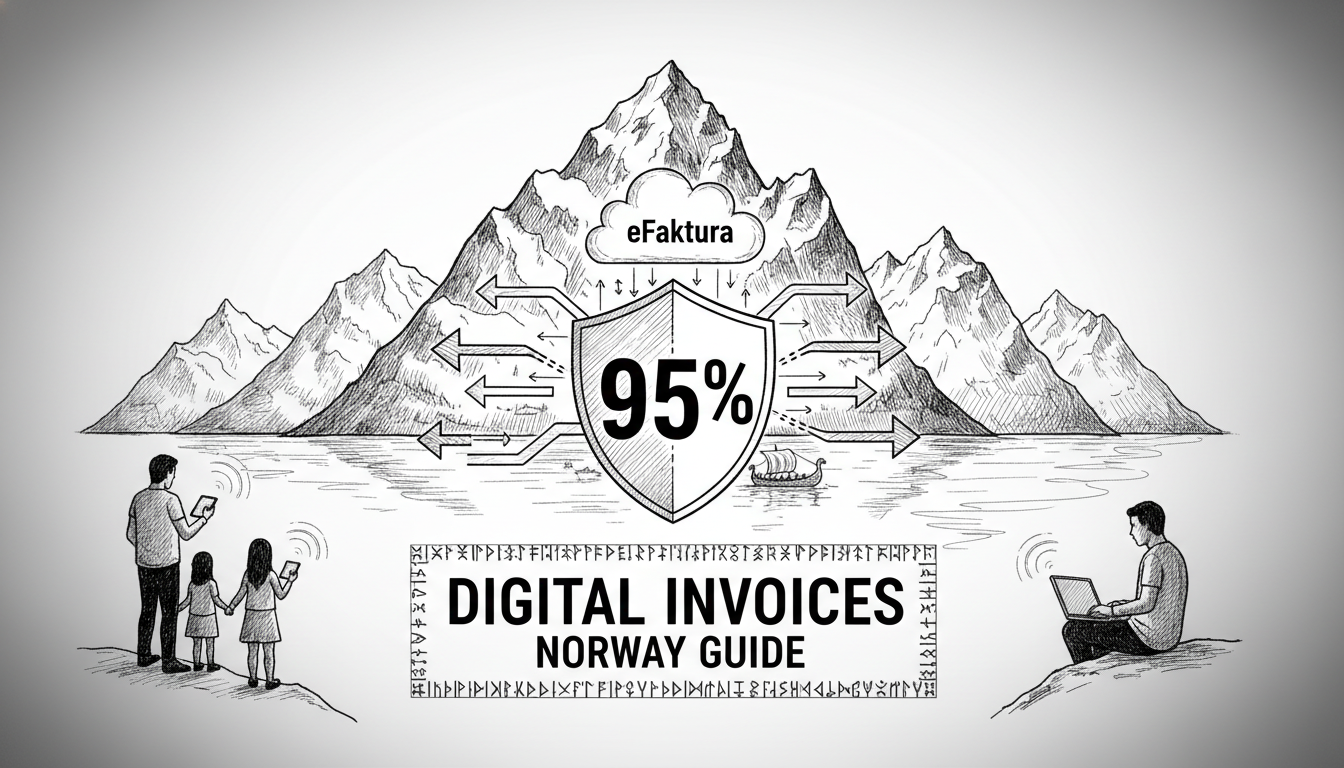
Norway sends over 95% of its invoices electronically through a system called eFaktura. This digital billing standard defines daily financial life in the country. For expats, navigating this paperless landscape is not just convenient—it is essential for integration. Understanding eFaktura means tapping into Norwegian efficiency and its broader digital transformation, a key trend in Nordic technology.
Norway's Invoice Revolution: From Paper to Pixels
eFaktura, short for electronic invoice, is Norway's universal digital billing system. Bills arrive directly in your online bank account. You approve and pay them with a single click. This eliminates paper invoices entirely. The system relies on BankID for security, a digital ID used by over 80% of Norwegians. It verifies identity for online transactions. eFaktura integrates with all major Norwegian banks like DNB, Nordea, and SpareBank 1.
Companies save approximately 50 kroner per invoice by adopting eFaktura. This explains its near-total adoption by businesses. Consumers benefit from automatic payment reminders. Late fees drop significantly with this automated approach. Norway's push for eFaktura is part of a national strategy to reduce waste and boost efficiency. It reflects the country's commitment to sustainability and technological innovation.
How eFaktura Transforms Daily Banking
The process is straightforward for users. Once set up, invoices from utilities, telecom providers, or the tax office appear in a dedicated eFaktura queue within your bank app. You review the amount and details. Then you click to approve and pay. BankID verification typically takes a few seconds. Payment processes immediately, and a digital receipt is generated. This system is a cornerstone of Norway digital transformation, showcasing how Scandinavia integrates tech into daily life.
For expats, the initial setup is the only hurdle. It requires a Norwegian bank account and a national identity number. After that, it becomes a routine part of financial management. The efficiency gains are clear. Manual data entry and paper checks are obsolete. This digital shift aligns with Nordic technology trends toward seamless public services. It also supports Oslo innovation news, as the capital's tech districts often develop similar solutions.
Step-by-Step: Getting Started with eFaktura
First, secure a Norwegian bank account. Major banks like DNB offer basic accounts with no monthly fees. You need a Norwegian national identity number, obtained through the tax office. Next, activate BankID through your bank. This costs about 300 kroner annually. Download your bank's mobile app. Most banks provide these apps free of charge.
Register for eFaktura in your online banking portal. Look for the eFaktura section. Click 'Add new invoice recipient.' Enter companies you regularly pay. Start with utilities like Hafslund Strøm for electricity. Set up automatic payments for recurring bills under 5000 kroner for safety. Always review invoices before approval to prevent errors. This process takes minutes but sets up a system for years.
Real Stories: Expats Mastering Digital Bills
Consider Anna, a Polish professional who moved to Oslo. Her first electricity bill from Hafslund arrived as eFaktura. She logged into her DNB mobile bank. The invoice appeared in her eFaktura queue. Anna reviewed the 1200 kroner charge. She clicked 'Approve and pay.' BankID verification took three seconds. The payment processed immediately. She received a digital receipt automatically. 'It felt intuitive after the first time,' she said. 'Now I can't imagine going back to paper.'
David from Canada subscribed to Telenor mobile service. His 499 kroner monthly bill comes via eFaktura. David set up automatic approval for this amount. The system pays Telenor every month without his action. He also receives Kommune tax bills electronically. These larger amounts require manual approval. He reviews them each quarter in his bank. The process takes two minutes total. 'It simplifies budgeting and saves so much time,' David noted.
The Bigger Picture: Norway's Digital Transformation
Norway's high adoption rate of eFaktura stems from strong digital infrastructure and public trust. Experts point to government incentives and a culture that embraces technology. 'eFaktura is a textbook example of how digital solutions can reduce costs and environmental impact,' said a tech analyst at an Oslo innovation lab. 'It's a model for other countries looking to modernize their financial systems.'
This system is part of a broader Scandinavian tech hub mentality. Norwegian tech startups often build on such secure, efficient platforms. The integration of BankID ensures security, which is critical for user acceptance. Over 80% of Norwegians use BankID regularly for various online services. This widespread use underpins the success of eFaktura and similar digital initiatives.
For expats, mastering eFaktura is a step toward understanding Norwegian society. It reflects values of efficiency, transparency, and sustainability. The digital shift also reduces administrative burdens for individuals and businesses alike. As Norway continues to lead in digital transformation, systems like eFaktura will likely evolve with new features. Future developments may include more advanced automation and integration with other Nordic services.
Will other countries follow Norway's lead in creating such comprehensive digital billing ecosystems? Only time will tell, but for now, expats in Norway have a clear path to managing finances digitally.