
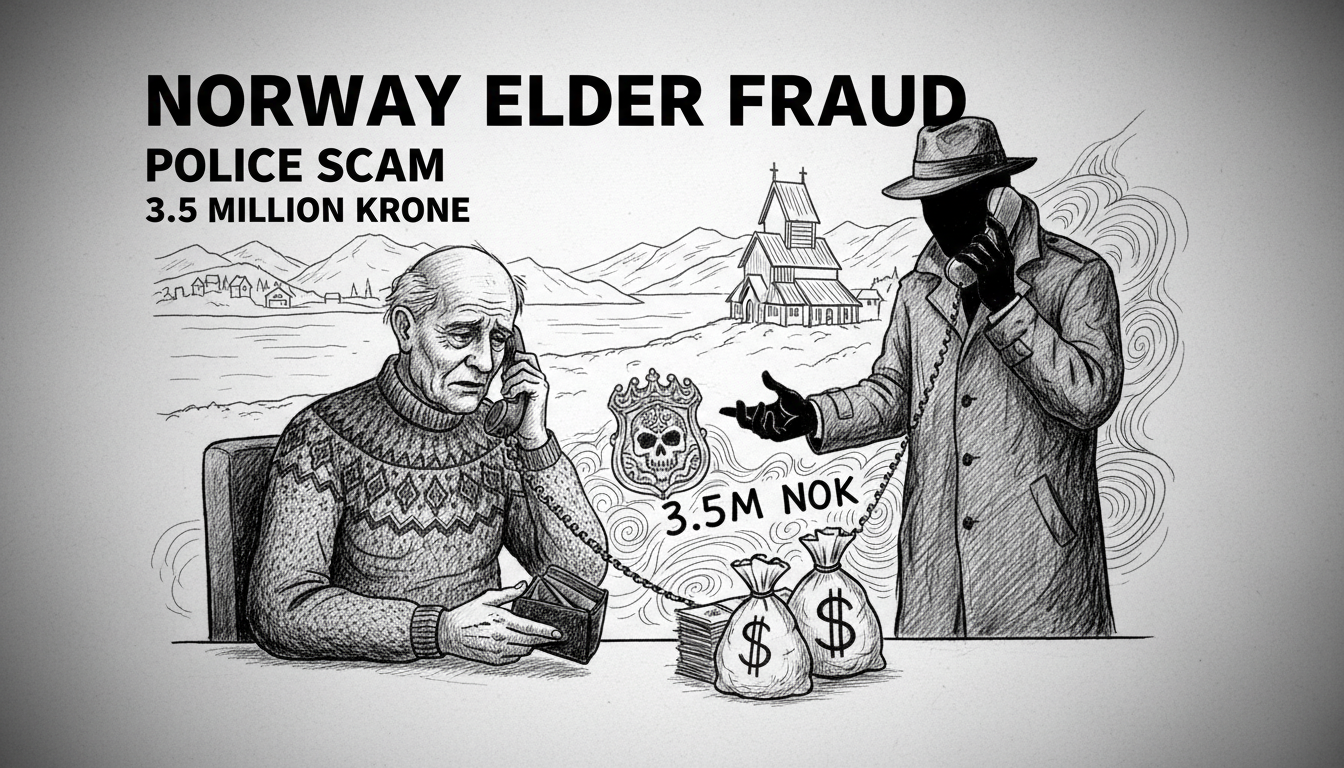
Norway's Møre and Romsdal police district has charged a Danish woman in her 50s with aggravated fraud. The case involves a sophisticated scam that defrauded a woman in her 70s from Romsdal of 3.5 million Norwegian kroner. The suspect is accused of impersonating a police officer and manipulating the victim into traveling to Turkey as part of the scheme.
This case highlights a disturbing and growing trend of elder fraud across the Nordic region. Scammers are increasingly using social engineering tactics to exploit trust and authority. The victim believed she was communicating with legitimate law enforcement throughout the ordeal.
Anatomy of a Sophisticated Scam
The fraud began with contact from someone pretending to be a police officer. The scammer used this false authority to build trust and create a sense of urgency. Through sustained psychological manipulation, the perpetrator convinced the elderly woman that complying with instructions was necessary.
The scheme escalated when the fraudster persuaded the victim to travel to Turkey. This international element added complexity and isolation, making it harder for the victim to seek help from her local support network. The 3.5 million kroner loss represents a life-altering sum for most retirees.
Senior public prosecutor for Møre and Romsdal confirmed the formal charges. The investigation involved tracing complex financial transactions and digital communications. Norwegian authorities are cooperating with international counterparts, likely including Turkish and Danish police, to build the case.
A Silent Epidemic Targeting Seniors
Elder fraud is a pervasive but underreported problem. Experts estimate only a fraction of such crimes are reported to authorities. Victims often feel deep shame or fear they will be seen as incompetent. Some worry about losing their financial independence if family members discover the deception.
Kripos, Norway's National Criminal Investigation Service, has repeatedly warned about rising online fraud. Their annual reports show consistent increases in financial scams targeting all demographics. However, criminals frequently focus on older adults who may possess significant lifetime savings and a more trusting disposition.
“These scams are not about technology alone,” explains a financial crime specialist at the Norwegian University of Science and Technology. “They are about psychology. The scammer creates a false reality where the victim feels obligated, frightened, or compelled to act against their own interest. Impersonating police is particularly effective because it exploits inherent trust in institutions.”
The Police Impersonation Playbook
Impersonating law enforcement is a common tactic in fraud across Scandinavia. The method works because most people are conditioned to trust and obey police instructions. Scammers use this authority to bypass natural skepticism.
In a typical police impersonation scam, the fraudster contacts the victim claiming there is an urgent problem with their bank account or identity. They say suspicious activity has been detected and the victim must move their money to a “secure” account controlled by police. Alternatively, they may claim the victim is a witness to a crime and must pay a fee or provide financial details.
The scam often involves multiple contacts over days or weeks. This builds a false relationship and normalizes the abnormal requests. Victims are sometimes told to keep the matter secret from real bank staff or family, under the guise of protecting an investigation.
Why Romsdal and Beyond Are Vulnerable
Romsdal, with its stunning fjords and smaller communities, represents the kind of area where such scams can be devastating. Close-knit communities foster trust, which criminals exploit. Older residents may be less familiar with the digital red flags that younger generations recognize.
Norway’s high standard of living and widespread wealth also make its elderly population attractive targets. A pensioner in Norway is likely to have more substantial savings than counterparts in many other countries. The national digitalization push, while beneficial, has also created new avenues for fraud against those less comfortable with technology.
Local police districts across Norway, from Finnmark in the north to Agder in the south, run awareness campaigns. They visit senior centers and community groups to explain common scams. Despite these efforts, the sophisticated narratives used by criminals continue to find victims.
The Legal Road Ahead and Victim Support
The Danish suspect now faces Norway's legal system. Aggravated fraud carries a potential prison sentence of up to six years under Norwegian law. The prosecution must prove deliberate deception for financial gain. International aspects will complicate the proceedings, requiring careful judicial cooperation.
For the victim, the path forward is about more than justice. Losing 3.5 million kroner can mean losing financial security, independence, and peace of mind. Victim support organizations in Norway emphasize the psychological trauma alongside the financial loss.
“We must treat the financial loss and the emotional betrayal as equally serious injuries,” says the head of a national victim support group. “Restitution is important, but restoring a sense of safety and trust is a longer process. Many victims blame themselves, and we work to counter that narrative.”
A Call for Collective Vigilance
This case serves as a stark reminder for families across Norway. Experts advise having open conversations with older relatives about financial safety. They recommend establishing simple check-in protocols, like calling a trusted family member before making large transfers or sharing personal information.
Financial institutions also play a critical role. Banks in Norway have systems to flag unusual transactions, particularly those involving elderly customers. Teller training now often includes spotting the signs of a customer who may be under the influence of a scammer.
The true scale of elder fraud is hidden in silence and shame. For every case like this one in Romsdal that reaches the courts, many more likely go unreported. As Norway's population ages, protecting its seniors from financial predators will require constant vigilance from families, communities, and law enforcement alike. The question remains: are we doing enough to shield our most trusting citizens from those who would weaponize that trust?