
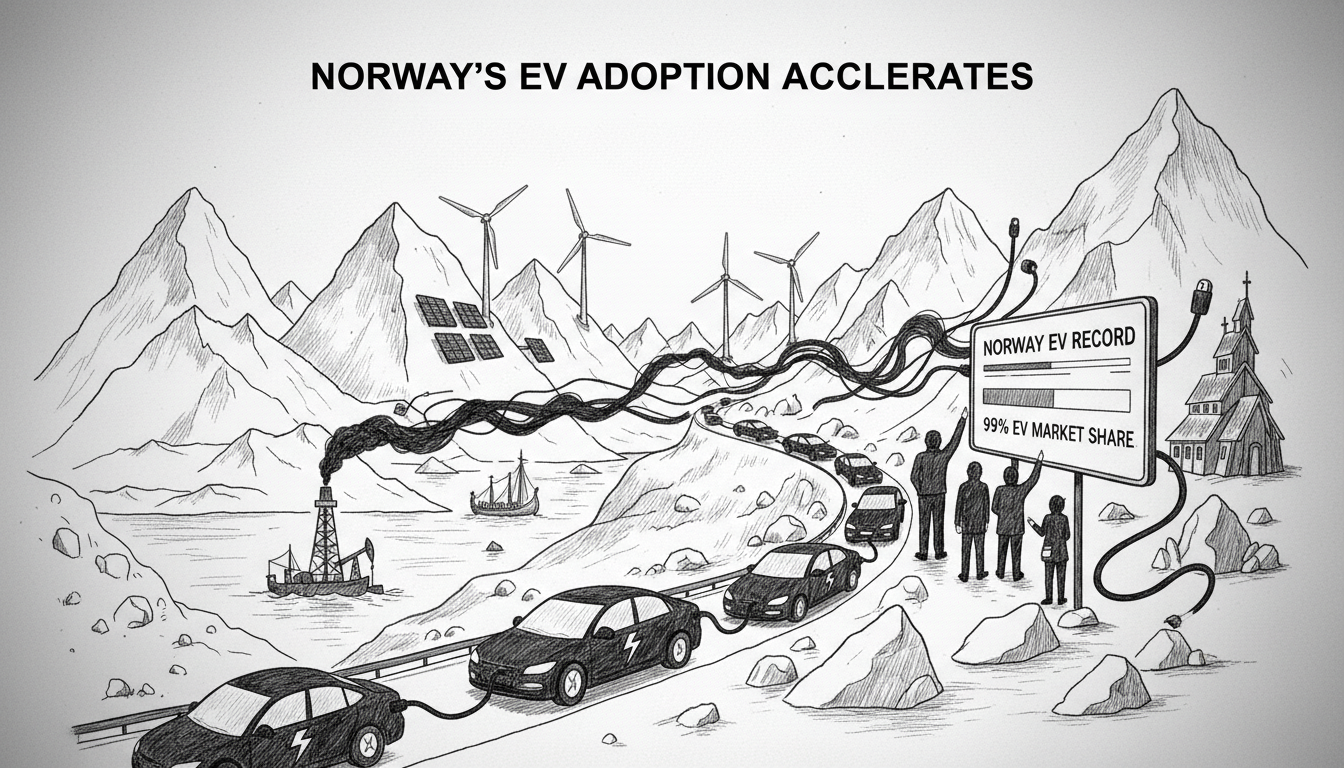
Norway is on track to shatter its annual electric vehicle sales record. The Norwegian Electric Vehicle Association reports that 137,887 new electric cars have been sold so far this year. This pace signals a new peak for both total EV sales and the overall market share of electric cars. The data underscores the country's continued dominance in the global transition away from fossil fuel-powered transport.
Regional statistics reveal near-total market saturation in several key counties. Telemark leads the nation with a staggering 99.7 percent share of new car sales being electric. Vestland follows closely at 99.5 percent, with Vestfold at 99.3 percent and the major oil-producing region of Rogaland at 98.5 percent. These figures highlight a nationwide consensus, transcending traditional urban-rural and industrial divides.
This surge is not accidental but the direct result of decades of consistent policy. Norway's Parliament, the Storting, has maintained a powerful package of incentives. These include exemptions from high purchase taxes and VAT, reduced annual road fees, and access to bus lanes and toll roads. The policy framework deliberately makes electric cars the most economically rational choice for Norwegian consumers. It is a clear example of using fiscal tools to steer the market toward a national environmental goal.
For the international energy market, Norway presents a fascinating paradox. It is Europe's largest oil and gas exporter, with production from fields like Johan Sverdrup in the North Sea and Snøhvit in the Barents Sea funding its sovereign wealth fund. Simultaneously, it is aggressively phasing out the domestic use of these products in transportation. This dual identity allows Norway to finance its green transition with fossil fuel revenues, a strategy often debated in the Storting's finance committee. The success of the EV policy directly reduces domestic oil consumption, potentially freeing more hydrocarbons for export, though it also signals a long-term strategic shift.
The implications for infrastructure and energy grids are substantial. Charging networks must expand, particularly along remote Arctic highways and in deep fjord communities like those in Vestland. The national power grid, fed largely by hydroelectric plants, must handle increased demand. This creates new political discussions about grid investments and potential local power generation. The next phase of Norway's transport revolution will focus on heavy vehicles and maritime transport, where electrification of ferries in the iconic Geirangerfjord and other waterways is already underway.
Norway's experience provides a critical case study for the world. It demonstrates that rapid consumer adoption is achievable with a stable, long-term incentive structure. The real test will be sustaining this momentum as initial purchase subsidies eventually phase out and the market matures. The data from counties like Rogaland, the heartland of the Norwegian oil industry, shows that even communities economically tied to fossil fuels are embracing the electric future, marking a profound cultural and economic shift.