
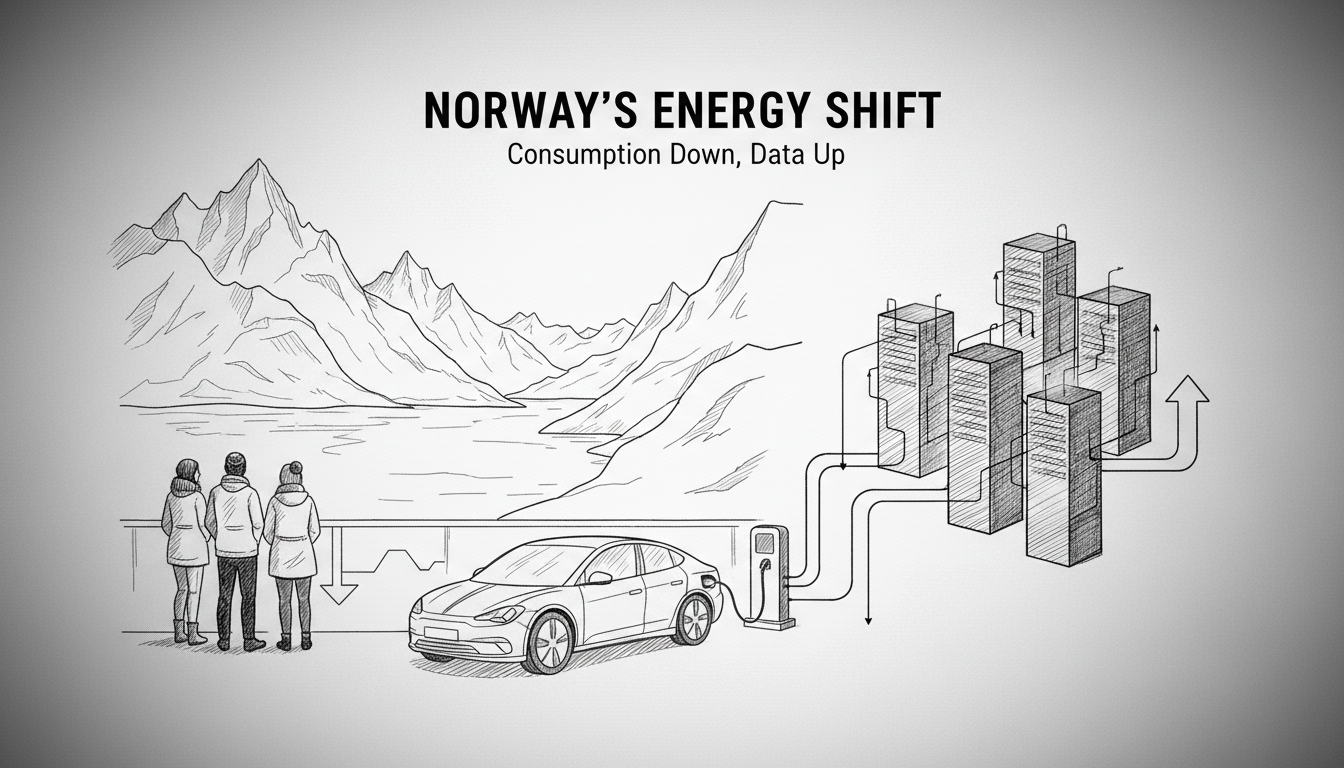
Norway's total energy consumption has dropped over recent years according to a new report from the Norwegian Water Resources and Energy Directorate. The findings reveal a notable shift in the country's energy landscape as it transitions toward more sustainable power sources.
The energy regulator points to the transition from fossil fuel vehicles to electric cars as a primary driver of this trend. Electric vehicle adoption in Norway continues to lead global rankings, with battery-powered cars now dominating new vehicle sales. This shift directly reduces petroleum consumption while increasing electricity demand for transportation.
Meanwhile, electricity consumption from data center operations has increased substantially. Norway's cool climate and abundant renewable energy make it an attractive location for data centers. The country's hydropower resources provide reliable, clean electricity for these energy-intensive facilities.
This energy consumption pattern reflects Norway's broader climate goals. The country aims to reduce greenhouse gas emissions significantly in the coming decades. The energy sector transformation aligns with these environmental objectives.
What does this mean for Norway's energy future? The data suggests the country is successfully decarbonizing parts of its economy while managing new electricity demands. The challenge lies in balancing increased electrical needs with sustainable production.
Norwegian households and businesses continue adapting to these energy changes. Many Norwegians now charge electric vehicles at home, shifting their energy usage patterns. The national grid must accommodate these new consumption behaviors while maintaining reliability.
Data centers represent both an economic opportunity and an energy management challenge. These facilities bring investment and jobs to local communities. They also require careful planning to ensure they don't strain regional power infrastructure.
The energy report provides valuable insights for policymakers and industry leaders. Understanding these consumption trends helps shape future energy strategies and infrastructure investments. Norway's experience offers lessons for other countries pursuing similar energy transitions.
Looking ahead, Norway faces the ongoing task of modernizing its energy system. The country must continue developing renewable resources while managing evolving consumption patterns. This balanced approach will determine Norway's success in building a sustainable energy future.