
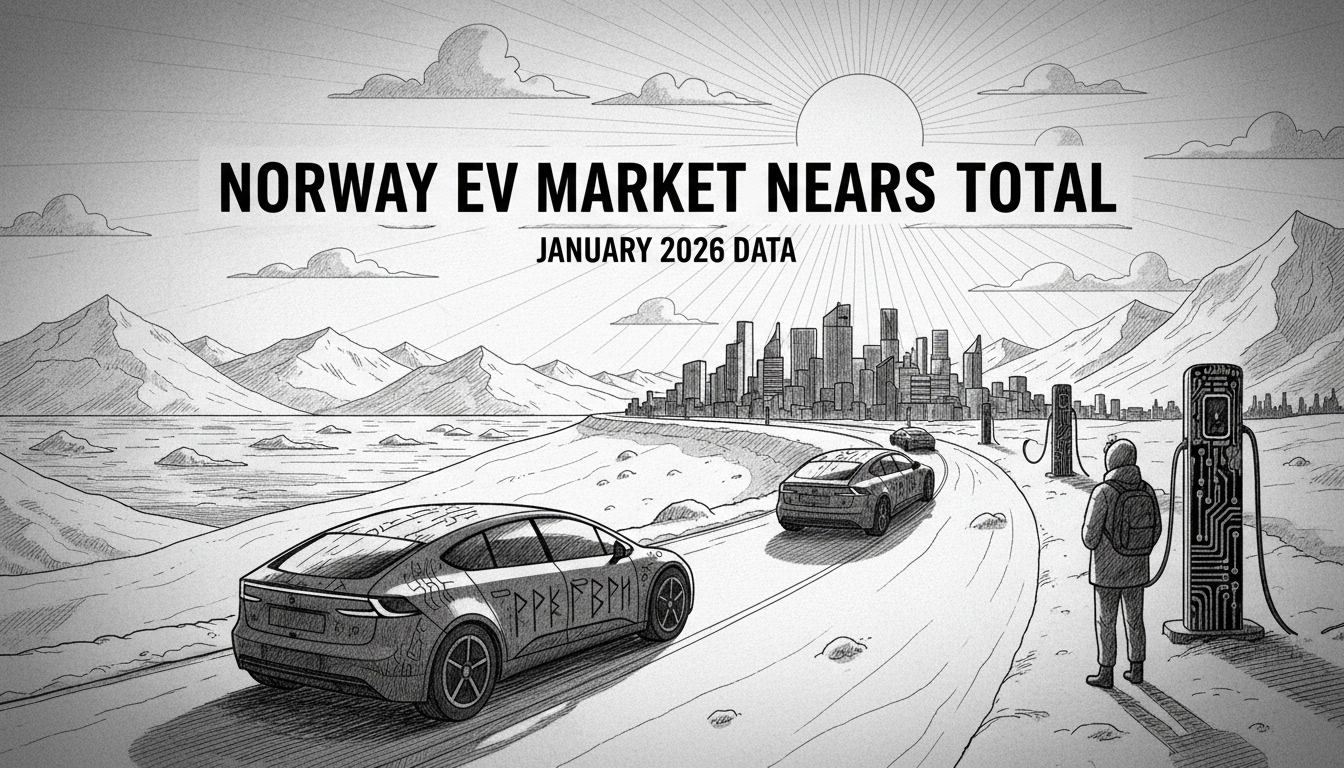
Norway electric vehicle sales continue their unprecedented rise, with preliminary reports for 2025 indicating a market share approaching total dominance. All eyes are now on the Norwegian Road Federation (OFV) as it prepares to release January 2026 figures, a dataset that will set the tone for the year and test the resilience of the world's most advanced EV transition. This is not just a statistical milestone; it is a profound shift in Norwegian society, energy policy, and industrial strategy, with global implications.
The January Benchmark: Interpreting the Data
January sales data serves as a critical health check for Norway's automotive market. The OFV's report will provide the first concrete evidence of whether the explosive growth trajectory from 2025 has been sustained. Analysts will scrutinize the figures for any signs of plateauing demand or shifts in consumer preference between battery electric vehicles (BEVs) and plug-in hybrids (PHEVs). In 2023, BEVs accounted for 82.4% of all new passenger cars sold, a figure that rose from approximately 79.3% in 2022. While final 2025 data is still being consolidated, industry observers anticipate the share could be historically high, reinforcing Norway's unique position. The January numbers will also reveal the immediate impact of any subtle policy tweaks and the market reception of new models entering the showrooms.
The Architecture of Success: Policy and Incentives
The Norwegian model is no accident. It is the direct result of a deliberate, long-term policy framework orchestrated from government buildings in Oslo. The cornerstone is a powerful package of financial incentives that make electric cars the economically rational choice. Buyers benefit from exemption from value-added tax (VAT) and purchase taxes, which can add thousands of euros to the price of a petrol or diesel car. They also enjoy reduced annual road taxes, lower tolls on roads and ferries, and in many urban areas like Oslo, free parking and access to bus lanes. This suite of benefits, championed by successive governments and supported across the Storting, has systematically reshaped the market. The goal to end sales of new fossil-fuel cars by 2025 is now within touching distance, a testament to consistent political will.
Powering the Transition: Infrastructure and Energy
Incentives alone would falter without the physical backbone to support millions of electric cars. Norway has invested heavily in a nationwide charging network, from fast-charging stations along the E6 highway to ubiquitous points in suburban housing cooperatives. This infrastructure build-out mitigates range anxiety, a key barrier in other markets. Crucially, this electricity is overwhelmingly green. Norway's vast hydropower resources, generated in fjords and mountains, provide a low-carbon electricity grid. This makes the environmental benefit of an EV in Norway substantially greater than in a country reliant on coal or gas power. The synergy between clean energy policy and transport policy is complete, turning Norway's geographic and resource advantages into a strategic strength.
Global Ripples: Lessons and Realities
International observers often point to Norway as the ultimate proof-of-concept for rapid EV adoption. The data provides a clear blueprint: combine substantial, persistent financial incentives with aggressive infrastructure investment and align it with a clean energy supply. However, analysts caution that Norway's specific conditions are not easily replicated. Its high per-capita income, concentrated population centers, and unique tax structure on conventional cars create a fertile ground that may not exist elsewhere. Furthermore, the decline of PHEV market share in favor of pure BEVs signals a maturation of consumer confidence in battery technology. For global automakers, Norway has served as a crucial testing ground and validation market for new electric models, influencing product development worldwide.
Economic and Environmental Crosscurrents
The shift has tangible impacts beyond the showroom. It directly supports Norway's ambitious climate goals, reducing domestic transport emissions even as the nation remains a major oil and gas exporter. This paradox is not lost in political debates at the Storting. Some members argue the EV success story must be matched with broader decarbonization efforts in maritime and heavy industry. Economically, the transition is reshaping state finances. The tax exemptions for EVs represent significant foregone revenue, prompting discussions about future fiscal models as the market nears saturation. The government must now plan for a sustainable revenue base from transport, potentially involving road pricing reforms that account for vehicle weight and distance traveled, rather than fuel type.
The Road Ahead: Challenges in a Saturated Market
As January 2026 data arrives, the conversation is shifting from growth to consolidation. The key challenges are no longer about achieving high adoption rates but managing the consequences of success. Grid capacity must expand to meet charging demand during peak periods, especially in cold winter months. The secondary market for used EVs is developing, critical for broader accessibility. There are also equity concerns; the initial benefits have largely accrued to wealthier, urban early adopters. Policy makers are now examining how to ensure the benefits of electrification reach all segments of society, including rural communities and lower-income families. The next phase of Norway's EV journey will be defined by these complex, systemic questions.
The release of January's sales figures will be a moment of reflection. Norway stands on the verge of fulfilling a once-ambitious political promise, transforming its vehicle fleet in little over a decade. This achievement underscores how targeted policy, aligned with natural advantages and public acceptance, can drive monumental change. For the rest of the world watching, the pressing question remains: which elements of the Norwegian model can be adapted, and what new, creative policies are needed to charge ahead in different national contexts? The data from Oslo provides not just a number, but a narrative of what is possible.