
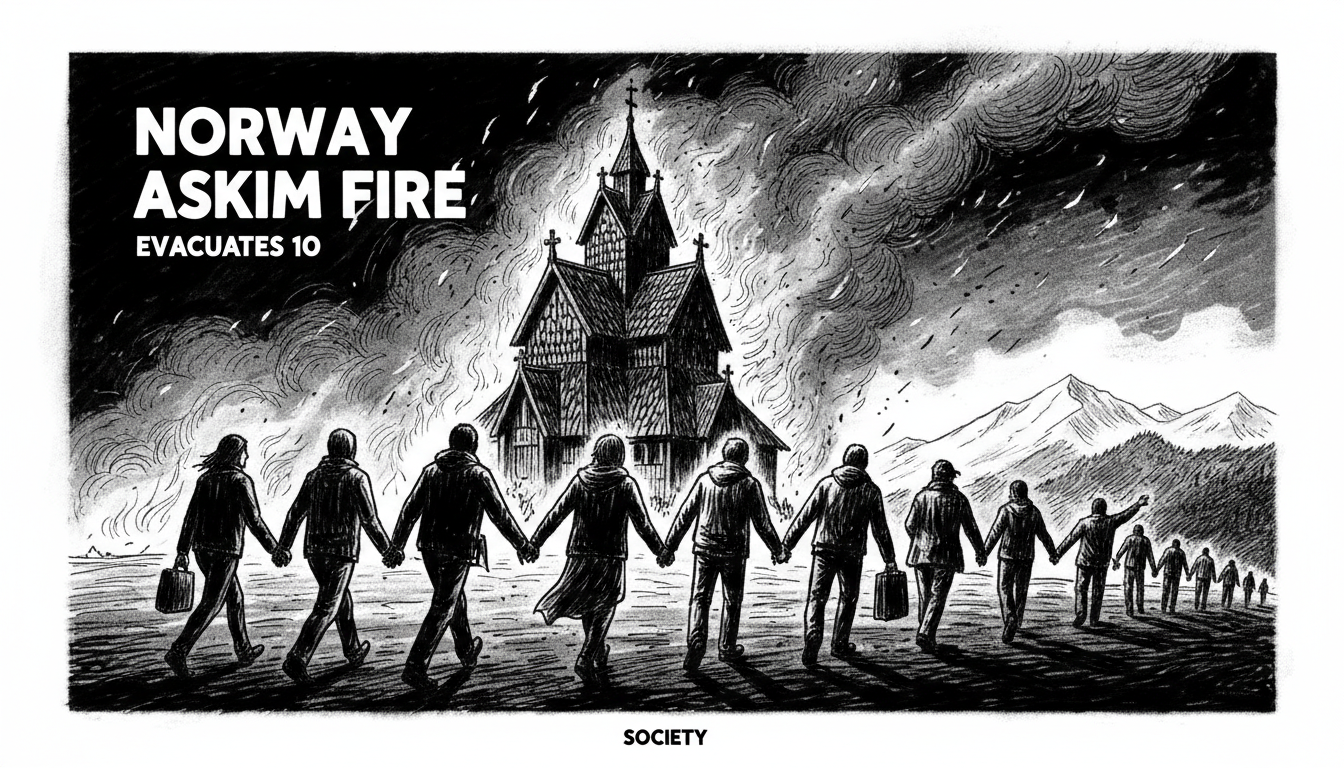
Norway emergency services evacuated ten residents as smoke poured from a multi-unit building in Askim Thursday. Police and fire crews responded to reports of smoke from the roof of a residential property in Indre Østfold, southeast of Oslo. Firefighters with breathing apparatus entered the structure while officers managed the evacuation. The incident underscores the persistent risks in residential areas, even in a nation with strict safety codes.
Smoke Fills Askim Sky as Evacuation Begins
Police operations leader Ronny Hellerud Samuelsen confirmed ten individuals were registered at the address. The building, containing several housing units, saw rapid deployment of røykdykkere—smoke divers—to assess the interior. Thick smoke visible from the roof prompted immediate concern in the quiet town. Emergency protocols were activated within minutes, reflecting Norway's coordinated response systems for urban fires. Local roads were cordoned off as crews worked to prevent the blaze from spreading to adjacent wooden structures common in the region.
This fire occurs in Indre Østfold, a municipality in Viken county formed after a 2020 merger. Askim, once an independent municipality, is now part of this administrative area. The town has a mix of older wooden homes and newer constructions, with this incident highlighting vulnerabilities in multi-tenant dwellings. Norway's cold climate exacerbates fire risks, as residents often use heating systems that can pose hazards if not maintained. Building materials, especially historic wood, can accelerate flame spread without proper safeguards.
A Closer Look at Norwegian Fire Safety Standards
Norwegian building codes mandate smoke detectors and clear escape routes in all residential properties. Experts stress that regular inspections are critical for older buildings like those in Askim. "In multi-unit dwellings, early detection and compartmentalization are key to saving lives," said a fire safety engineer familiar with Nordic standards, who requested anonymity as the investigation is ongoing. "The use of breathing apparatus by responders shows they prioritized interior search and rescue, which is standard but high-risk procedure."
Norway has invested heavily in emergency response networks since tragedies like the 2014 Bergen fire that killed a firefighter. Municipalities are required to maintain rapid intervention teams, particularly in densely populated areas. However, budget constraints in smaller towns like Askim can strain resources. This fire will likely prompt reviews of local readiness and building compliance checks across Indre Østfold. The Storting's standing committee on justice and public security often debates funding for fire services, especially in rural zones.
The Human Impact of Sudden Displacement
For the ten evacuated residents, the fire means sudden homelessness and loss of possessions. Social services in Indre Østfold are typically activated to provide temporary housing, often in local hotels or community centers. In Norway's welfare system, municipalities bear responsibility for emergency accommodation under the Social Services Act. The psychological toll of such events is significant, particularly for families with children or elderly individuals who may struggle with displacement.
Community response in Askim is likely to be swift, given Norway's strong culture of mutual aid. Volunteer organizations like the Norwegian Civil Defence and Red Cross often assist in such crises. The local government will coordinate with insurance companies to assess damage, which can be costly in a country where construction expenses are high. This incident serves as a stark reminder that even in a nation famed for its safety, everyday risks persist.
Broader Implications for Housing and Policy
This fire raises questions about the state of Norway's older housing stock. Many buildings from the mid-20th century lack modern fire-retardant materials, though retrofitting is encouraged through tax incentives. Energy policy also plays a role; as Norway transitions to greener heating, improper installation of heat pumps or wood burners can increase fire risks. The Ministry of Local Government and Modernisation oversees building regulations, and incidents like this may fuel calls for stricter enforcement.
From an Arctic policy perspective, resilience in remote communities is crucial. While Askim is not in the High North, the principles of emergency preparedness apply nationwide. Norway's expertise in maritime and oil field safety doesn't always translate to residential urban settings. The government's focus on oil industry safeguards, such as those on platforms in the North Sea, contrasts with more mundane domestic hazards. Yet, both require vigilant oversight and continuous improvement of protocols.
Lessons from the Flames and Next Steps
As investigators determine the cause of the Askim fire, attention will turn to prevention. Possible factors include electrical faults, heating system failures, or human error. Insurance data shows that residential fires in Norway cause hundreds of millions of kroner in damage annually, with most incidents occurring in winter. This event may influence ongoing political debates about municipal mergers and resource allocation, as Indre Østfold adapts to its new administrative reality.
The response demonstrated the effectiveness of Norway's integrated emergency services. Police, fire, and health teams train regularly for such scenarios, ensuring a measured approach even under pressure. For international observers, this incident highlights the balance between proactive safety measures and reactive crisis management. Norway's model, while effective, is not infallible. As the smoke clears in Askim, the community must rebuild not just structures, but confidence in the systems designed to protect them. How will Norway adapt its safety frameworks to an aging housing landscape in towns across the fjords and valleys?