
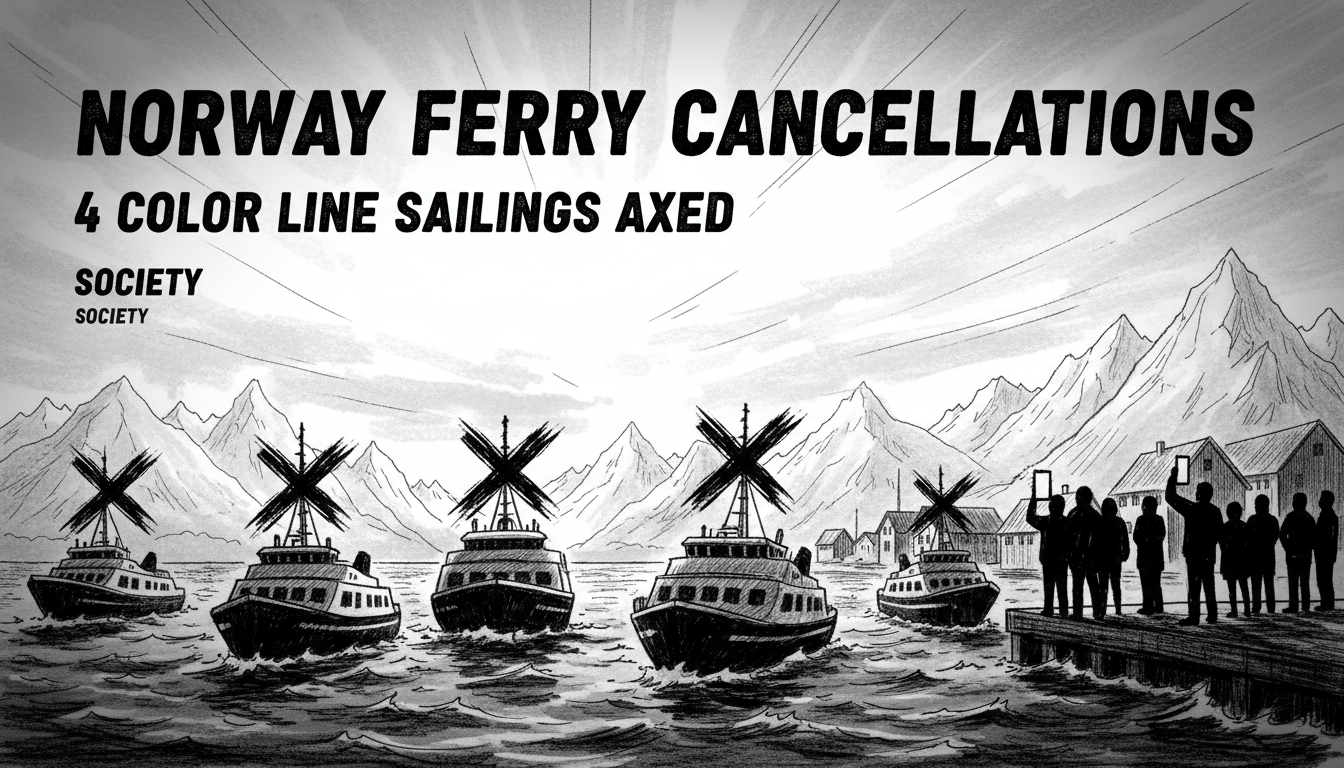
Norway ferry cancellations have disrupted travel for passengers and freight after Color Line axed four key departures. The operator cancelled sailings from Larvik and Kristiansand to Denmark's Hirtshals on January 2nd due to forecasted severe winds on Norway's southeastern coast. This decision highlights the perennial vulnerability of Scandinavia's maritime transport network to winter's fury.
Color Line announced the cancellations on its website, citing adverse weather conditions. The affected routes are critical links in the North Sea transport corridor. Meteorologists predicted powerful winds for the Austlandet region overnight into January 2nd, forcing the operator's hand. Passenger and freight traffic must now wait for calmer seas.
Winter's Grip on Scandinavian Travel
Ferry services between Norway and Denmark are a lifeline for tourism and commerce. The cancelled Color Line Hirtshals route from Kristiansand is a major artery for both passenger vehicles and commercial trucks. The Larvik-Hirtshals crossing serves a similar function further north along the coast. These are not mere tourist excursions but integral parts of the regional infrastructure.
"Safety is the absolute priority when we assess weather conditions," a Color Line representative said in a statement. "We regret the inconvenience to our passengers, but operating in forecasted severe winds poses an unacceptable risk." This protocol is standard for all major ferry operators navigating the North Sea and Skagerrak strait. The decision likely came after consultation with the Norwegian Coastal Administration and meteorological services.
The Economic Ripple Effect
Each cancelled sailing carries a significant economic cost. Beyond disappointed travelers, the movement of freight is delayed. Fresh produce, manufactured goods, and other time-sensitive cargo sitting in ports represent a tangible loss. The ferry to Norway weather disruption compounds existing winter supply chain challenges for businesses on both sides of the Skagerrak.
Shipping analysts note that while such cancellations are operationally necessary, they underscore a broader infrastructure dependency. "These ferries are floating bridges," said Lars Andersen, a maritime transport analyst based in Oslo. "When they close, there is no immediate alternative for trucks and drivers. The only other option is a massive detour via the Oresund Bridge between Sweden and Denmark, adding hundreds of kilometers and many hours."
This creates a domino effect. Delayed trucks miss warehouse schedules, which in turn disrupts just-in-time delivery systems for supermarkets and retailers. For passengers, missed connections to flights or other transport links in Denmark can mean extended hotel costs and rearranged itineraries. The impact is felt far from the dock.
Norway's Maritime Dependency and Climate Questions
Norway's geography makes it reliant on coastal and international ferry services. With a long, fractured coastline and mountainous interior, sea routes have always been highways. Modern operators like Color Line, Fjord Line, and DFDS provide essential connectivity. The country's famous fjords, while stunning, create complex wind patterns that can make sailing hazardous, especially for large, high-sided vessels like cruise ferries.
The frequency of weather-related cancellations invites questions about long-term climate trends. While a single winter storm is not evidence of change, marine insurers and operators are increasingly studying data on storm intensity and frequency in the North Sea. More powerful or unpredictable weather could challenge current operational models and scheduling reliability.
Conversely, milder winters with less sea ice might open new scheduling opportunities. The discussion is ongoing within the maritime industry. For now, operators must work with the forecasts they have. The Norwegian Meteorological Institute provides detailed models that are crucial for these go/no-go decisions, often made 12 to 24 hours in advance.
Passenger Realities and Operator Protocols
For the traveler, a cancellation notice means scrambling. Color Line's terms typically offer rebooking on the next available sailing or a refund. The company's large vessels, like the "Color Magic" and "Color Fantasy," which operate on these routes, can carry over 2,000 passengers and hundreds of cars. Rescheduling that volume of people and vehicles is a logistical challenge.
Passengers are advised to monitor operator websites and app notifications closely during winter. Travel insurance that covers trip interruption due to weather is also a prudent consideration for anyone booking winter ferry travel in the region. The lesson from this January 2nd event is a familiar one: when planning winter travel to or from Norway, build in flexibility.
Looking Ahead: Resilience and Alternatives
This incident is a routine winter occurrence, but it points to the need for resilient transport planning. The Norwegian government continues to invest in road and rail networks, including the controversial but ongoing E39 Coastal Highway project, which aims to replace some ferry crossings with bridges and tunnels. Such mega-projects, however, are decades in the making and face enormous technical and environmental hurdles.
In the immediate term, operators are investing in more stable vessel designs and improved weather routing technology. The goal is to expand the window of operable conditions without compromising safety. Digital communication with passengers has also improved, allowing for faster notification and rebooking processes than in the past.
Yet, the sea remains an unpredictable force. The cancellations from Larvik and Kristiansand are a stark reminder that despite advanced technology, human schedules are still subject to nature's timetable. As the wind howls across the Skagerrak, the ferries remain safely in port, waiting for the signal that the ancient pathway between Norway and Denmark is open once more. How will increasing volatility in weather patterns shape the future of this vital maritime connection?