
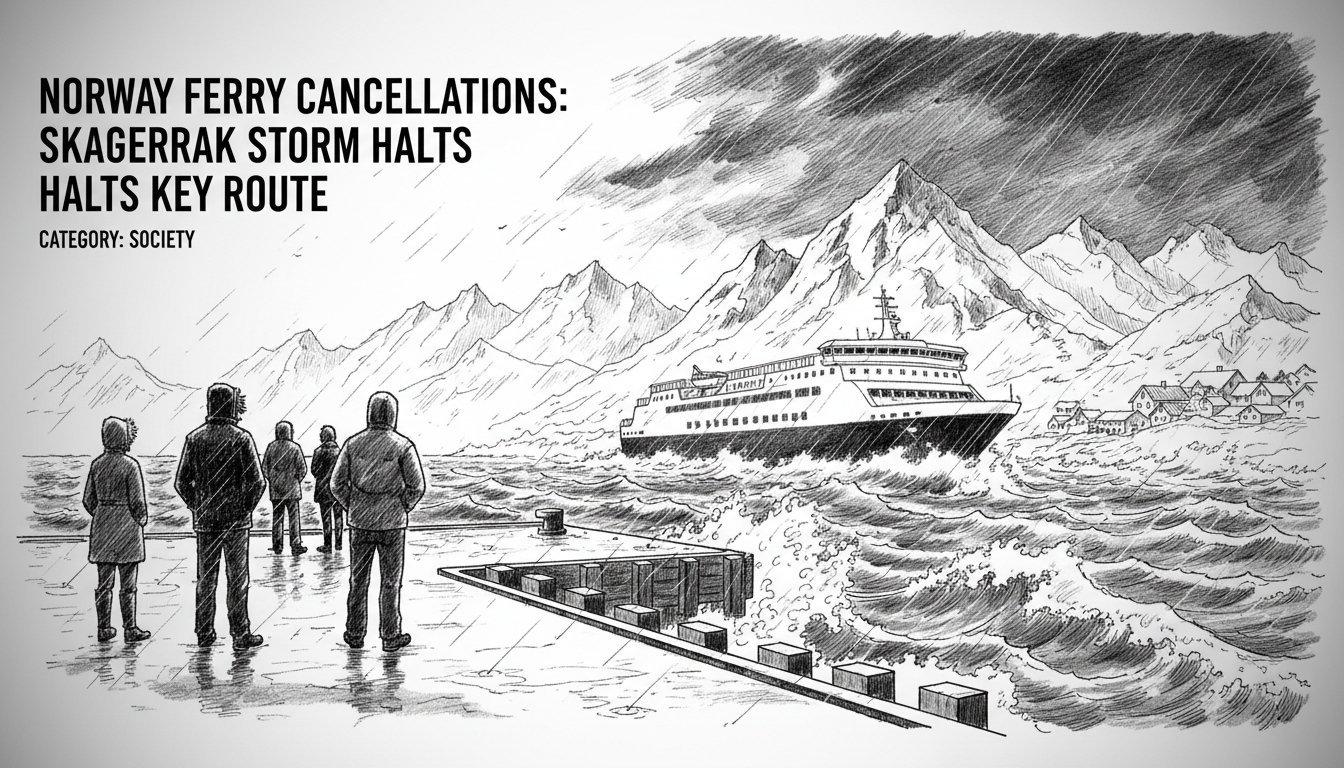
Norway's vital ferry link to Denmark was severed today as severe weather forced the cancellation of key crossings. Color Line's ferry from Kristiansand to Hirtshals, scheduled for 08:00, and its 12:05 return service from Denmark were both called off. The Norwegian Meteorological Institute issued a yellow weather warning for the Skagerrak Strait, forecasting powerful winds and hazardous sea conditions that made the passage unsafe for the large passenger vessel.
This disruption highlights the persistent vulnerability of Norway's maritime transport network to the fierce North Sea weather. For travelers, truckers, and businesses relying on this corridor, the cancellations mean missed connections, delayed freight, and economic ripple effects. The decision, while routine for operators, underscores a fundamental tension between Norway's modern economy and its ancient, unpredictable seas.
The Unforgiving Waters of the Skagerrak
The Skagerrak, the arm of the North Sea separating southern Norway from Denmark's Jutland peninsula, is notorious among mariners. Its relatively shallow waters can quickly become turbulent when strong winds sweep across from the Atlantic or the European continent. The funneling effect between the two landmasses often amplifies wind speeds, creating short, steep waves that are particularly challenging for roll-on/roll-off ferries with large superstructures.
"The Skagerrak demands respect," says Lars Andersen, a veteran shipping analyst based in Oslo. "Operators like Color Line have sophisticated weather routing and decision protocols. A cancellation is never taken lightly, given the costs involved, but it is the ultimate safety valve. The risk of cargo shifting or passengers being injured in heavy rolling is too great." The yellow warning indicates conditions that could cause minor damage and disruption, signaling to operators that precautionary measures are necessary.
Economic Ripples from a Halted Crossing
Beyond stranded passengers, such cancellations have tangible economic consequences. The Kristiansand-Hirtshals route is a critical freight corridor. According to recent industry reports, hundreds of trucks and trailers carrying Norwegian seafood, industrial goods, and consumer products cross weekly. A single day's cancellation creates a backlog, delays just-in-time supply chains, and incurs substantial costs for logistics firms.
Fresh seafood exports, a cornerstone of Norway's economy, are especially time-sensitive. Delays can affect quality and market price. For importers, goods ranging from Danish dairy products to European manufactured components are held up. While some freight can be rerouted via Sweden's bridges or other ferry lines, this adds time, distance, and expense. The indirect cost to businesses across southern Norway and Denmark often exceeds the direct losses for the ferry operator.
The Balancing Act of Safety and Service
Ferry operators navigate a complex calculation. On one side is an unwavering commitment to safety, reinforced by strict Norwegian maritime regulations. On the other is commercial pressure to maintain reliable schedules for passengers and freight customers who have alternatives, including airlines and the Oresund Bridge route via Sweden.
Color Line and its competitors use advanced meteorological data and hydrodynamic modeling to predict vessel behavior in forecasted conditions. Captains and operations centers make the final call, often hours in advance, to allow passengers and freight companies to adjust plans. "The protocol is proactive," Andersen explains. "It's far better to cancel a sailing the night before than to turn a ship around mid-crossing or, worse, encounter dangerous conditions. The trust of your passengers is built on this conservative approach."
Norway's Enduring Dependence on Coastal Ferries
This incident is a microcosm of Norway's broader transportation reality. Despite extensive road tunnels and bridges, coastal ferry services remain part of the national highway system. They are lifelines for island communities and essential commercial links. The government subsidizes many domestic routes, recognizing their societal role. International routes like Kristiansand-Hirtshals, however, operate commercially, competing on service and reliability.
Weather disruptions are an accepted, if frustrating, part of Norwegian life, particularly from autumn through spring. Travelers are generally advised to purchase flexible tickets and build buffer time into their plans during these seasons. The Norwegian Coastal Administration continuously works to improve weather forecasting and traffic management in these busy sea lanes, but the power of nature remains the dominant factor.
Looking Ahead: Resilience and Adaptation
While no technology can calm a storm, the industry focuses on building resilience. Newer ferry designs feature improved stability and fuel efficiency. Digital tools provide passengers with real-time updates and rebooking options. Operators also collaborate on contingency planning, though capacity on alternative routes is often limited during peak periods or widespread bad weather.
For now, the waiting game continues in Kristiansand and Hirtshals. Passengers monitor weather apps and ferry company websites, hoping the wind will abate enough for service to resume. Freight managers recalculate delivery schedules. The powerful winds sweeping the Skagerrak serve as a blunt reminder that in Norway, a nation built on seafaring, the weather still holds the ultimate veto over the best-laid travel plans. As one stranded truck driver in Hirtshals put it, "You can't argue with the sea. It's better to be late and safe. We'll sail when it says we can."