
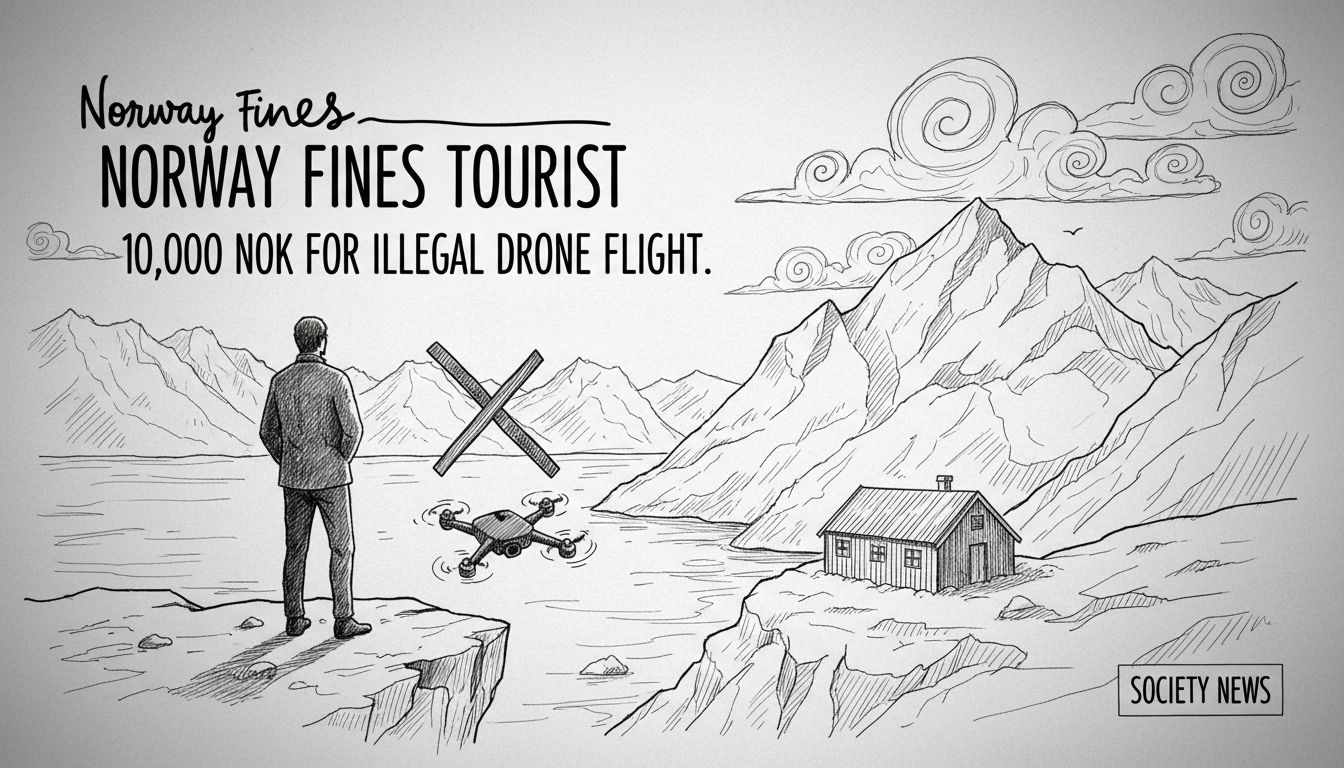
Norway drone laws have been enforced against a tourist in the Arctic, with police issuing a 10,000 NOK fine for illegal drone flying in Svolvær. The incident occurred within the flight restriction zone of Svolvær Airport (SVJ), a regional hub in the Lofoten Islands. Police discovered the drone during a patrol and later located the pilot, who accepted the fixed penalty notice. While the airport was closed at the time, preventing any impact on air traffic, the case highlights a persistent enforcement challenge in Norway's most scenic regions.
The Lofoten Conundrum: Scenery Versus Security
The dramatic peaks and fjords of the Lofoten Islands create a powerful draw for photographers and drone pilots. Svolvær, the administrative centre of Vågan municipality, sits beneath the iconic Svolværgeita mountain peak. This landscape generates millions of social media impressions annually, with drone footage a key component. However, the same geography that creates stunning visuals also complicates aviation. Svolvær Airport, with its single runway extending into the Vestfjord, is surrounded by terrain that leaves little margin for error. The Civil Aviation Authority designates strict flight restriction zones, known as 'flyforbudssoner', around all Norwegian airports. These zones are absolute for unauthorized drone operations, regardless of whether scheduled flights are active. "The drone was within the flight restriction zone," said Operations Manager May Wenche Hansen of the Nordland Police District in a statement confirming the fine.
A System of Strict but Clear Regulations
Norwegian drone regulations are considered some of the most structured in Europe, built on a principle of risk-based operation. The rules differentiate clearly between recreational and commercial use, with weight and proximity to people or infrastructure being critical factors. Near airports, the rules are unambiguous: flying a drone within a 5-kilometer radius of an airport boundary is generally prohibited without explicit coordination and approval. This forms part of the broader 'flyforbudssone'. For pilots, the primary tool for compliance is the official drone map provided by the Norwegian Air Traffic and Airport Management agency. This interactive map shows no-fly zones, including those around airports like SVJ, as well as restrictions near critical infrastructure, prisons, and protected natural areas. The tourist fined in Svolvær likely violated a clearly marked zone on this map. The fixed penalty of 10,000 kroner is a standard first-tier fine for such violations, though more severe breaches or repeat offenses can lead to higher fines or prosecution.
The Tourist Trap: Awareness and Enforcement Gaps
This incident points to a significant gap between regulation and visitor awareness. Each year, hundreds of thousands of international tourists visit the Lofoten Islands. Many arrive with consumer drones packed in their luggage, eager to capture aerial footage. The regulations, however, are primarily published in Norwegian and English on official government websites. There is often no physical signage at popular trailheads or viewpoints in Svolvær or nearby villages like Henningsvær explaining local drone restrictions. "We see this as an ongoing educational challenge," said a source within the Norwegian Civil Aviation Authority who spoke on background. "The drone map is an excellent tool, but we cannot assume every tourist knows it exists or checks it diligently before every flight. The responsibility lies with the pilot, but the industry and authorities could do more to inform visitors." Police in Nordland have conducted similar enforcement actions in the past, particularly during the peak summer tourist season. Their patrols are often reactive, triggered by reports from the public or airport personnel, rather than systematic surveillance.
Beyond the Fine: Risks to Safety and Environment
The fine addresses the legal breach, but experts argue the underlying risks are multifaceted. The immediate safety concern is a potential collision with aircraft, including the Dash 8 turboprops operated by Widerøe that serve Svolvær Airport, air ambulance helicopters, and general aviation. Even a small drone can cause catastrophic damage if ingested into an engine or striking a cockpit windshield. A second, growing concern is environmental and social disturbance. The Lofoten Islands are a critical area for sea eagle populations, and drones can harass nesting birds. The noise of drones also disrupts the quiet, natural soundscape that many travelers seek. "It's a question of balancing the right to capture images with the right to peace, privacy, and safety," noted Arne Fjørtoft, a former helicopter pilot and now a consultant on Arctic aviation safety. "A drone buzzing near a crowded mountain peak or a secluded cabin can significantly degrade the experience for others. The regulations exist to manage this balance, but they require broad public buy-in to be effective."
A Model for Stricter Future Enforcement?
The Svolvær case may signal a shift toward more proactive enforcement. Norway is investing heavily in drone detection technology, particularly around major airports like Oslo Gardermoen. This technology, which uses radar and radio frequency sensors, could eventually be deployed at sensitive regional airports. Furthermore, drone manufacturers are increasingly implementing geofencing software that physically prevents drones from taking off in restricted zones encoded in their firmware. However, these systems are not foolproof and can sometimes be circumvented. The most effective solution, according to tourism industry representatives, is integrated communication. "Tour operators, rental agencies, and accommodation providers should all play a role in informing guests about the rules," said Kari Anne Haug, manager of a Svolvær-based tourism association. "A simple leaflet at check-in or a reminder from a guide could prevent these incidents. It protects the visitor from a heavy fine and protects our shared environment."
The 10,000 kroner fine in Svolvær is more than a minor administrative footnote. It is a direct consequence of the collision between accessible technology, powerful landscape, and necessary regulation. As drone technology becomes more advanced and affordable, such incidents will likely increase unless awareness keeps pace. For the tourist who received the fine, the cost of that memorable aerial shot became substantially higher than anticipated. For Norwegian authorities, the case is a clear reminder that protecting Arctic skies requires constant vigilance, both in patrols and in public outreach. The pristine silence of the Lofoten mountains, and the safety of the airways above them, may depend on it.