
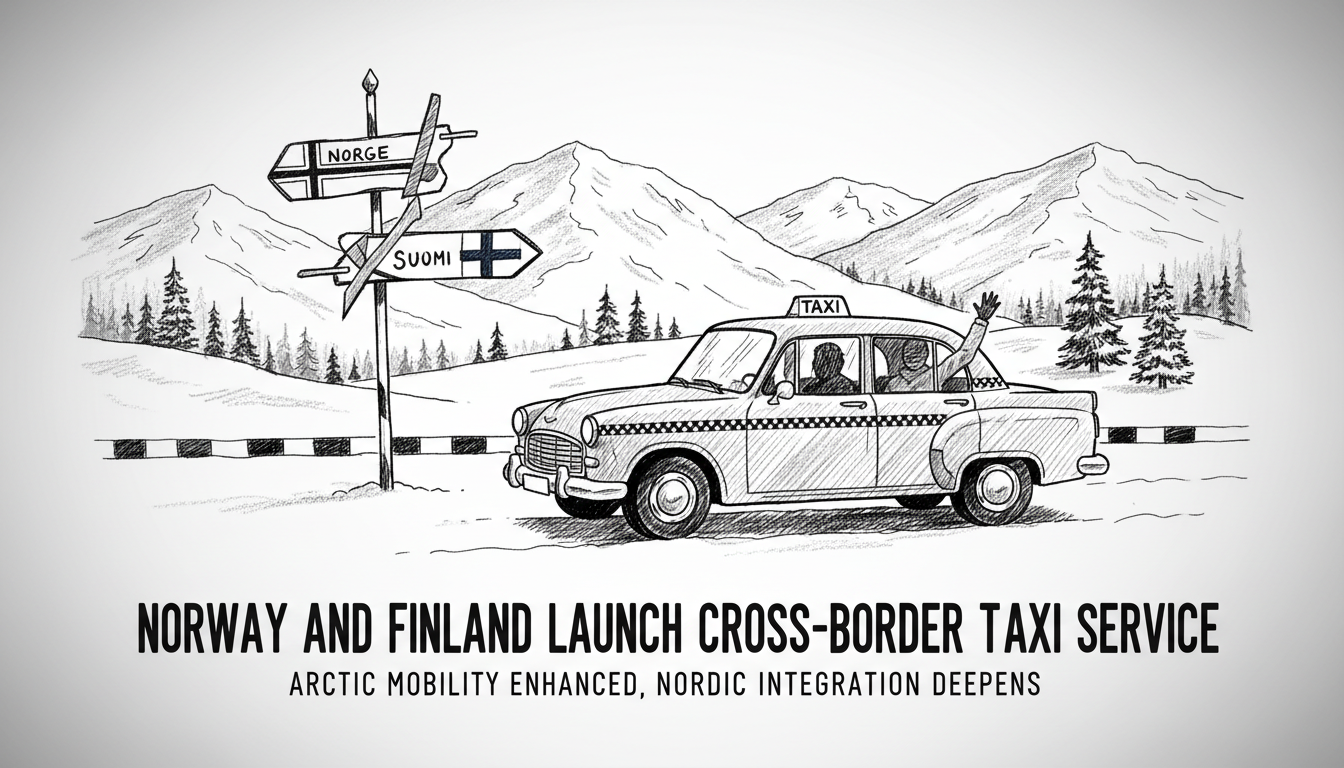
A new cross-border taxi agreement between Norway and Finland takes effect in mid-December. Passengers can now travel directly between the two countries without changing vehicles at the border. The Norwegian Ministry of Transport and Communications confirmed the policy change in a recent announcement. This marks a significant shift in Nordic transport policy. It directly impacts mobility in the strategically important Arctic region.
The previous system required a mandatory vehicle switch at the border crossing. This was a legacy of strict national licensing and insurance regulations. The new bilateral agreement, signed earlier this year, removes that barrier. It allows licensed taxi operators from either nation to pick up and drop off passengers across the international frontier. The change applies specifically to the northern land border between Finnmark county in Norway and Lapland in Finland.
This policy has clear implications for regional connectivity and the local economy. It simplifies travel for residents in remote border communities like Kirkenes and Inari. Tourists visiting the Arctic region will also benefit from more flexible transport options. The move aligns with broader Norwegian government goals for northern development. It supports the High North Strategy, which prioritizes infrastructure and mobility. The Storting has consistently allocated funds to improve Arctic logistics and transport links.
From a regulatory perspective, the change required careful negotiation. It involved harmonizing taxi licensing, insurance frameworks, and fare regulations. Officials from both transport ministries worked for months to finalize the details. The agreement demonstrates a practical approach to cross-border cooperation within the Nordic Council framework. It is a tangible result of the Nordic Transport Policy cooperation, which seeks to create a seamless regional transport area.
What does this mean for the taxi industry? Operators in border regions can now access a larger customer base. A driver from Vadsø can take a fare directly to Ivalo, Finland, and potentially pick up a return trip. This improves vehicle utilization and economic viability for small firms. It also introduces new competition, which could affect pricing and service quality. The market will need time to adjust to this new operational freedom.
The policy also touches on energy and environmental considerations. Many taxis in Norway, especially in the north, are electric or hybrid vehicles. Facilitating longer cross-border trips may influence charging infrastructure planning along the E75 highway. It could also impact the business case for operators investing in cleaner vehicle fleets. This small transport policy change is therefore connected to larger national goals on electrification and emission reductions.
The cross-border taxi service is a modest but symbolic step. It makes the border between two NATO allies and close Nordic partners feel less rigid. In a time of heightened geopolitical focus on the Arctic, such practical cooperation is noteworthy. It shows that everyday mobility and economic integration continue to progress, even amid broader strategic discussions about northern security and resources. The real test will be whether passengers and operators use the new freedom enough to make it a sustainable service.