
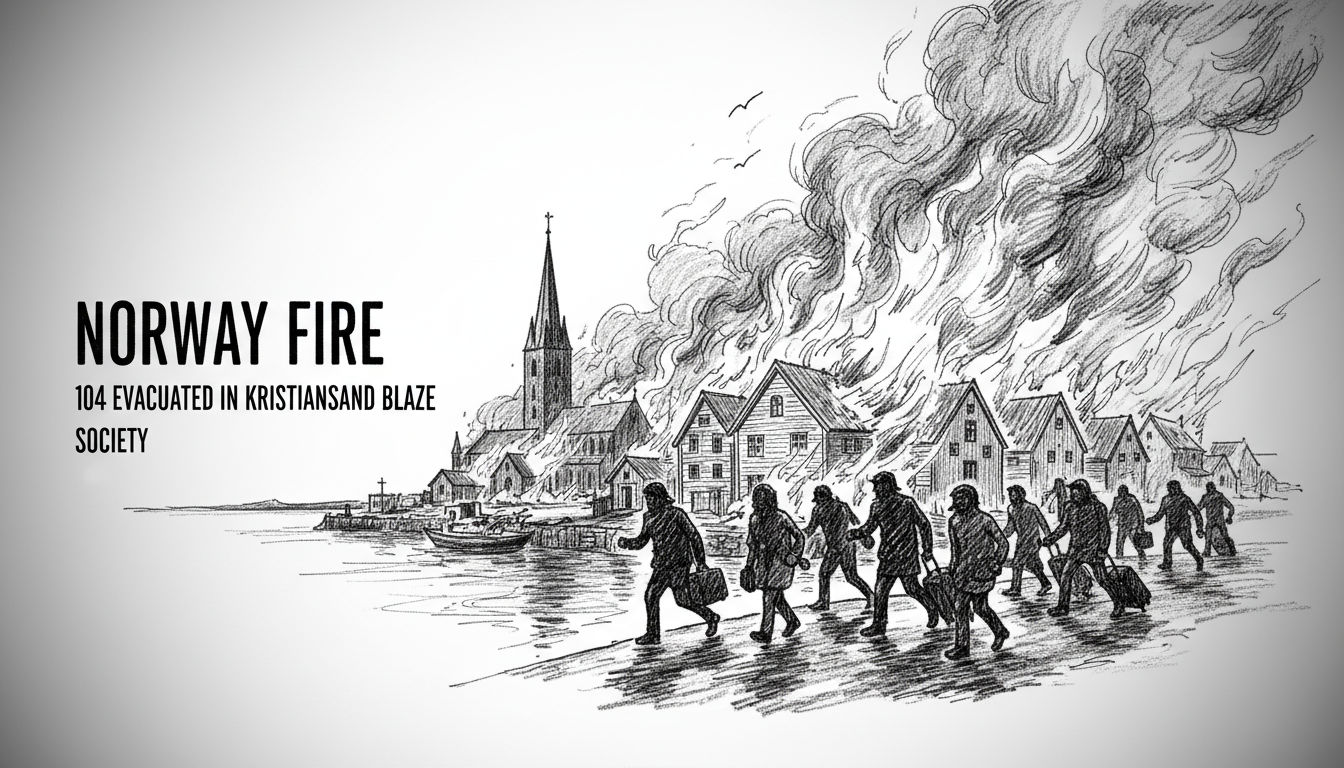
Norway fire news centers on Kristiansand after a major blaze in the city center forced 104 people from their homes. The evacuation order remains in effect as authorities investigate the extent of smoke damage inside the affected apartments. The cause of the fire, which broke out in a densely populated urban area, is currently unknown.
Ole Robert Strandhagen, the operations leader for the Agder Police District, confirmed the scale of the displacement. "A continuous assessment is being made about when they can move back," Strandhagen wrote in a police log. "It is currently unclear how much smoke has entered the apartments and this must be investigated."
The incident highlights the acute vulnerability of urban residential blocks to rapid-spreading fires. Kristiansand, Norway's fifth-largest city, is a key southern hub and popular tourist destination. Its compact city center, characterized by mixed-use buildings with residences above shops and cafes, presents unique challenges for fire containment and mass evacuation.
A Night of Disruption in Agder's Capital
The fire caused significant disruption in the heart of Kristiansand. Emergency services, including multiple fire crews and police units, cordoned off a section of the downtown area. The 104 evacuated residents were directed to temporary accommodation, with local authorities and the Norwegian Red Cross assisting. The sight of displaced families and individuals waiting with their belongings underscored the suddenness of the crisis.
Such large-scale evacuations are relatively rare in Norwegian cities, which boast strict building codes and high safety standards. The number 104 represents not just a statistic but a community abruptly uprooted. For many, the immediate concern is the integrity of their homes and possessions, pending the investigation into smoke infiltration. Smoke damage can render apartments uninhabitable for extended periods, requiring specialized cleaning and restoration.
"The uncertainty is the worst part for those evacuated," said a local community coordinator, who asked not to be named as they were not authorized to speak to the press. "They don't know if they'll be back in a day, a week, or a month. For families with children and elderly residents, this is a profound hardship."
Urban Density and Fire Safety Challenges
The Kristiansand fire places a spotlight on fire safety in Norway's urban centers. While Norwegian building regulations (TEK17) mandate robust fire prevention measures, including compartmentalization and the use of non-combustible materials, older buildings may not meet the latest standards. City center buildings often share walls, attics, and ventilation systems, creating potential pathways for fire and smoke spread.
Fire safety experts point to the critical importance of functional smoke detectors and clear evacuation plans in multi-unit dwellings. "In a dense urban setting, a fire in one unit becomes everyone's emergency," explained Lars Holen, a fire safety engineer based in Oslo. "Early warning from smoke detectors is paramount. Equally important is that residents know their building's evacuation plan and that common areas like stairwells are kept clear of obstructions. Seconds count."
Holen noted that while the fire cause is unknown, common triggers in residential settings include electrical faults, unattended cooking, and improper disposal of smoking materials. The investigation will likely focus on the point of origin and the performance of the building's passive fire protection systems, such as fire doors and wall seals, which are designed to contain a blaze.
Economic Ripple Effects for a Tourist City
Beyond the immediate human impact, the fire carries potential economic consequences for Kristiansand. The city center is the commercial and cultural heart of the region, home to boutique shops, restaurants, and service businesses. A prolonged closure of a building or block due to fire and smoke damage disrupts local commerce.
If structural damage is severe, reconstruction could take months, affecting ground-floor businesses and their employees. Kristiansand also markets itself as a charming, safe coastal destination, especially in the summer months leading up to its popular family festival. A major fire in the sentrum could subtly affect this image, though the city's robust emergency response demonstrates institutional strength.
"Local businesses already face enough challenges," said Kari Nilsen, head of the Kristiansand Chamber of Commerce. "An event like this hits a concentrated area hard. We hope the damage is limited and that the displaced residents and affected businesses receive swift support to recover."
The incident may prompt a wider review of fire preparedness in similar Norwegian city centers, from Stavanger to Trondheim. Municipalities balance historical preservation with modern safety upgrades, a complex and costly endeavor. This fire could accelerate inspections and public awareness campaigns in Kristiansand and beyond.
The Path Forward: Investigation and Recovery
The Agder Police District and fire investigation authorities now begin the meticulous work of determining the fire's cause. This process involves interviewing witnesses, examining the physical evidence at the scene, and potentially using forensic analysis. Until a cause is determined, speculation is unhelpful and could cause undue distress to those affected.
For the 104 evacuees, the immediate future hinges on the assessment of smoke damage. Specialized contractors will need to check each apartment for soot and toxic residues in walls, ducts, and soft furnishings. Cleaning and air quality testing must be completed before residents can safely return. The municipality is responsible for ensuring suitable temporary housing is available for the duration.
Insurance companies will also play a major role in the recovery phase. Most Norwegian homeowners and tenants have coverage for fire damage through their contents or building insurance. The scale of this event will test the capacity of adjusters and repair services in the Agder region.
This fire in Kristiansand serves as a stark reminder. It shows that even in a nation renowned for its safety and order, urban communities remain vulnerable to sudden, catastrophic events. The resilience of the city will be measured not just by the speed of the fire response, but by the effectiveness and compassion of the recovery that follows. The coming days will reveal whether this incident was a contained emergency or a catalyst for broader change in how Norway protects its urban hearts.