
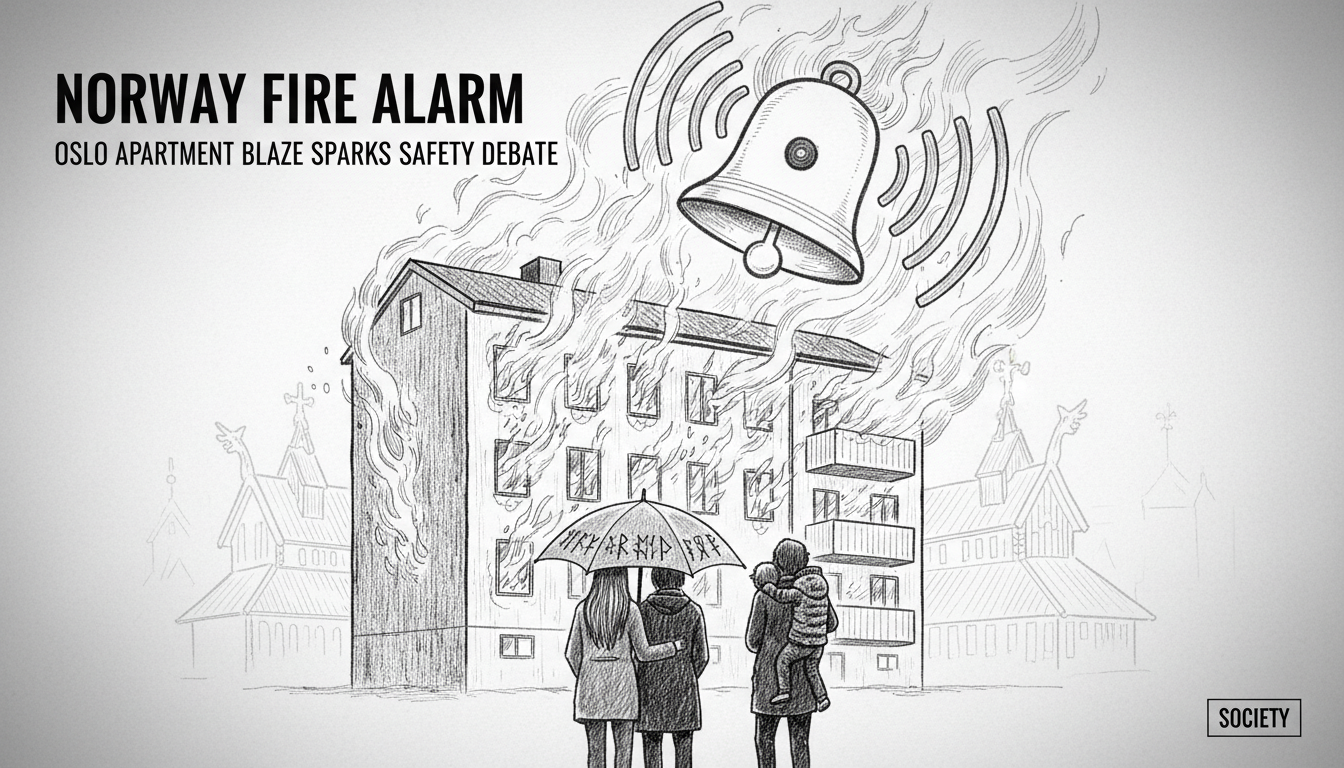
Norway fire services responded to a reported apartment blaze in Oslo's Grünerløkka district on Monday evening. The incident at a residential building on Sofienberg triggered automatic alarms and prompted an urgent response from emergency crews. Initial reports described open flames, creating a tense situation for residents in the densely populated neighborhood.
Operational manager Eirik Sannes confirmed the alarm activation in a police log statement. "The fire alarm is triggered and there is a report of open flames. The situation is unclear," Sannes wrote. The 110 Oslo emergency center received conflicting information as they mobilized. A duty commander provided an update at 8:45 PM, highlighting the confusion. "It is unclear whether it is a fire or not. We know that a fire alarm is going off and that a fire has been reported, but there is also a report of a light show in an apartment, so we are trying to figure this out now. We do not know if there are open flames."
Within a short time, police clarified the situation. They confirmed a minor fire outbreak that responders had already extinguished. Authorities determined no evacuation was necessary. The rapid resolution prevented what could have escalated into a serious building fire in a central urban area.
The Anatomy of an Urban Alarm
This incident exemplifies the complex reality of urban fire response in Norway. Automatic alarm systems in apartment buildings connect directly to the 110 Oslo emergency center. This direct link ensures firefighters can reach a scene within minutes, a critical factor in densely built areas. Oslo's fire service maintains one of Europe's fastest average response times, typically under five minutes for high-priority calls in the city center.
However, false alarms and minor incidents represent a significant portion of these calls. Cooking mishaps, steam from showers, and technical malfunctions commonly trigger sensors. The mention of a "light show" in the initial report suggests unusual indoor lighting, possibly from electronic equipment or decorative fixtures, may have contributed to the confusion. Each alarm requires a full emergency response until proven otherwise, draining resources and posing potential risks to responders traveling under priority conditions.
Fire safety expert Lars Holen, who has studied response protocols in Scandinavian cities, explains the balancing act. "The system is designed for worst-case scenarios. In an apartment building, a small fire can become lethal for dozens of people within three to five minutes. Therefore, every alarm is treated as a potential catastrophe until crews are on scene and can assess it. The cost of a false alarm is financial and operational. The cost of a slow response to a real fire is measured in lives."
Gentrification and Safety in Grünerløkka
The fire occurred in Sofienberg, a sub-district of Grünerløkka. This area has transformed dramatically over recent decades. Once a solidly working-class neighborhood centered around old industries, it is now a hub for young professionals, artists, and students. Property values have soared, and classic brick apartment buildings from the late 19th and early 20th centuries have been renovated. This architectural charm comes with inherent fire safety challenges.
Many of these beautiful old buildings contain original wooden structures within walls and under floors. Modern renovations often add new electrical systems and appliances to older frameworks. The population density is high, with buildings closely spaced along narrow streets. These factors create a specific risk profile that Oslo's fire department monitors closely.
"Historic districts like Grünerløkka present unique challenges," says Anette Larsen, a city planner specializing in building safety. "We have a responsibility to preserve architectural heritage while ensuring modern safety standards. This often means mandating upgraded alarm systems, fire-resistant materials in renovations, and clear access routes for emergency vehicles, even on small streets."
The Science of Fire Investigation
Following any fire incident, Norwegian police initiate an investigation to determine the cause. For a minor, extinguished fire like the one in Sofienberg, this process is typically straightforward. Investigators will examine the point of origin, looking for evidence of electrical faults, careless handling of ignition sources like candles or cooking equipment, or other accidental causes. The reference to a "light show" will likely be a key point of inquiry.
Intentional fires, or arson, are statistically rare in Norway but are treated with extreme seriousness. Police use forensic methods to detect accelerants and analyze burn patterns. In most apartment incidents, the cause is found to be accidental. National statistics show cooking-related incidents lead the causes of residential fires, followed by electrical faults and improper use of candles or fireplaces.
"The investigation serves two main purposes," explains Police Inspector Magnus Thoresen. "First, to establish facts for any insurance or liability proceedings. Second, and more importantly, to gather data that can prevent future incidents. If we see a pattern—for example, fires related to a specific type of charger or appliance—that information is shared with the national consumer safety authority for potential action."
A System Under Pressure
While this event ended without injury or major damage, it highlights the ongoing pressure on emergency services. Oslo's population growth and increasing urban density mean more alarms, more calls, and more complex incidents. Fire departments must continuously train for scenarios ranging from high-rise blazes to hazardous material spills, all while responding to numerous minor alarms.
Public education remains a cornerstone of fire prevention. Norwegian authorities consistently campaign for the proper installation and maintenance of smoke detectors. In rental apartments, landlords are legally responsible for installing detectors. Tenants are responsible for testing them monthly and replacing batteries. Despite this, firefighters still encounter disabled detectors, often because of nuisance alarms from cooking.
Technology offers new solutions. Some newer alarm systems feature multi-sensor technology that can better distinguish between steam, dust, and smoke. Smart home systems can now provide remote alerts to homeowners' phones and even give emergency services preliminary information about the location of a heat source within an apartment. These innovations are slowly being integrated into Oslo's building stock, but widespread adoption in older buildings takes time and significant investment.
The Human Element of Emergency Response
Behind the official statements and protocols are the human decisions made in moments of uncertainty. The duty commander who must interpret vague initial reports, the firefighters suiting up not knowing if they are heading to a light display or a life-threatening blaze, and the residents hearing sirens approach their building—all experience the acute stress of these situations.
The swift resolution in Sofienberg is a testament to a system working as intended. A potential threat was identified, resources were deployed with maximum urgency, and the situation was brought under control. The alternative—a delayed response to a genuine, growing fire—is unthinkable. This explains why the system is calibrated for caution, even at the risk of frequent false alarms.
As cities like Oslo grow taller and denser, the calculus of fire safety becomes ever more critical. Each minor incident provides data and reinforces the need for vigilance, both from emergency services and from residents themselves. The old brick buildings of Grünerløkka will stand for centuries more, but the technology and strategies to keep them safe must continue evolving, one alarm at a time.