
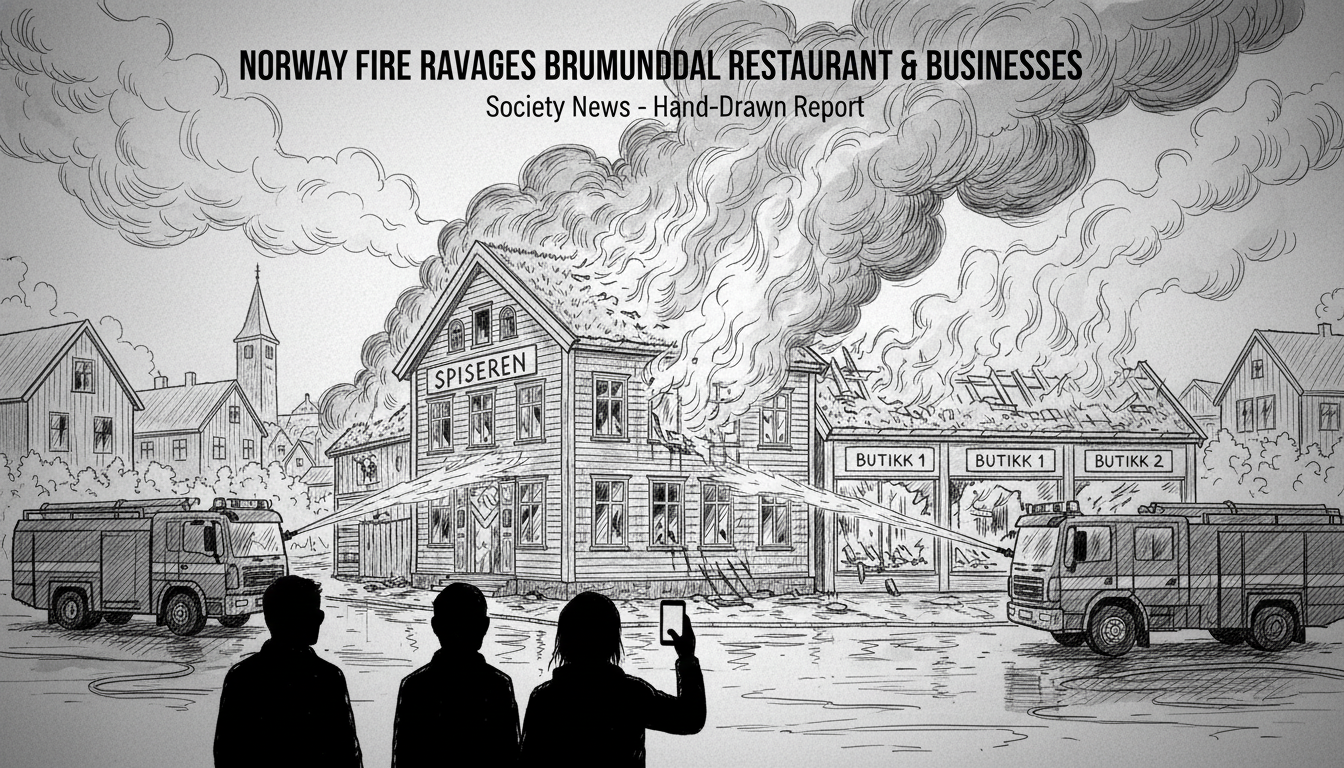
Norway fire crews contained a Brumunddal restaurant blaze within 30 minutes early Sunday, but smoke infiltration has impacted multiple adjacent businesses, police confirmed. Emergency services received the alarm at 04:32, with operations leader Vidar Flokenes of the Innlandet Police District noting the scene remains cordoned off for investigation. The rapid response prevented total destruction, yet the incident underscores vulnerabilities for small enterprises in rural communities.
Immediate Response and Containment
Police reported the fire extinguished by approximately 05:00, just over half an hour after the first alert. Flokenes emphasized that while flames were quickly suppressed, smoke spread through shared ventilation or building structures, affecting several commercial spaces at the address. No injuries were reported, a relief given the early morning timing when the restaurant was likely closed. Investigators have now launched a formal inquiry to determine the fire's origin and cause, standard procedure for such incidents.
Fire safety experts point to common ignition sources in restaurants, including electrical faults, kitchen equipment, or heating systems. "In older buildings, especially in smaller towns, compliance with modern fire codes can be inconsistent," said Lars Hansen, a former fire chief now consulting on industrial safety. He added that smoke damage often proves more costly than flame damage for businesses, requiring extensive cleaning and inventory replacement.
Brumunddal's Community and Economic Context
Brumunddal sits in Ringsaker Municipality within Innlandet county, a region known for its agricultural heritage and proximity to Lake Mjøsa. With a population around 10,000, the town serves as a local hub for commerce and services. This fire strikes at the heart of its small business sector, where independent shops and eateries operate on thin margins. The affected restaurant, yet unnamed by authorities, likely contributed to local tourism and daily life.
Economic ripple effects could be significant. Smoke contamination may force neighboring businesses to close temporarily for remediation, leading to lost revenue and potential job disruptions. In Norway, where property insurance is widespread, claims processes can be lengthy, straining cash flow. "For a family-run shop, even a week of closure can be devastating," noted Anna Larsen, an economist specializing in regional development. "We often see communities rally, but the financial toll is real."
Investigation Priorities and Expert Insights
Police investigators will meticulously examine the restaurant's premises, focusing on electrical panels, cooking areas, and any recent renovations. Forensic teams often use thermal imaging and residue analysis to pinpoint ignition points. Given the speed of containment, the fire likely started in a confined area, but smoke traveled through ducts or wall cavities.
"The 30-minute extinguishment time suggests effective firefighting, but it also indicates the blaze was intense enough to generate substantial smoke quickly," Hansen explained. He noted that Norwegian building codes mandate smoke detectors and fire barriers in commercial spaces, but older structures like those in Brumunddal's downtown may have grandfathered exemptions. Compliance checks typically fall to municipal authorities, with periodic inspections.
This incident aligns with broader Norwegian fire statistics. According to the Directorate for Civil Protection (DSB), approximately 200 restaurant or café fires occur annually in Norway, with most caused by technical failures or human error. Early morning fires, while less common, often result from equipment left on overnight or faulty wiring. The DSB emphasizes regular maintenance and staff training as critical prevention measures.
Community Resilience and Support Networks
Local residents and business owners in Brumunddal have already expressed concern on social media, offering assistance to those affected. Such solidarity is typical in Norwegian towns, where community bonds are strong. The Ringsaker municipality may activate its crisis support framework, providing counseling and logistical aid to displaced entrepreneurs.
Mayor Kai Ove Berg of Ringsaker highlighted the town's resilience in a statement. "We have faced challenges before, and our community always pulls together. Our priority is ensuring the affected businesses receive the help they need to recover." He added that municipal services are coordinating with insurance assessors and fire investigators to streamline recovery.
Beyond immediate aid, this fire raises questions about infrastructure investment in rural Norway. Many small towns have historic building stocks that require upgrades to meet evolving safety standards. Government grants for fire suppression systems exist, but application processes can be complex. "This could be a wake-up call for property owners to review their fire preparedness," Hansen said.
Looking Ahead: Recovery and Prevention
The police investigation may take weeks, with findings submitted to the Fire and Explosion Investigation Board (BEI) if criminal negligence is suspected. Insurance adjusters will assess damages, which could range from hundreds of thousands to millions of Norwegian kroner, depending on the extent of smoke contamination and business interruptions.
For Brumunddal, the path forward involves cleanup, repair, and reflection. Restaurants and shops in Norway often incorporate wood and traditional designs, which can exacerbate fire risks if not properly managed. Experts recommend installing advanced ventilation filters and dual-sensor smoke alarms to mitigate smoke spread.
As the community rebuilds, this incident serves as a stark reminder of the fragility of small businesses in the face of unforeseen disasters. Will it spur wider adoption of fire safety measures in rural commercial districts? The answer may shape Brumunddal's recovery and set a precedent for similar towns across Innlandet and beyond.