
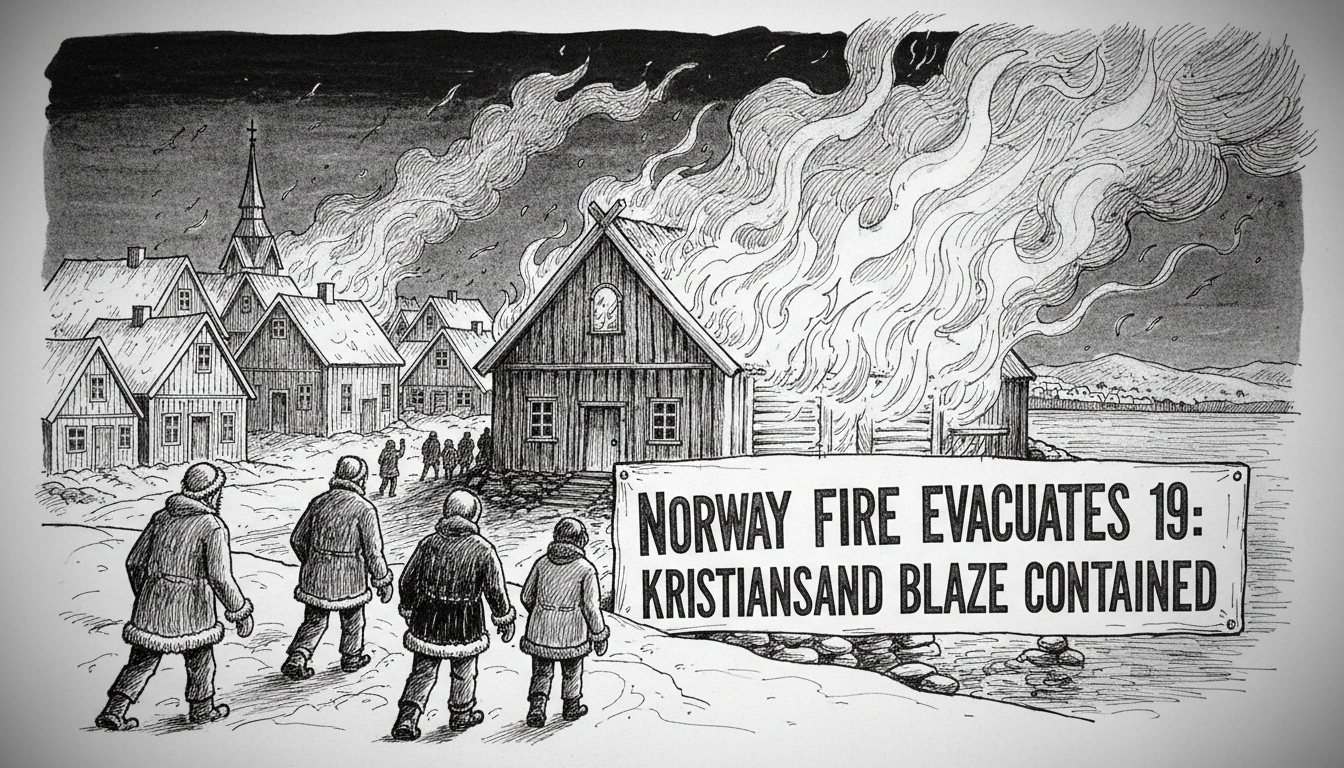
Norway's emergency services evacuated 19 people from a burning building in Kristiansand early Sunday morning. The Agder police district reported the fire in Tordenskjolds gate at 5:49 AM, with thick smoke prompting warnings for nearby residents to keep windows closed. Kristiansand municipality is now assisting those displaced from the building, which housed both a commercial space and residential units.
Firefighters from the local Brannvesen, supported by police, worked for hours to contain the blaze. The operation required a coordinated response to secure the structure and protect adjacent buildings. Residents in neighboring properties were also evacuated as a precautionary measure. The cause of the fire is not yet known, and investigators will examine the scene once it is declared safe.
A Coordinated Emergency Response
The incident activated Norway's integrated civil protection system. The Sivilforsvaret, the national Civil Defence agency, was alerted alongside municipal crisis teams. This protocol ensures resources for shelter, logistics, and citizen support are mobilized quickly. "When people are forced from their homes, even temporarily, a structured municipal response is critical," said a crisis management advisor familiar with southern Norway's procedures. "The focus shifts from just fighting the fire to caring for those affected."
Local authorities established a temporary reception center for the evacuees. The Red Cross and other volunteer organizations often assist in such situations, providing necessities and information. The speed of the initial evacuation, conducted in the early morning hours, likely prevented injuries. Police cordoned off the area to allow emergency vehicles unimpeded access and to ensure public safety.
The Role of Norway's Civil Defence
This fire illustrates the everyday work of Sivilforsvaret beyond its traditional wartime role. The agency's mandate covers peacetime disasters, including major fires, floods, and industrial accidents. It maintains equipment and trained personnel across the country, ready to support local fire and police departments when needed. Their involvement often includes technical expertise in hazardous situations and manpower for large-scale operations.
In Kristiansand, a key port city in southern Norway, building density in older neighborhoods can pose specific challenges. Narrow streets like Tordenskjolds gate can complicate access for modern fire trucks. This makes early detection and rapid intervention by first responders even more vital. Norway's strict building codes, which mandate fire alarms and compartmentalization in multi-use buildings, are designed to contain fires and provide safe egress.
After the Flames: Investigation and Recovery
The immediate danger has passed, but the process of recovery and investigation is just beginning. Fire safety engineers will work to determine the fire's origin and path. They will assess whether safety systems functioned as intended. For the 19 evacuated residents, the primary concern is when they can return home. Structural damage from fire, water, and smoke can render apartments uninhabitable for extended periods.
Insurance assessments and repairs must be coordinated. The building's commercial tenant faces significant business disruption. Kristiansand municipality's social services will work with individuals who may have lost belongings or need alternative housing. "The community aspect is important," the advisor noted. "Neighbors often provide immediate support, but longer-term needs require official channels."
A Broader Look at Urban Fire Safety
While this fire was successfully managed, it prompts examination of urban fire risks. Norway has seen several significant blazes in recent years, including devastating wildfires and apartment fires. Each incident tests emergency protocols and leads to reviews of safety regulations. Experts consistently emphasize the importance of functional smoke detectors, clear escape plans, and public awareness.
For historic city centers, balancing preservation with modern safety standards is an ongoing challenge. Retrofitting old electrical systems and improving fire barriers are costly but necessary investments. The Norwegian Directorate for Civil Protection (DSB) regularly publishes safety advice and conducts audits of public buildings and multi-occupancy residences.
The Human Impact of Sudden Displacement
Behind the number—19 evacuees—are individual stories of sudden loss and uncertainty. Being awakened by alarms and forced to leave one's home with minimal belongings is a traumatic event. The psychological impact of such a disruption, even if temporary, should not be underestimated. Community support and clear communication from authorities are essential for mitigating this stress.
Local news outlets in Agder county will likely follow the personal stories of those affected in the coming days. This community-focused reporting highlights the human dimension behind the official statements. It also fosters a sense of solidarity, which is a cornerstone of the Norwegian concept of "dugnad," or communal work.
Lessons for Preparedness
This early morning fire serves as a stark reminder for all households. Checking smoke alarm batteries, knowing fire escape routes, and having a prepared emergency kit are simple steps that save lives. For city planners and regulators, it reinforces the need for continuous investment in emergency service capacity and infrastructure.
The response in Kristiansand demonstrates a system working as designed: police, fire, civil defence, and municipal services cooperating under a unified command. The efficiency of this coordination directly influences outcomes. As the investigation proceeds, any findings will be integrated into national safety training and guidelines, contributing to the collective preparedness for the next inevitable emergency.
Norway's resilience is built on such protocols, tested not in theory but in the cold, smoky reality of a Sunday dawn in Kristiansand. The ultimate measure of success is not just the extinguished flames, but the effective care for the 19 citizens who suddenly found themselves in need.