
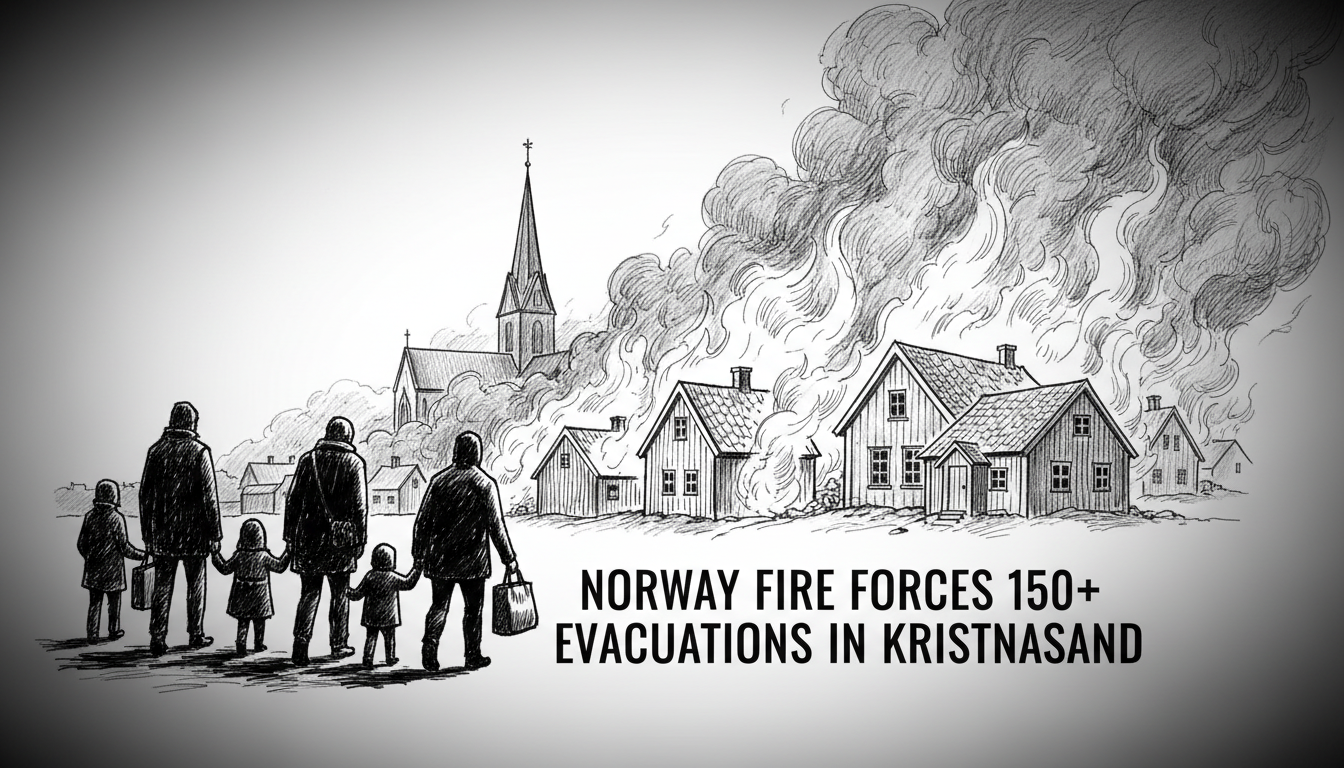
Norway fire services are battling a major blaze in Kristiansand city center that has forced the evacuation of over 150 apartments. The fire, which began in a ground-floor shop early Sunday morning, spread rapidly to upper floors and the attic of a wooden building, threatening a large residential complex known as Byhaven.
A Chaotic Sunday Morning
Residents of the Byhaven complex were awakened by sirens and urgent knocks on their doors as police and emergency crews moved from apartment to apartment. The operation, described as methodical but urgent, aimed to clear the entire complex of approximately 150 units. Evacuees were directed to the Ernst Hotel, which was established as an emergency shelter. "Due to the danger of spread and heavy smoke, these people are being evacuated to Ernst Hotel, which is becoming a center for the evacuees," said operations manager Ole Robert Strandhagen. Initial reports confirmed 19 people were evacuated from the immediate fire zone before the decision was made to clear the entire adjacent building.
The fire's origin in a corner unit of a city block presented immediate challenges. Firefighters struggled to access the burning structure, which was burning inward toward a rear courtyard. "This is on a corner of a block, and it is difficult to get to. It is burning into a backyard, which you have to try to extinguish from several sides with two ladder trucks," said Grunde Homme, a watch manager with the emergency services. He estimated it would take several hours to gain full control, a prediction that proved accurate as the fire continued to burn unchecked through the morning.
Containing a Spreading Threat
As thick smoke billowed over the city center, the response escalated. The Civil Defense was alerted to assist fire services with extinguishing efforts and police with the large-scale evacuation. The use of heavy excavators became a visible and dramatic symbol of the struggle. Machinery was deployed to demolish sections of an adjacent building, a tactical move to create a firebreak and prevent the flames from jumping to other structures, including the historic Tordensjolds Hus. "We do not have control of the fire yet," Strandhagen confirmed to local media, highlighting the ongoing danger.
Sigurd Paulsen, the emergency preparedness chief for Kristiansand municipality, outlined the broader civic response. His team's focus shifted to humanitarian aid, securing hotel accommodations and providing psychosocial support for those displaced. "We help those who need a roof over their head or psychosocial follow-up," Paulsen said. This shift from pure firefighting to community care marks the second phase of any major urban disaster, where the immediate threat is followed by a prolonged period of displacement and recovery for residents.
The Persistent Risk of Urban Fires
This incident underscores a recurring vulnerability in Norwegian and broader Scandinavian cities: historic urban cores built with wood. Kristiansand, while a modern regional hub for Agder county and a popular tourist destination, retains architectural character in its center. Fires in such densely packed, older wooden buildings can be exceptionally volatile and difficult to contain. The rapid vertical spread from a first-floor shop to the attic demonstrates how quickly fire can travel through void spaces and old timber.
Fire safety experts consistently point to early detection and compartmentalization as critical defenses in these environments. Once a fire breaches a building's compartment, as it did in this case, the risk of a total loss increases significantly. The decision to use excavators, while drastic, is a recognized last-resort tactic. It sacrifices a portion of a structure to save a greater whole, a calculated risk made by incident commanders on the scene. The success of such an operation hinges on precise execution under extreme pressure.
Community and Recovery Ahead
The coming days will focus on damage assessment and supporting the displaced community. For the residents of Byhaven, the primary question is when, or if, they can return home. Structural integrity checks, smoke damage, and utility safety inspections must all be completed before re-entry is possible. Some may face prolonged displacement. The municipal support system, now activated, will be tested in providing clear information and sustained assistance, from housing to mental health resources.
The cause of the fire remains unknown and will be the subject of a detailed investigation by fire authorities. This probe will examine the building's construction, the commercial unit where the fire started, and the overall response timeline. Lessons learned could influence local fire safety regulations and building codes, particularly for mixed-use historical properties.
For now, Kristiansand's city center bears the scars of a sudden disaster. The incident is a stark reminder that despite advanced emergency services, urban fires remain a powerful and unpredictable force. It disrupts lives in minutes and leaves a community to grapple with the aftermath long after the last ember is cold. The true test for Kristiansand begins now, in the coordinated effort to heal and rebuild.