
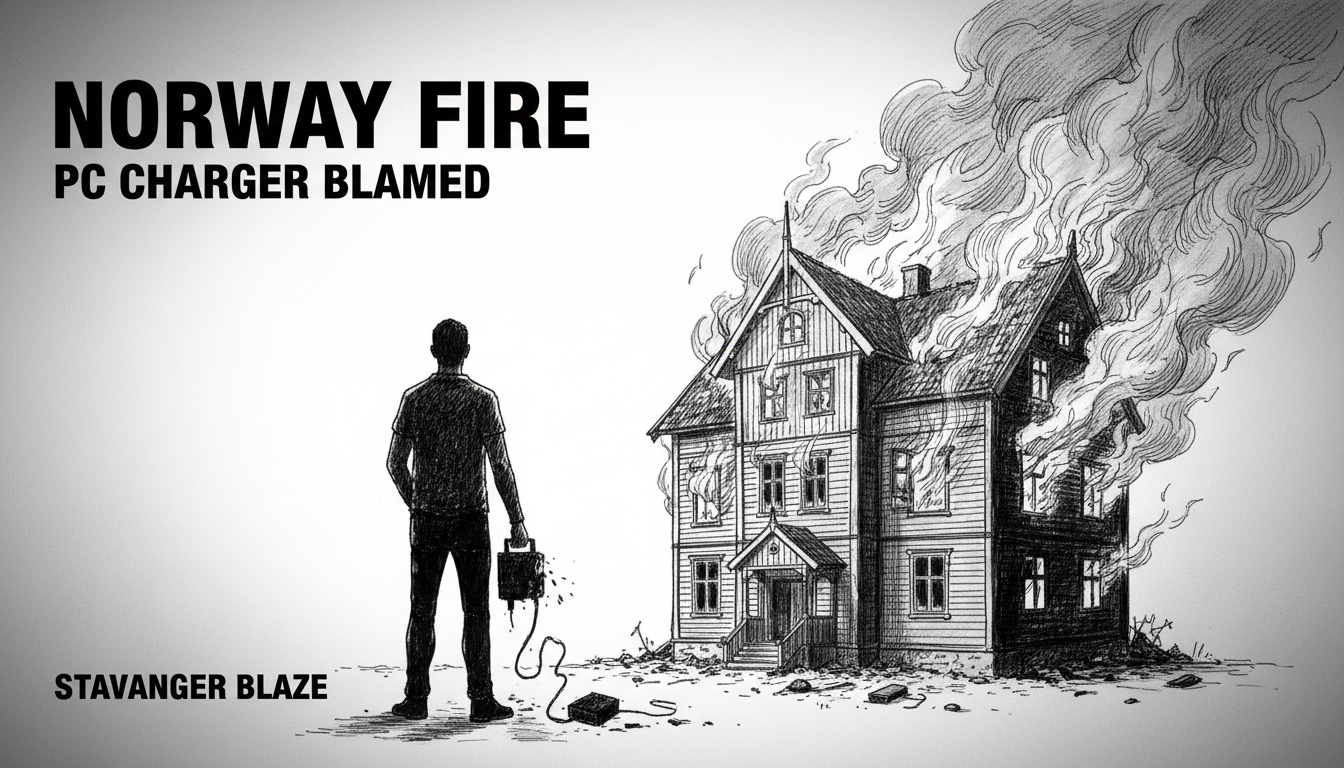
Norway emergency services responded to a residential fire in Stavanger's Åsen district on Tuesday evening. Four residents were safely evacuated from the smoke-filled property and received medical attention. Preliminary findings from police indicate the fire likely originated in a computer charger.
Firefighters from the Stavanger Fire and Rescue Service arrived at the scene to find smoke billowing from the building but no visible flames from the exterior. Specialist smoke divers entered the residence to assess and combat the fire. "The fire has likely started in a PC charger," said operations manager Victor Fenne Jensen of the South-West Police District in a statement released at 20:26 local time.
A Swift Emergency Response
The coordinated response highlights Norway's integrated emergency service model. Police, fire, and medical personnel worked simultaneously to secure the scene, fight the fire, and care for the evacuated residents. The property was ventilated to clear toxic fumes, a critical step following any electrical fire. While the four individuals were reported safe, standard procedure following smoke inhalation involves assessment by healthcare professionals for potential respiratory complications.
This incident occurred in a residential area of Åsen, a neighborhood within Norway's oil capital. Stavanger's status as a major economic hub did not influence the cause, but it underscores the city's dense population and the universal risk of household fires. The rapid containment prevented the blaze from spreading to adjacent properties, a significant concern in residential districts.
The Hidden Danger in Everyday Devices
The suspected cause points to a widespread but often underestimated risk. "Electrical faults in consumer devices, including chargers, power banks, and battery packs, are a consistent cause of household fires we investigate," said a fire safety engineer with the Norwegian Directorate for Civil Protection (DSB), who spoke on background. "These devices contain lithium-ion batteries and circuitry that can fail, especially if using non-certified chargers, overloading sockets, or leaving devices charging unattended for extended periods."
Norwegian authorities have repeatedly warned consumers about purchasing cheap, uncertified electrical goods from online marketplaces that may not meet EU (CE) or Norwegian (S) safety standards. A charger that overheats can ignite nearby combustible materials like curtains, furniture, or bedding within minutes. The DSB recommends using only original manufacturer chargers or products with reputable safety certifications, and never charging devices on soft surfaces like beds or sofas that can trap heat.
Building Safety and Evacuation Protocols
The successful evacuation of all four residents speaks to effective alarm systems and clear escape routes. Norwegian building codes, particularly for multi-unit dwellings, mandate interconnected smoke alarms and fire-resistant materials in certain structures. Investigators will examine whether the building's safety features performed as intended.
"In any fire investigation, we look at three core elements: the ignition source, the fuel that allowed it to spread, and the human factors involved," the DSB engineer explained. "For electrical fires, we conduct a forensic examination of the suspected device and the home's electrical installation. We also assess if working smoke alarms were present and whether they provided adequate early warning."
The fact that smoke was reported before visible flames suggests smoke detectors likely activated, giving occupants crucial time to escape. This aligns with Norway's public safety campaigns emphasizing the life-saving function of regularly tested smoke alarms.
A Local Incident with National Relevance
While this fire was swiftly managed, it serves as a microcosm of national safety challenges. The Norwegian Fire Protection Association (Norsk Brannvernforening) estimates that electrical faults cause approximately one-third of all building fires in Norway each year. These incidents result in significant property damage, though fatalities have decreased due to improved prevention and detection.
Stavanger Municipality, like all Norwegian communes, has a responsibility for local fire prevention education. This event may prompt renewed local campaigns focusing on electrical safety in the home. The South-West Police District will finalize its report on the incident, which will be logged with the DSB for national statistics and trend analysis.
For the residents of the Åsen property, the next steps involve working with insurance assessors and building professionals to survey the damage. Smoke and water damage can often be more extensive than fire damage itself, requiring specialized cleaning and restoration. The psychological impact of a home fire is also recognized, with support services available through municipal health services.
A Preventable Reminder
This Stavanger fire ended without tragedy, but it functions as a stark reminder. Modern homes are filled with potential ignition sources, from laptops and phones to kitchen appliances and heating devices. Norwegian safety experts advocate for a proactive approach: use certified products, avoid daisy-chaining extension cords, unplug non-essential devices when not in use, and never leave charging devices unattended overnight.
The incident also showcases the efficiency of Norway's emergency response framework, where police, fire, and health services integrate seamlessly. Their quick action turned a potentially deadly event into a manageable incident. As one firefighter at the scene noted, the best fire is the one that never starts. This near-miss in Stavanger underscores that vigilance with everyday technology is the first and most important line of defense.