
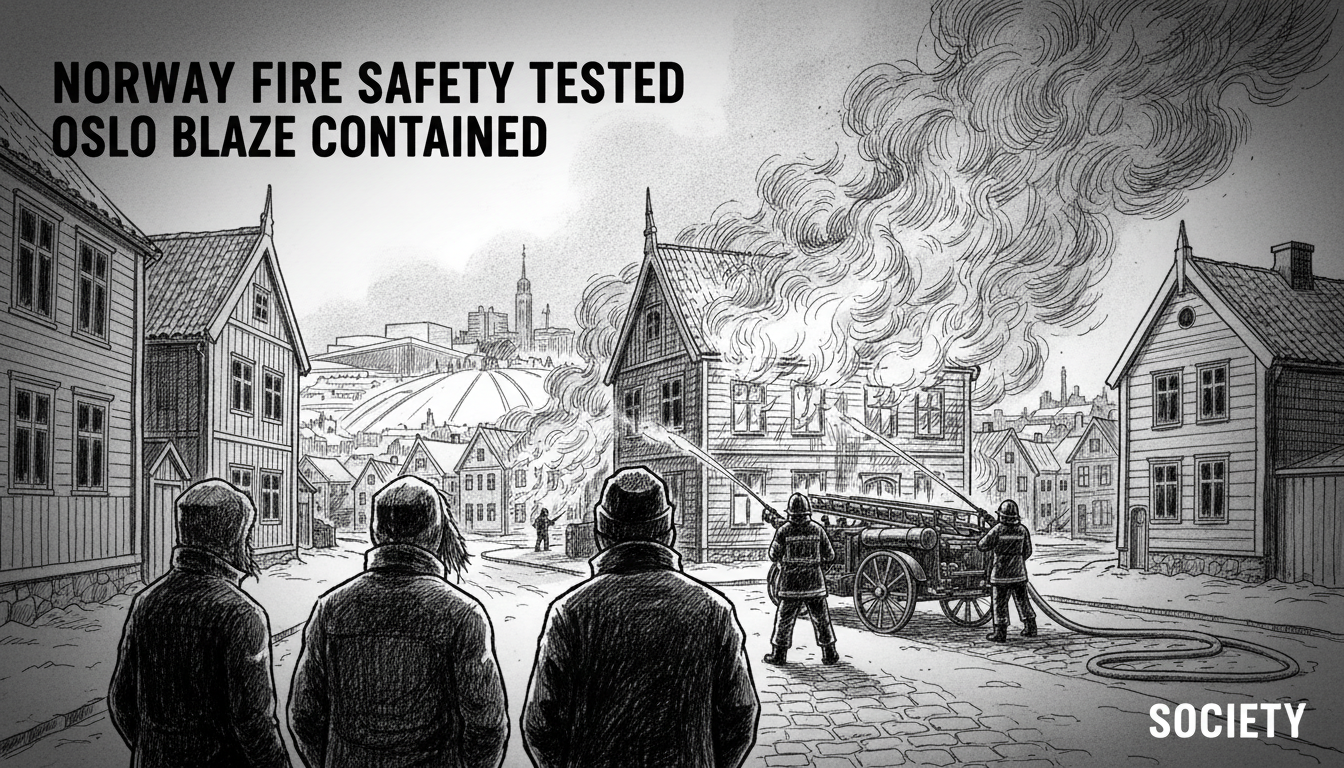
Norway's emergency services contained a minor apartment fire in central Oslo Monday evening, preventing potential disaster in a historic neighborhood. The blaze broke out in a residential building on Sofienberggata in the Grünerløkka borough, a densely populated area known for its 19th-century architecture. Oslo Police District confirmed the fire was extinguished quickly and no evacuation of residents was necessary. This incident, while minor, casts a spotlight on the persistent challenge of fire safety in Norway's aging urban building stock.
A Swift Response on Sofienberggata
Emergency vehicles converged on Sofienberggata shortly after reports of activated fire alarms and visible flames. Firefighters from the Oslo Fire and Rescue Service arrived to find a small, developing fire within the apartment building. Their rapid intervention limited damage to the unit of origin. Police sealed off the immediate area as a standard precaution, but traffic and pedestrian flow in the vibrant district resumed normal patterns within hours. The building's residents were able to remain in their homes, a testament to the fire's limited scope and the effectiveness of the initial response.
The Grünerløkka Context: Charm and Risk
Grünerløkka, situated on Oslo's east side, is a cultural hub with a mix of cafes, independent shops, and residential blocks. Its popularity stems in part from its distinctive character, much of which is housed in buildings constructed between 1880 and 1920. These structures often feature wooden joists, narrow stairwells, and original facades. While meticulously maintained, their age and original construction materials present inherent fire safety challenges not found in modern concrete high-rises. A fire in such a building, if not caught early, can spread rapidly through voids and channels in the old timber framework.
Expert Analysis: Prevention in Older Buildings
Fire safety experts point to this incident as a successful case study in early detection and response. "The ideal outcome is a small event that is reported immediately and dealt with before it escalates," said a senior fire prevention officer with the Directorate for Social Security and Preparedness (DSB). "This appears to be exactly what happened in Grünerløkka. The alarms functioned, the call was made promptly, and resources were deployed effectively." The expert emphasized that the cornerstone of safety in older buildings is a layered approach: working smoke detectors in every unit, clear escape routes, resident awareness, and swift emergency service intervention.
Norway has stringent fire codes, but retrofitting historic buildings with modern sprinkler systems or extensive compartmentalization can be prohibitively expensive and architecturally invasive. This creates a balancing act between preserving cultural heritage and ensuring resident safety. The DSB regularly runs public information campaigns stressing the importance of not overloading electrical circuits, proper storage of flammable materials, and never disabling smoke alarms—common risks in apartments of any age.
National Fire Safety Landscape and Statistics
While Norway has a strong record on fire safety, incidents in residential buildings remain a primary concern for authorities. According to the latest official statistics from the DSB, Norwegian fire departments respond to approximately 11,000 building fires annually. A significant portion of these are in residential properties. Fatalities are relatively low compared to other nations, a fact often attributed to high building standards, widespread use of smoke detectors, and a well-funded emergency response infrastructure. However, each fire carries the potential for tragedy, especially in densely populated urban zones like central Oslo.
The Role of Emergency Services and Public Vigilance
The Oslo Fire and Rescue Service operates a network of stations strategically placed to maintain rapid response times across the capital. Their effectiveness relies on continuous training and public cooperation. "The first few minutes of a fire are critical," the DSB officer noted. "Public vigilance—seeing smoke, hearing an alarm, and calling 110 immediately—is often the first and most important link in the chain of survival." This week's event underscores that partnership. A neighbor or resident reported the flames quickly, setting the successful containment operation in motion.
Looking Ahead: Policy and Preparedness
This minor fire will likely result in a standard inspection report from the Oslo Fire Department, which may recommend specific safety improvements for the building in question. On a broader policy level, the Storting continues to review and update national fire safety regulations. Recent discussions have focused on strengthening requirements for battery-powered smoke detectors and exploring subsidies for safety upgrades in protected historic buildings. The governing coalition has indicated that urban safety, including fire prevention, is a priority in its municipal policy platform.
For residents of Oslo's charming older neighborhoods, the incident is a quiet reminder. The very wooden floors and vintage details that define their homes also require respect and proactive care. Ensuring that smoke detectors have fresh batteries, knowing escape routes, and avoiding fire hazards are simple, individual actions that contribute to collective safety. The successful handling of the Sofienberggata fire demonstrates a system working as intended, but it is a system that depends on constant vigilance from both the authorities and the public.
As Oslo continues to grow and its historic cores remain desirable places to live, the dialogue between preservation and modern safety standards will persist. Can a city built heavily of wood and brick in the 19th century meet the impeccable safety expectations of the 21st? Monday's event suggests that with the right mix of technology, timely response, and public awareness, it can. The real test, however, is ensuring that outcome every single time, across thousands of similar buildings, as the city sleeps.