
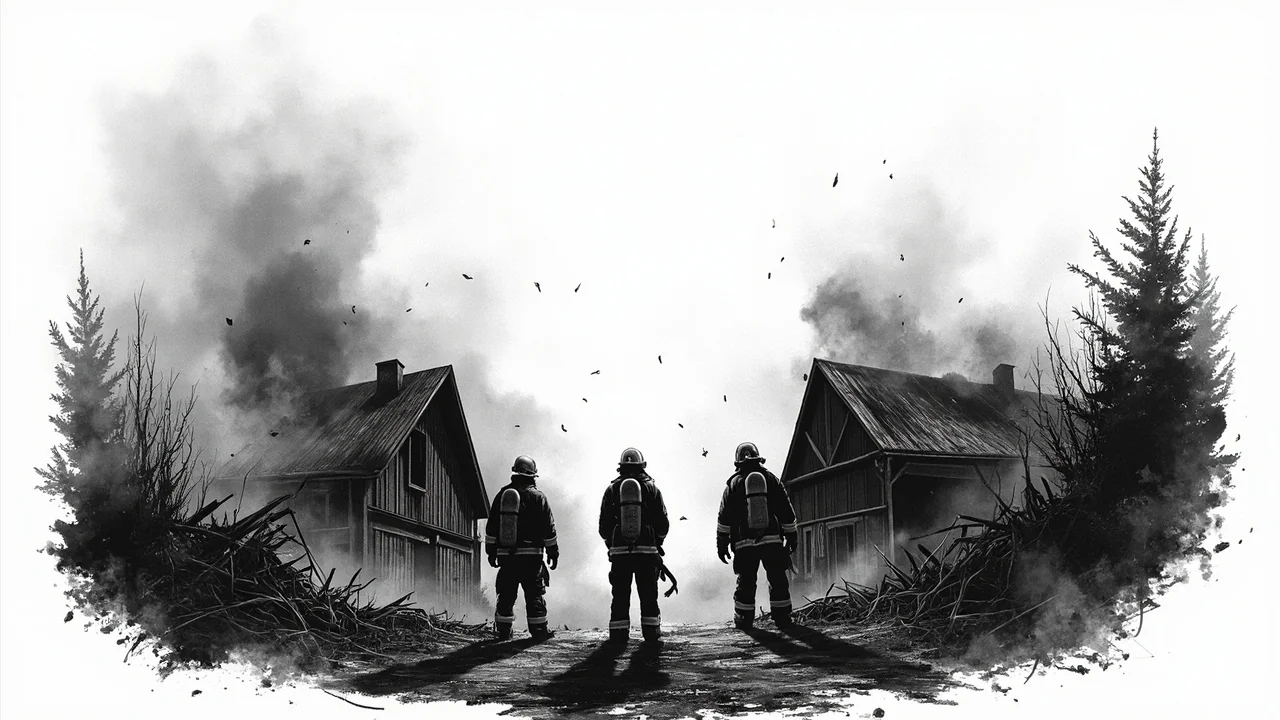
Norway's close-knit community of Verdal is mourning the loss of two veteran firefighters after a fatal house fire. The deaths of 51-year-old Roger Kvello Hansen and 58-year-old Geir Otto Lein Johnson have sent shockwaves through the small Trøndelag town of 15,000 residents. Flags flew at half-mast outside the town hall this week, a stark visual symbol of a community united in grief.
A Community in Mourning
The fatal fire occurred in the early hours of Sunday morning. Eleven of the local fire station's eighteen personnel responded to the call. Only nine returned home. Outside the Verdal fire station, lit candles and red rose petals now contrast sharply against the white snow covering the black asphalt. The scene marks a solemn tribute to the colleagues lost. Fire Chief Håvard Bye described the two men as highly experienced smoke divers. "It is terribly difficult," he said in a statement hours after the blaze.
The impact is deeply personal in a town where, as Mayor Knut Snorre Sandnes notes, everyone knows each other. "I knew them. I know their wives, and their children. That's how it is when you live in a place like this," Sandnes said. He described both men as active and engaged citizens with large local networks. A memorial service held on Wednesday evening drew crowds from the emergency services, colleagues, and many young people from the community.
The Aftermath and Investigation
At the center of the residential neighborhood, close to Verdal's town center, darkness now occupies a space where a home once stood. Only soot-covered ruins remain, a grim void in a streetscape still illuminated by Christmas lights. Neighbor Odd Inge Grøtheim was awakened by police knocking on his door that night. "It is sad. This concerns all of us in the local community," Grøtheim said. "The job the fire service does—they risk their own lives to help the rest of us. I feel for those who have lost their loved ones.
The precise circumstances that led to the firefighters' deaths remain under investigation by local police and relevant safety authorities. The incident raises immediate and difficult questions about operational procedures, equipment, and the inherent dangers of interior firefighting, known as smoke diving. Norway's Directorate for Civil Protection (DSB) will likely scrutinize the event as part of its mandatory investigation into serious fire service accidents.
The Inherent Risks of Smoke Diving
This tragedy casts a national spotlight on the perilous work of Norway's municipal fire services, particularly the role of smoke divers. These firefighters enter burning structures to perform search and rescue and to attack the seat of a fire. They work in conditions of zero visibility, intense heat, and rapidly changing structural integrity. The term "smoke diver" itself denotes specialized training for these high-risk interior attacks.
While comprehensive national statistics on firefighter fatalities are compiled over time, each loss resonates profoundly within Norway's relatively small and interconnected professional and volunteer fire corps. The Verdal deaths follow other line-of-duty deaths in recent years, reminding the public that firefighting is not just a community service but a regularly hazardous occupation. Risk is managed through training, technology, and protocol, but it can never be fully eliminated.
A National Conversation on Safety
The Verdal fire will inevitably prompt a review of safety protocols within the Norwegian fire service. Experts will examine the timeline of the response, the command decisions made, the equipment used, and the nature of the structure involved. Key questions will focus on building construction, potential collapse risks, and the communication and accountability systems for personnel inside a burning building.
Norway has detailed regulations governing fire service operations under the Fire and Explosion Prevention Act. However, local municipalities are responsible for providing and managing their fire services, which can lead to variations in resources, training frequency, and equipment across different regions. A tragedy of this magnitude often acts as a catalyst for evaluating whether national standards need tightening or if additional resources are required for adequate training and equipment maintenance.
The Human Cost Beyond the Headlines
Beyond the policy discussions lies the enduring human loss. Two families have lost husbands and fathers. A fire station has lost a third of its core staff in one night, leaving colleagues to grapple with trauma while continuing to provide a critical public service. The community of Verdal has lost two dedicated public servants who were also neighbors and friends.
This aspect—the personal network of loss—is amplified in Norway's smaller towns and cities. The social fabric is tightly woven. The firefighter who dies in the line of duty is also the local football coach, the parent at the school meeting, and the volunteer at the community hall. Their absence leaves multiple voids. The public outpouring of support, seen in the memorial attendance and the tributes left at the station, is a testament to this deep connection.
Looking Ahead: Grief and Resolve
In the coming weeks, the official investigations will proceed. Reports will be written, and recommendations may be issued. For the people of Verdal, the process of grieving and healing will continue long after the national attention fades. The fire station will need to rebuild its team and its morale. The families of Roger Kvello Hansen and Geir Otto Lein Johnson will face the immense challenge of moving forward.
This tragedy serves as a somber reminder of the contract between society and its first responders. The public calls for help, and firefighters answer, accepting a level of risk most citizens will never face. The red rose petals on the snow in Verdal are a poignant symbol of that sacrifice. As Norway reflects on this loss, the conversation must balance necessary scrutiny of safety systems with profound respect for the bravery of those who run toward danger when everyone else is instructed to flee. The ultimate honor for the fallen is not just in remembrance, but in ensuring that the lessons from this dark night in Verdal make the vital work of firefighting as safe as humanly possible for those who continue to serve.