
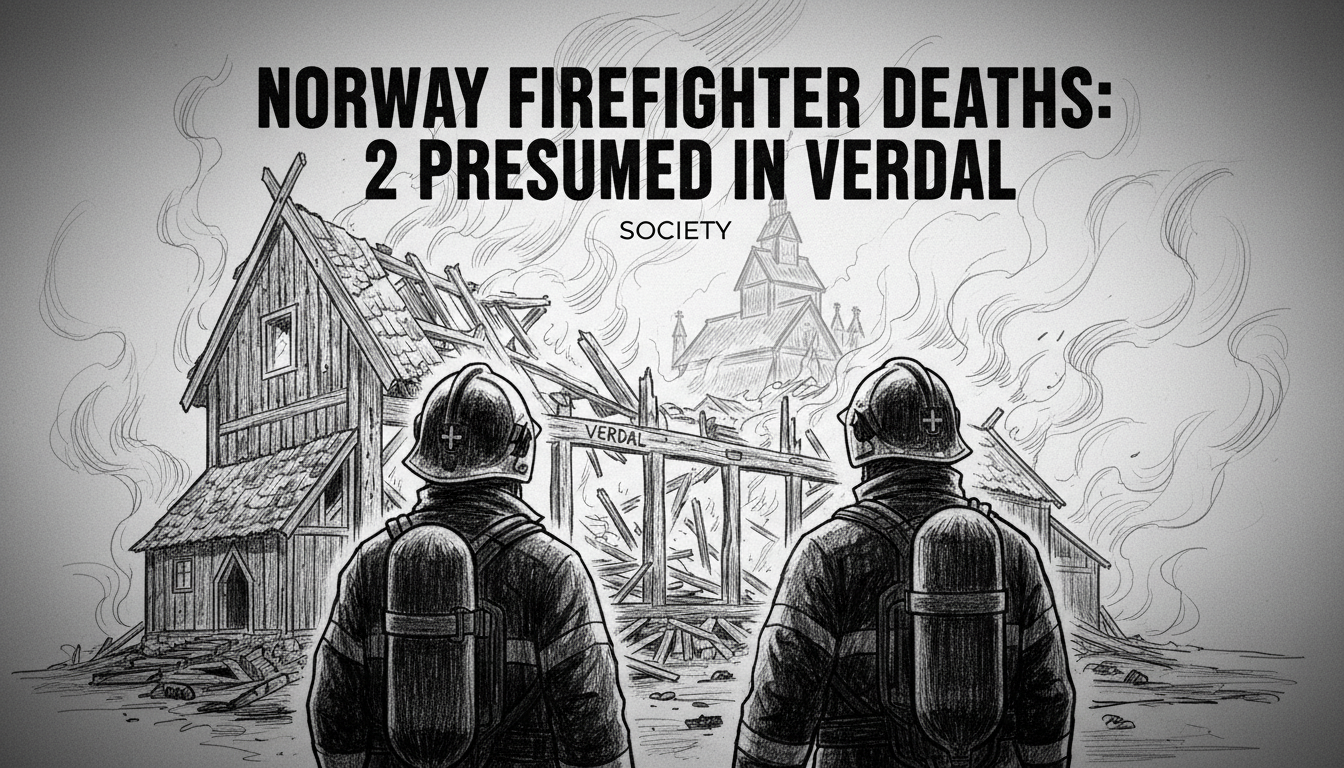
Norway's fire and rescue community is grappling with the loss of two firefighters presumed dead after a nighttime blaze in Verdal. The families, colleagues, and local residents in Trøndelag county are confronting a profound tragedy that resonates across the nation's emergency services. Two members of the intermunicipal fire company Brann Midt IKS are missing and feared deceased following the fire response. The incident has triggered an outpouring of grief and underscored the perpetual dangers faced by first responders.
A Devastating Blaze in Trøndelag
Initial reports indicate the fire occurred in Verdal municipality, a community of approximately 15,000 people situated along the Trondheimsfjord. Details surrounding the fire's origin and the exact circumstances leading to the firefighters' presumed deaths remain under investigation. Emergency services responded to the call, but the operation took a tragic turn. The two firefighters involved were røykdykkere, or smoke divers, a role that entails entering extremely hazardous, smoke-filled environments. Their sacrifice highlights the acute risks taken during routine emergency calls.
Elisabeth Aarsæther, the Director of Norway's Directorate for Civil Protection and Emergency Planning (DSB), articulated the national sentiment. "This affects all of fire-service Norway to hear that two smoke divers from Brann Midt IKS are presumed dead after last night's fire in Verdal," Aarsæther wrote in a public statement. She extended her deepest sympathy to the families, next of kin, colleagues, and the local community. Her message concluded with a raw acknowledgement of the loss: "We have none to spare – this is just terribly painful."
The Role and Reach of Brann Midt IKS
The fallen firefighters served with Brann Midt IKS (Fire Midt IKS), an intermunicipal company providing fire and rescue services to several municipalities in the Trøndelag region. This cooperative model is common in Norway, allowing smaller municipalities to pool resources and maintain a high standard of emergency response. The company has confirmed that support structures are now active for the affected colleagues, working in coordination with local municipality officials and the employer. This immediate response focuses on psychological first aid and practical assistance for the tight-knit team.
The tragedy brings a harsh spotlight onto the operational realities of regional fire services. While Norway boasts advanced safety protocols and equipment, the fundamental job of firefighting involves unpredictable and life-threatening situations. Every shift, personnel across the country report for duty with the mission to save lives and property, often in conditions that can deteriorate in seconds. The Verdal incident is a stark reminder that training and technology cannot eliminate all risk.
Examining Firefighter Safety and Systemic Support
Experts in emergency management and occupational safety often emphasize the complex balance firefighters must strike between aggressive intervention and personal safety. Smoke diving, in particular, is one of the most dangerous assignments within firefighting. The priority is always on rescuing lives, but this imperative can lead personnel into untenable environments. Norwegian fire services follow strict guidelines on air management, team coordination, and building assessment, but dynamic fire conditions can override even the best plans.
The DSB, as Norway's supreme fire authority, plays a critical role in oversight, standardization, and after-incident support. Aarsæther's prompt, public condolence reflects the directorate's role as a national focal point during such crises. Beyond public statements, the DSB is likely to be involved in reviewing the incident to identify any potential lessons for safety procedures. However, the primary focus in the immediate aftermath is unequivocally on human care and mourning.
This loss also opens a necessary conversation about the long-term mental health support for emergency responders. The psychological impact on the crew who responded to the Verdal fire, and on the wider Brann Midt IKS workforce, will be significant. Norway has systems in place for critical incident stress management, but the effectiveness of these supports is continually tested by events of this magnitude. The culture within fire services, which valorizes bravery and resilience, must also foster an environment where seeking help for trauma is normalized.
A Nation's Gratitude and a Painful Reflection
The presumed deaths in Verdal will reverberate through the Storting's discussions on emergency service funding and through local government meetings across Trøndelag. While not a political story in the conventional sense, it touches on core policy areas: resource allocation for rural fire services, investment in protective gear, and the sustainability of the intermunicipal model. The Norwegian tradition of civic duty and communal responsibility is embodied by firefighters, making their loss a collective societal wound.
As the investigation proceeds, the community of Verdal and the brotherhood of Norwegian firefighters will begin the painful process of memorializing their colleagues. The names of the fallen, when released, will be added to a sobering list of those who have died in service. Their ultimate sacrifice reinforces a grim truth acknowledged by Director Aarsæther: the country has "none to spare." Every firefighter is a vital component of Norway's societal safety net.
What happens now? The coming days will see funerals and public commemorations. The weeks and months ahead should involve a meticulous review of the Verdal incident, not to assign blame, but to honor the fallen by strengthening protocols. The best tribute to these smoke divers is a relentless commitment to making their inherently dangerous profession as safe as humanly possible. Norway's emergency responders will continue their work, but today, the nation pauses to remember the cost of that service.