
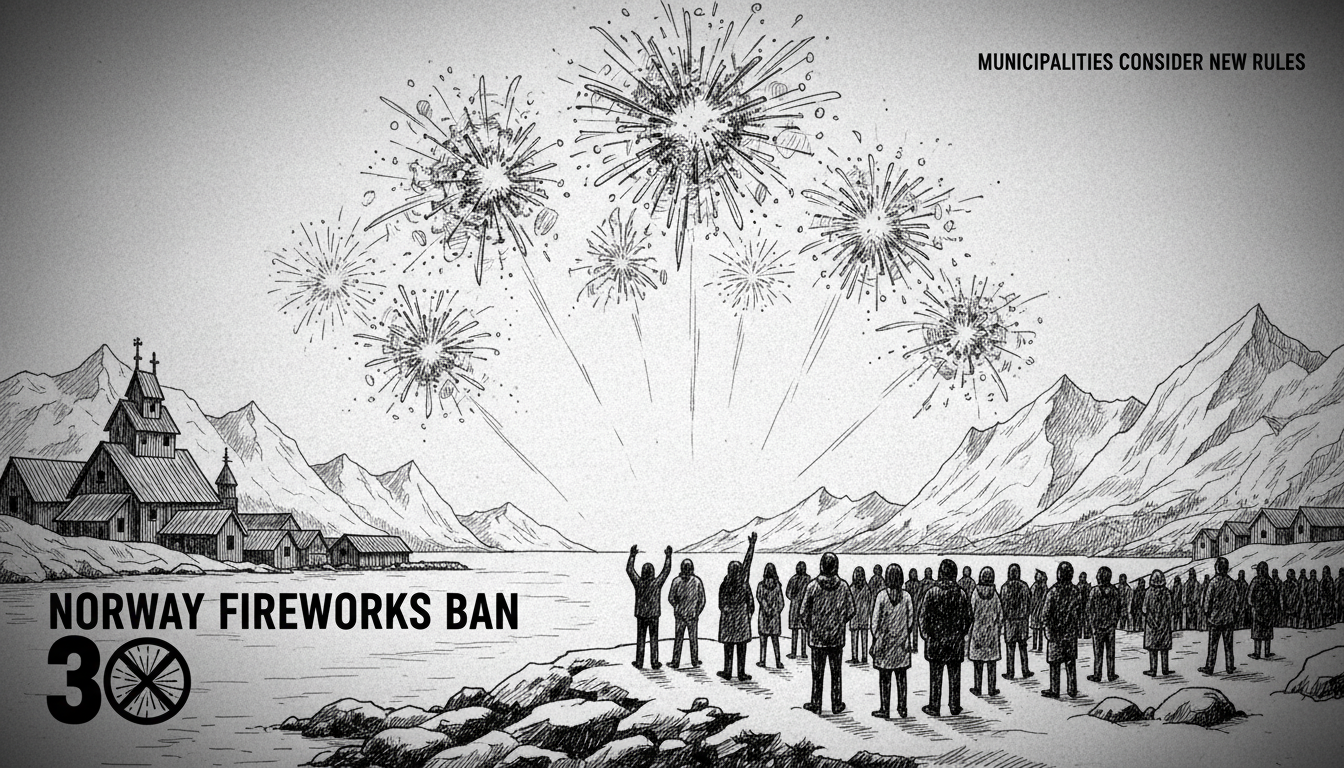
Norway's iconic New Year's Eve tradition of private fireworks is facing its most significant challenge yet. Thirty-nine municipalities are actively considering local bans, propelled by a powerful surge in public support for stricter controls. A fresh survey by the animal rights organization NOAH reveals that 66 percent of the Norwegian population now backs a prohibition on private pyrotechnics. This marks a decisive shift in a long-running cultural debate, pitting tradition against growing concerns for animal welfare, public safety, and environmental impact.
A Growing Municipal Movement
The movement is not centralized but spreading locally. Organizations like NOAH have conducted a nationwide outreach campaign, contacting every municipality in the country to urge action. The response has been tangible. From Halden in the south to smaller communities like Skiptvet, local councils are now weighing specific proposals. This municipal-level approach reflects Norway's decentralized governance but also creates a potential patchwork of regulations. Some towns may opt for complete bans within city centers or near sensitive areas, while others might impose stricter sales limits or designated public display zones only. "Every single year, animals are injured and killed," said NOAH leader Siri Martinsen, framing the issue as an annual, preventable crisis. Her statement underscores the primary driver behind the municipal push: a desire to protect pets, wildlife, and livestock from the intense stress and physical danger caused by sudden, explosive noise.
The Science Behind the Stress
Expert consensus from veterinarians and animal behaviorists strongly supports these concerns. The auditory systems of most animals are far more sensitive than humans'. Dogs can hear frequencies up to 45 kHz, and cats up to 64 kHz, compared to the human maximum of around 20 kHz. The sharp, unpredictable bangs of fireworks can trigger extreme panic. This leads to animals fleeing blindly, often resulting in traffic accidents, getting lost, or suffering fatal heart attacks. Wildlife, including birds, are also severely affected, with studies in other countries showing mass panic flights that lead to exhaustion and death. Beyond immediate trauma, the lingering fear can condition animals to experience anxiety for days surrounding the New Year period. For farmers, the night of December 31st becomes one of vigilance, often requiring them to stay with their livestock to prevent stampedes and injuries in barns. This scientific and practical reality is converting public opinion, moving the discussion beyond nostalgia.
Safety, Environment, and Changing Public Sentiment
Animal welfare is the headline, but it is bolstered by two other strong arguments: human safety and environmental pollution. Each year, Norwegian hospitals treat dozens of serious injuries caused by private fireworks mishandling, including burns and eye damage. These incidents often involve teenagers and young adults, turning celebration into tragedy. Environmentally, fireworks release a cocktail of pollutants, including fine particulate matter (PM2.5), heavy metals like strontium and barium (which create vibrant reds and greens), and perchlorates. These compounds contaminate air and soil, and residue washes into waterways. In a nation deeply committed to environmental stewardship, this aspect increasingly clashes with modern values. The 66% support figure is a powerful political indicator. It suggests that the tradition, while cherished by some, is now viewed by a clear majority as an unacceptable risk. This data provides municipal politicians with the confidence to enact changes that might have been unpopular a decade ago.
The Cultural Counter-Argument
Opposition to a ban is rooted in a deep-seated cultural practice. For many Norwegians, purchasing a box of rockets and sparklers and lighting them with family at midnight is an integral part of romjuls—the days between Christmas and New Year. It represents a moment of communal celebration, a bright, loud farewell to the old year. Small retailers, particularly in border regions, also rely on seasonal fireworks sales. Critics of a ban argue for personal responsibility, suggesting that education and stricter enforcement of existing safety rules, rather than prohibition, is the answer. They see the municipal moves as an overreach, a limitation on a harmless personal freedom. The challenge for local governments is to balance this cultural heritage with the demonstrable harms, often by promoting alternative community celebrations.
The Path Forward: Public Displays and New Traditions
The likely future, as modeled by the considering municipalities, points toward a shift from private to public. Organized, professional fireworks displays offer a controlled alternative. They are louder and more spectacular but singular, shorter in duration, and located in predictable areas, allowing pet owners and farmers to prepare. Some Norwegian towns already couple these displays with family-friendly events featuring bonfires, ice sculptures, and concerts, creating a new, centralized tradition. This model satisfies the human desire for spectacle while significantly mitigating the risks of widespread, uncontrolled explosions. The debate in the 39 municipalities will center on this transition: how to fund public displays, how to communicate designated areas, and how to manage the sale of fireworks if a full ban is not implemented. The outcome will be closely watched, as successful local policies often pave the way for national legislation.
Norway stands at a crossroads, where the crackle of a rocket fuse meets the quiet anxiety of a frightened dog. The municipal considerations signal a society recalibrating its rituals against modern evidence and ethics. The high public support suggests a readiness for change. The question is no longer if the tradition will evolve, but how swiftly and in what form. The decisions made in town halls from Halden to the Arctic north this year may well determine whether future New Year's Eves are marked by a thousand scattered bangs or a single, shared, spectacular boom.