
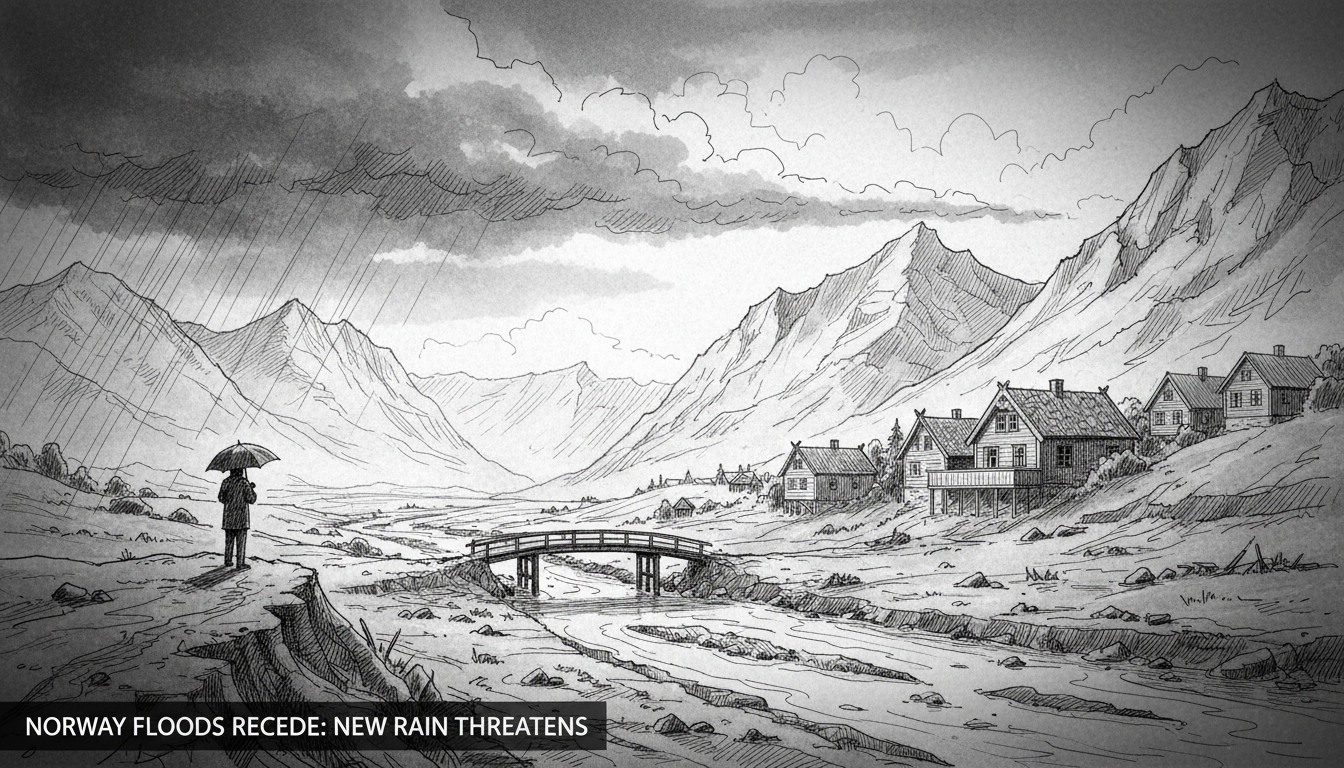
Norway's flood-hit municipality of Sokndal is experiencing a temporary reprieve as water levels in the Sokna river drop, allowing road access to the Øyno area to reopen. The local government reports that while some watercourses remain at overflow levels, the overall strain on the river system has decreased. This brief calm comes with a significant caveat: weather forecasts predict heavy rainfall overnight, forcing authorities to maintain a state of high alert.
Residents are navigating a landscape of cautious normalcy and persistent risk. Schools, healthcare services, and most kindergartens have resumed ordinary operations. The community's activity hall reopened its doors today. Yet, the Øyno kindergarten will remain relocated to Bø for the remainder of the week, a tangible sign of the disruption caused by the rising waters. Municipal work crews are now focused on the cleanup, prioritizing the removal of debris and securing roads and infrastructure weakened by the flood.
"The operations department is prioritizing cleanup and securing roads, and the public is asked to report dangerous conditions," Sokndal kommune stated in its latest update. This call for public vigilance underscores the ongoing, collaborative effort required to manage the aftermath. The situation remains fluid, hinging on the intensity of the coming downpour.
A Community Between Storms
The current lull in Sokndal is not a conclusion but an intermission. The municipality's explicit decision to maintain its emergency preparedness highlights the precarious nature of flooding events in Norway's coastal and riverine communities. Hydrologists note that ground saturation is a critical factor; after significant flooding, the earth's capacity to absorb new rainfall is severely diminished. This means even moderate subsequent rain can quickly lead to renewed overflow and rapid rises in water levels.
"Continuous monitoring is absolutely essential in areas like Sokndal," explains a hydrologist familiar with Rogaland's watersheds. "The river systems respond very quickly to precipitation. A decrease in water level is positive, but it doesn't reset the risk clock. The catchment area is still primed, and new rain runs off almost immediately." This scientific reality dictates the cautious stance of local officials, who are balancing the return to normal life with the responsibility to prepare for a potential second wave of flooding.
The Mechanics of Municipal Response
Sokndal's response follows a well-rehearsed Norwegian model for civil protection. The municipality acts as the first line of defense, with its technical services department managing direct interventions like road closures, sandbagging, and drainage work. Their shift from acute flood defense to cleanup and safety inspection is a key phase in this process. Simultaneously, they maintain communication channels with county (Rogaland) and national authorities, including the Norwegian Water Resources and Energy Directorate (NVE) and the Norwegian Meteorological Institute.
The decision to keep the Øyno kindergarten relocated, while others reopen, is a targeted risk assessment. It likely reflects specific concerns about that facility's location, access routes, or the vulnerability of the local road network serving it. Such granular decisions are characteristic of Norway's decentralized emergency management, where local knowledge is crucial. The reopening of the activity hall serves a dual purpose: restoring community services and providing a potential gathering point or support center if conditions deteriorate.
The Broader Context of Climate and Preparedness
Flooding in Norway is a perennial challenge, often triggered by autumn and winter storms, intense rainfall, or rapid spring snowmelt. Communities like Sokndal, situated near river mouths and in valleys, are particularly exposed. However, expert consensus points to a shifting baseline. Climate change projections for Norway indicate a trend towards more frequent and more intense extreme precipitation events, especially in western counties like Rogaland.
This elevates flood preparedness from a seasonal operational task to a long-term strategic imperative. "What we consider a '100-year flood' event is changing," says an emergency management researcher. "The historical data we used to plan infrastructure and response is becoming less reliable. Municipalities are having to factor in a new degree of uncertainty and severity." This means investments in reinforced infrastructure, updated flood zone maps, and public education campaigns are becoming increasingly critical.
National agencies support local efforts through monitoring networks, forecasting, and funding schemes for protective measures. The public awareness component is vital; residents in flood-prone areas are encouraged to know evacuation routes, have emergency supplies, and heed official warnings. The simple act of reporting a blocked culvert or a crumbling road edge, as Sokndal has requested, is a key part of this collective resilience.
The Path Forward for Sokndal
For now, the people of Sokndal wait and watch the skies. The immediate future depends on the precise track and intensity of the incoming weather system. Municipal crews will be on standby, monitoring gauges along the Sokna river and its tributaries. The priority is clear: protect life and property while managing the recovery from the initial flood.
The coming days will test the effectiveness of both the physical infrastructure and the procedural response plans. This event, like others before it, will provide lessons. It will inform where drainage needs improvement, which roads are most vulnerable, and how communication with residents can be most effective. Each flood leaves a mark on the community's memory and its administrative playbooks.
Norway's relationship with its powerful natural environment is one of respect and adaptation. In Sokndal, as the water recedes only to threaten a return, that adaptation is happening in real time. It is seen in the work of the road crews, the decisions of kindergarten administrators, and the vigilance of residents checking the forecast. The question hanging over the community is not if they will face such challenges again, but how soon, and how prepared they will be when the next warning comes.