
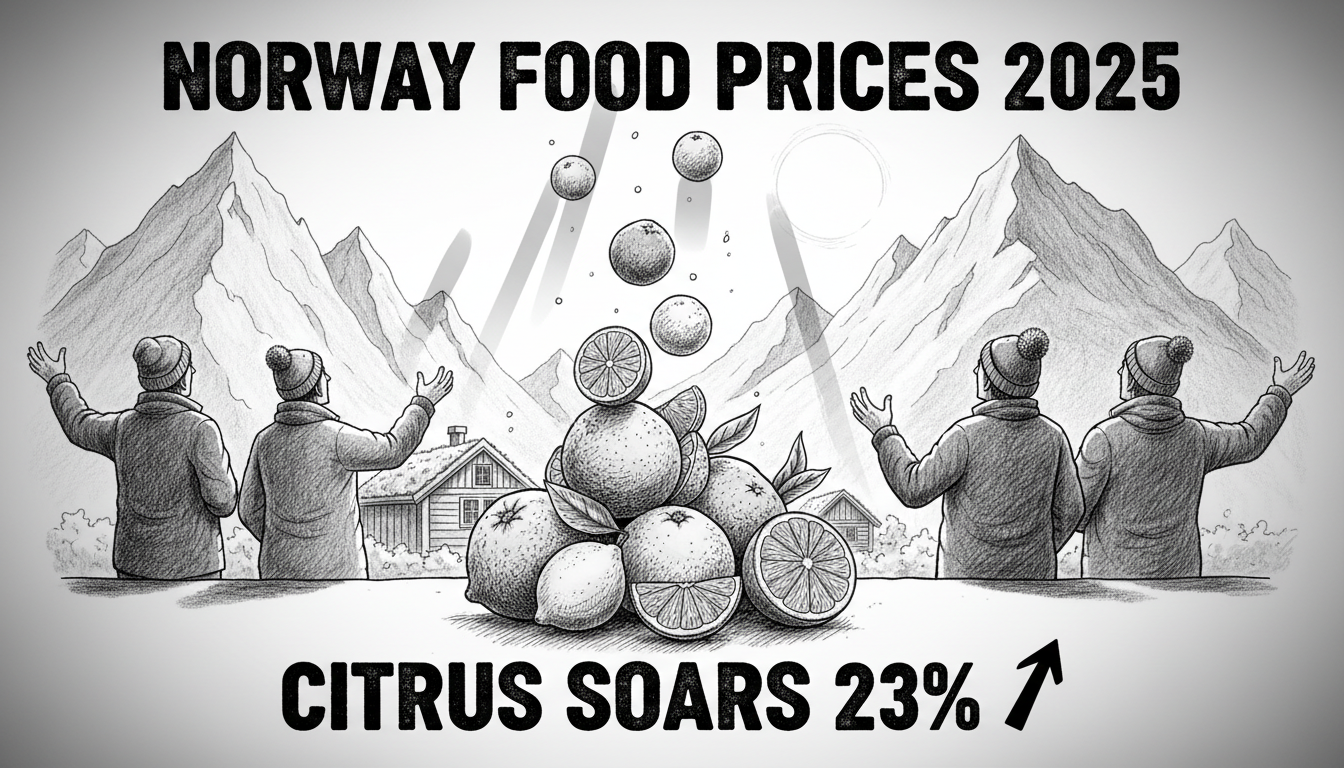
Norway food prices are rising at a sharp and uneven pace, with citrus fruits leading a surge that is squeezing household budgets and highlighting global vulnerabilities. New data from Statistics Norway (SSB) reveals a general food price inflation of 4.2 percent for the year, but specific categories have experienced shocking increases exceeding 20 percent. The price of citrus fruits has jumped by 23 percent, while cocoa and coffee have also become significantly more expensive. This disparity paints a picture of a cost-of-living pressure that is far from uniform, hitting consumers hardest on items often considered everyday staples or healthy choices.
Espen Kristiansen, a section chief at SSB, directly links these spikes to global forces. "What we are seeing is largely a global phenomenon characterized by failing harvests and climate change," Kristiansen said in an analysis of the data. This expert perspective shifts the focus from domestic Norwegian policy to worldwide agricultural and climatic disruptions. For a country that imports a substantial portion of its fresh produce, these international shocks translate directly into higher prices at Norwegian grocery stores, from the Meny in Frogner to the Kiwi in Kirkenes.
The Citrus Squeeze on Norwegian Kitchens
The 23 percent increase for citrus fruits—including oranges, lemons, and limes—is the most dramatic figure in the SSB report. This surge impacts both direct consumption and the cost of many processed foods and drinks that rely on citrus derivatives. For Norwegian families, a simple morning glass of orange juice or the lemon used for a Friday night fish dinner now carries a heavier financial burden. The increase is particularly poignant in a nation that actively promotes healthy eating through official dietary guidelines, which often highlight fruits and vegetables.
Analysts point to a confluence of factors driving the citrus crisis. Major producing regions like Spain and Brazil have faced consecutive years of drought and extreme heat, severely reducing yields. Simultaneously, diseases like citrus greening have devastated orchards. Shipping costs, while down from pandemic peaks, remain volatile. "This isn't a minor fluctuation," says food economist Kari Moe, who consults for several Nordic retail chains. "We are looking at structural pressures on citrus production. Norwegian consumers are, in effect, paying the price for water scarcity thousands of kilometers away."
Bitter Costs for Coffee and Cocoa
Beyond the fruit bowl, the SSB data signals trouble for the Norwegian coffee break and chocolate cupboard. Norway has one of the world's highest per capita coffee consumptions, making it a culturally and economically sensitive commodity. The rise in coffee prices is tied to droughts in Vietnam and Brazil, the world's leading producers of robusta and arabica beans respectively. Poor harvests have constrained global supply just as demand remains resilient.
The cocoa increase follows a similar, but even more extreme, global pattern. Catastrophic harvests in West Africa due to changing weather patterns and crop disease have sent international cocoa prices to historic highs. For Norwegian consumers, this means more expensive chocolate bars, baking cocoa, and any product containing cocoa butter or powder. The timing is awkward, as food manufacturers are caught between soaring raw material costs and consumer resistance to significant price hikes.
A Patchwork of Price Pressures
The overall food inflation rate of 4.2 percent masks a highly varied landscape. While some categories like citrus, coffee, and cocoa skyrocket, others may have seen more moderate increases or even price stability. This patchwork effect is critical for understanding the real impact on different households. A pensioner who consumes little chocolate but relies on oranges for vitamin C feels the pinch differently than a young family buying large amounts of staple goods.
The SSB's consumer price index is the definitive measure for adjusting pensions, wages, and social benefits in Norway. Therefore, these food price movements have direct policy implications beyond the grocery receipt. They influence the calculations for the upcoming year's national budget negotiations in the Storting. Opposition parties are likely to seize on the data to critique the government's economic management and its strategies for tackling the cost of living.
Global Roots of a Local Problem
Kristiansen's emphasis on the global nature of the phenomenon is crucial. Norway's domestic agricultural policy, focused on subsidies for meat, dairy, and grain production, has limited influence on the price of imported tropical goods. The country's strength in seafood and some dairy products does not buffer it from weaknesses in the global fruit and soft commodity markets. This exposes a key vulnerability in Norway's food security strategy, which has traditionally emphasized self-sufficiency in core staples but accepted dependence on imports for produce that cannot be grown locally.
Climate change acts as a threat multiplier. Extreme weather events that disrupt harvests are becoming more frequent and severe. "The data for citrus, coffee, and cocoa are early warning signals," argues environmental economist Lars Fjelldal. "They show how climate instability in the Global South creates immediate economic instability in Norway. Our food system is globally interconnected, and these price spikes are the financial manifestation of ecological stress."
Navigating the New Normal
For Norwegian consumers, adaptation is the immediate response. Some may switch to frozen or canned citrus alternatives, which often have different pricing and supply chains. Others might reduce consumption or seek out seasonal, locally-grown fruits where possible, though Norway's short growing season limits this option for much of the year. Retailers are also in a difficult position, forced to decide whether to absorb some cost increases or pass them fully to customers.
The government faces longer-term strategic questions. While short-term price controls are unlikely in a market economy, the data reinforces arguments for investing in agricultural research for climate-resilient crops and examining the robustness of national food import corridors. There is also a growing debate about whether Norway should explore more protected horticulture, like greenhouses, for certain produce to reduce reliance on volatile international markets.
The SSB's figures are more than a monthly economic indicator. They are a snapshot of a world under strain, where a failed harvest in Brazil or a drought in Ivory Coast echoes in the aisles of a Coop Mega in Oslo. As Norwegians pay more for their morning coffee and their weekend oranges, they are directly engaging with the complex and often harsh realities of a warming planet and an interconnected global economy. The question now is whether these price shocks are a temporary anomaly or the beginning of a costly new normal for the Norwegian dinner table.