
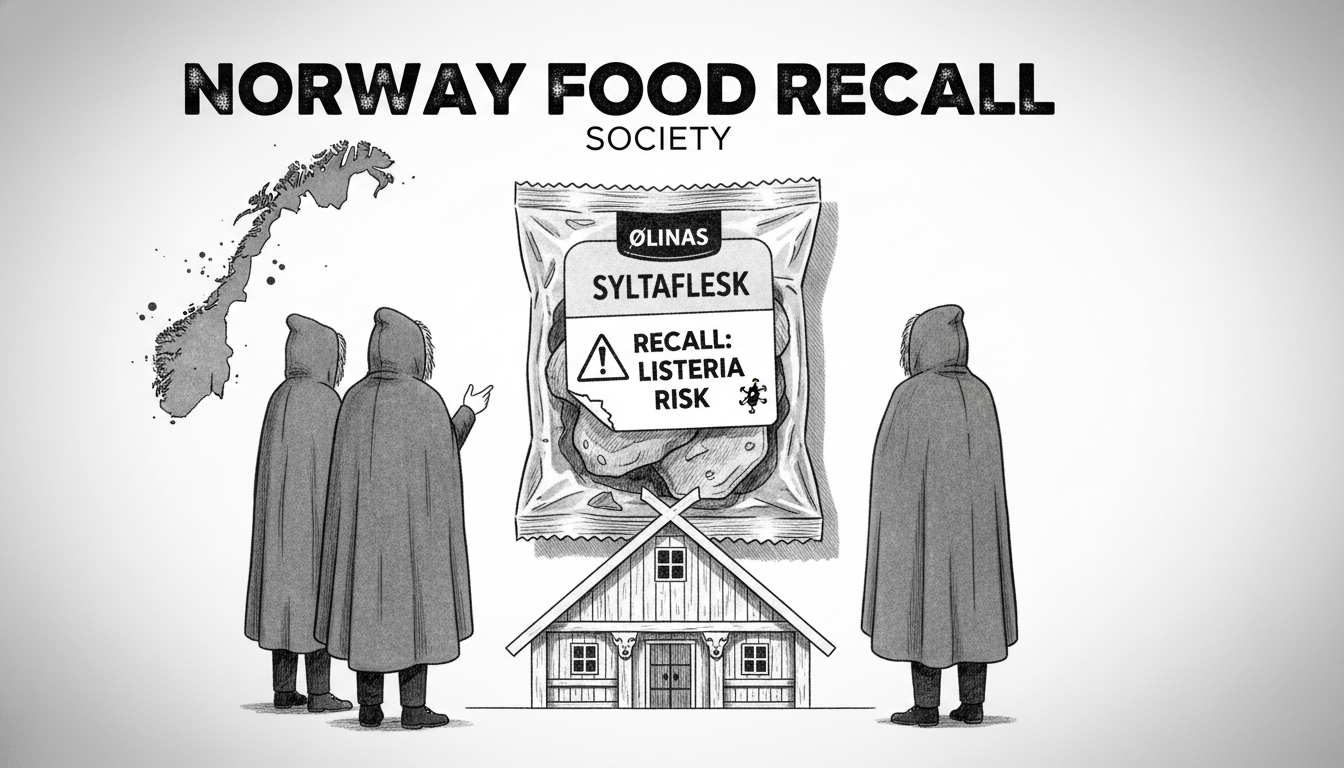
Norway's food safety authority has issued a recall for a popular cured pork product after detecting listeria contamination. The Norwegian Food Safety Authority, Mattilsynet, announced the recall of Olinas Syltaflesk produced by Haugen Gardsmat Drift AS. Consumers who purchased the product at specific markets in Oslo and Bergen, or at stores in Aurland and Flåm, are urged to discard it immediately or return it to the point of sale.
This recall highlights the constant vigilance required in food production, even for traditional products made by smaller-scale producers. Listeria monocytogenes poses a significant risk, particularly to pregnant women, newborns, the elderly, and individuals with weakened immune systems. The discovery triggers a standard but critical public health protocol to prevent potential outbreaks.
A Targeted Recall for Specific Retailers
The recalled product was distributed through a limited but notable network. It was available at Bondens marked, a farmers' market concept in both Oslo and Bergen known for showcasing local artisanal foods. The product was also sold at Spar Aurland, a grocery store in the Sognefjord region, and at the Fretheim Hotel in the tourist hub of Flåm.
This distribution pattern is typical for smaller Norwegian producers who supply local markets and specialty retailers rather than nationwide supermarket chains. It presents a specific challenge for authorities, as consumers may have purchased the product while traveling or as a souvenir from western Norway. Mattilsynet's announcement clearly targets these locations to reach the affected customer base.
“We advise consumers who have bought this product to throw it away or return it to the store,” the authority said in a statement. The direct instruction is the standard and most effective method to remove the hazardous product from homes and kitchens.
Understanding the Listeria Threat
Listeria monocytogenes is a resilient bacterium found in soil, water, and some animals. Unlike many foodborne pathogens, it can grow at refrigeration temperatures, making it a persistent concern for ready-to-eat foods. Infection, known as listeriosis, can cause severe illness.
Symptoms often include fever, muscle aches, nausea, and diarrhea. If the infection spreads to the nervous system, it can lead to headaches, stiff neck, confusion, loss of balance, and convulsions. For vulnerable groups, the disease can be life-threatening, potentially causing miscarriage, stillbirth, or severe infection in newborns.
“The role of regular testing and monitoring by both producers and regulatory agencies cannot be overstated,” explains a food safety expert familiar with Nordic systems. “For products like cured or smoked meats, which do not undergo a cooking step by the consumer, the producer’s controls are the primary barrier to illness.”
The detection that led to this recall likely came from either the producer’s own routine testing or as part of Mattilsynet’s surveillance sampling program. Norway maintains a robust monitoring system for foodborne pathogens, contributing to generally high food safety standards.
The Producer and the Product
Haugen Gardsmat Drift AS is the company behind the recalled syltaflesk. Syltaflesk is a traditional Norwegian dish involving cured, boiled, and pressed pork, often served with stewed peas, potatoes, and mustard. It represents a classic part of Norwegian culinary heritage, and artisanal versions are valued for their quality.
A recall like this can have a substantial impact on a small to medium-sized enterprise (SME). It involves immediate costs for public notifications, product retrieval, and investigation. More significantly, it risks damaging hard-earned consumer trust. The company will now need to work closely with Mattilsynet to identify the source of contamination in its production line, which could involve equipment, raw materials, or the processing environment.
For other small-scale charcuterie producers in Norway, this event serves as a stark reminder. It underscores the necessity of impeccable hygiene protocols and constant microbiological vigilance, even when production methods are traditional and small-batch.
Norway's Food Safety Framework in Action
Mattilsynet operates under the Ministry of Health and Care Services. Its mandate encompasses the entire food chain, from farm and sea to fork. The authority conducts inspections, oversees producer self-monitoring, runs control programs, and manages crisis responses exactly like this recall.
The system is designed for rapid response. When a contaminated product is identified, the traceability requirements embedded in Norwegian and EU food law allow authorities to quickly pinpoint distribution. This enables a targeted recall, minimizing public risk while avoiding unnecessary alarm about unaffected products.
This incident will be logged in the Rapid Alert System for Food and Feed (RASFF), the EU-wide network that allows member states and Norway, as part of the EEA, to instantly share information on food hazards. This ensures that if any product was inadvertently exported, neighboring countries would be informed.
Consumer Advice and Public Health Implications
The primary advice for consumers is simple and non-negotiable: do not consume this product. If you have Olinas Syltaflesk from the specified batches purchased at the named locations, you must discard it or return it. Freezing the product does not kill listeria bacteria.
For anyone who may have already eaten the product and feels well, no specific action is needed, though being aware of symptoms is prudent. Individuals in high-risk groups who have consumed the product and develop symptoms should contact their doctor promptly, mentioning the potential listeria exposure.
From a public health perspective, this recall is a preventive success. The contamination was caught before a cluster of illnesses was reported, demonstrating the system working as intended. It shifts the burden from treating sickness to preventing it, which is the ultimate goal of food safety regulation.
Analysis: Trust in the Norwegian Food Chain
Norwegians generally exhibit high trust in their domestic food supply. This trust is built on a foundation of strict regulations, transparent labeling, and effective authorities like Mattilsynet. A recall, while concerning, can also reinforce this trust by showing the system’s responsiveness.
There is no indication this is part of a wider outbreak or affects other producers. The isolated nature of the recall should reassure consumers about the overall food safety landscape. However, it does put a spotlight on the challenges faced by smaller producers in maintaining perfect microbiological control without the vast resources of major industrial food companies.
This event may prompt discussions within the industry about supporting SMEs with food safety technology and expertise. It also reminds consumers that even high-quality, locally-sourced products from trusted markets require the same safety checks as any other food item.
Looking Ahead: The Path Forward for Haugen Gardsmat
The immediate next steps involve a thorough root-cause analysis by Haugen Gardsmat Drift AS under Mattilsynet's supervision. The production facility will likely undergo deep cleaning and sanitization. Processes will be reviewed, and additional testing regimes may be implemented before production can resume.
Regaining market confidence will be a longer process. Transparency about the cause, once found, and the corrective actions taken will be crucial. The Norwegian market often rewards honesty and a demonstrable commitment to higher standards following a setback.
For the Norwegian public, this recall is a brief alert in a normally quiet food safety environment. It is a reminder that safety is an active, daily process, not a guaranteed state. The efficient, no-nonsense response from Mattilsynet provides confidence that the mechanisms to protect dinner tables across Norway, from Oslo to the Sognefjord, are functioning precisely when needed. The true test of any system is not that a problem never occurs, but that when it does, it is contained swiftly and effectively before public health is harmed.