
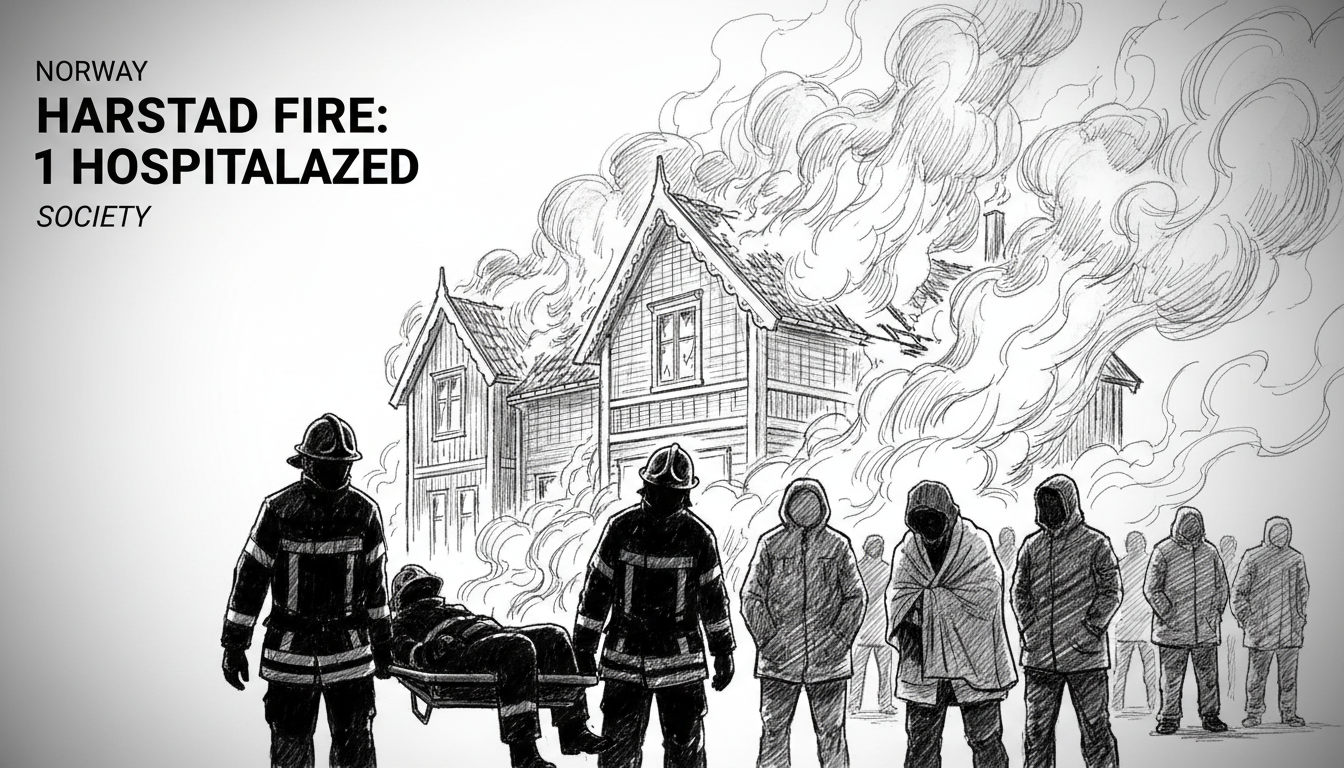
Norway Harstad fire has sent one person to the hospital after a residential blaze broke out in the town center late Sunday. The fire service worked to extinguish the flames, stating there was no risk of the fire spreading further. The injured individual was inside the home when the fire started and was transported by ambulance, though the extent of their injuries remains unknown.
A Nighttime Emergency in Northern Norway
The call came in to emergency services on a Sunday evening in Harstad, a key municipality in Troms og Finnmark county. Fire crews rushed to the scene of a burning residential building. Their primary task was to contain and extinguish the flames, a mission declared successful with no spread to neighboring properties. The immediate human cost, however, was one individual requiring urgent hospital care. Operations leader Robin Åsheim Lindberg confirmed the hospitalization in a police log update, marking a serious end to the weekend for the local community.
Harstad, situated on the island of Hinnøya, serves as a vital cultural and economic hub for Southern Troms. Its architecture, like many Norwegian towns, includes a mix of modern structures and older wooden buildings. This blend presents unique challenges for fire safety, particularly during the colder months when heating systems operate continuously. A fire in a central residential area immediately raises concerns about rapid spread, especially if wind conditions are unfavorable.
The Constant Threat of Residential Fires
While this single incident was contained, it highlights an ongoing national concern. Residential fires in Norway carry disproportionate risk due to the climate and building materials. The cold environment means homes are tightly sealed, and occupants may be less aware of a fire starting in another part of the building. Older wooden structures, common in historic town centers, can provide ready fuel for flames.
Fire safety experts consistently point to prevention as the first and most critical line of defense. "Every fire like this is a stark reminder," said a senior fire prevention officer from the region, who asked not to be named as they were not directly involved in the response. "Smoke detectors are not optional; they are essential lifesaving devices. In the winter, with increased use of electrical heaters, fireplaces, and candles, vigilance must be higher."
The expert emphasized the chain of survival: early detection through working alarms, immediate evacuation, and a swift call to the emergency number 110. The response time of local fire brigades, often staffed by a combination of professionals and dedicated volunteers in smaller towns, is then critical. The Harstad fire department's ability to prevent spread suggests an effective and timely response.
Building Codes and Winter Preparedness
Norway has stringent building codes, especially for new constructions and major renovations. These regulations mandate fire-resistant materials, compartmentalization to contain fires, and clear escape routes. However, a significant portion of the national housing stock predates the most rigorous modern codes. This creates a patchwork of risk across cities, towns, and rural areas.
Municipalities and the national Directorate for Civil Protection (DSB) run public awareness campaigns, particularly in early winter. They focus on safe practices for heating, electrical safety, and candle use—a common feature in Norwegian homes during the dark season. The goal is to translate national statistics into personal responsibility. A single unattended candle or a faulty electrical outlet can lead to the scenario witnessed in Harstad.
For residents, the advice is practical and repeated. Test smoke alarms monthly. Never leave open flames unattended. Have chimneys and flues cleaned regularly. Keep portable heaters away from curtains and furniture. These simple steps, experts argue, prevent the majority of household fires. The investment in a few minutes of monthly checks and basic safety equipment is negligible compared to the potential cost.
The Human Impact Beyond the Flames
The article in the police log is brief: "One person is sent to the hospital with an ambulance. The extent of damage is unknown." This clinical description belies a profound personal crisis. A home fire is a traumatic event, involving the potential loss of life, health, property, and a sense of security. The individual hospitalized faces not only physical recovery but also the daunting task of rebuilding.
Community response often follows such incidents. In close-knit communities like those in Northern Norway, neighbors and local organizations frequently mobilize to provide immediate support—offering shelter, clothing, and assistance with insurance and authorities. The true toll of the fire will be measured in the coming days and weeks as the injured person's condition becomes clear and the process of assessing the property damage begins.
A Northern Town's Resilience
Harstad is no stranger to challenges, shaped by the demanding climate and geography of Northern Norway. Its economy is tied to the sea, aquaculture, and increasingly, technology and education. This incident, while serious, is a type of emergency for which the community's infrastructure is prepared. The seamless coordination between police, ambulance, and fire services, as indicated by the official updates, demonstrates a drilled response protocol.
The town's location on Hinnøya, connected by bridges and ferries, also means emergency resources are centralized and capable of responding without significant delay. The fire service's quick declaration that there was no spread risk would have brought immediate relief to surrounding residents, preventing a larger-scale evacuation and greater panic.
This event will likely prompt local authorities to reiterate fire safety advice through community channels. It serves as a case study, albeit a small one, in the importance of prevention and the effectiveness of emergency response. For the national audience, it is a reminder that the risk of fire is universal, from the largest cities like Oslo to regional centers like Harstad.
Looking Ahead: Safety in the Dark Season
As Norway moves deeper into the year, daylight hours shorten significantly in the north. The increased reliance on artificial light and heat sources elevates fire risks. The Harstad fire is a timely, if unfortunate, warning signal. It underscores that safety is a continuous practice, not a one-time consideration.
For policymakers, it reinforces the value of supporting volunteer fire departments in rural and regional areas, ensuring they have modern equipment and training. For building owners, it highlights the importance of upgrading older properties to meet contemporary safety standards where possible. For every resident, it is a call to action to perform that simple smoke alarm test.
The ultimate measure of this incident's impact will be whether it leads to greater community awareness and preventative action. Will more people in Harstad and beyond check their alarms tonight? Will they think twice about leaving a room with a candle burning? The hope among safety professionals is that the answer is yes. The memory of an ambulance rushing one person to the hospital in Harstad should serve not just as news, but as a catalyst for safer homes across Norway.