
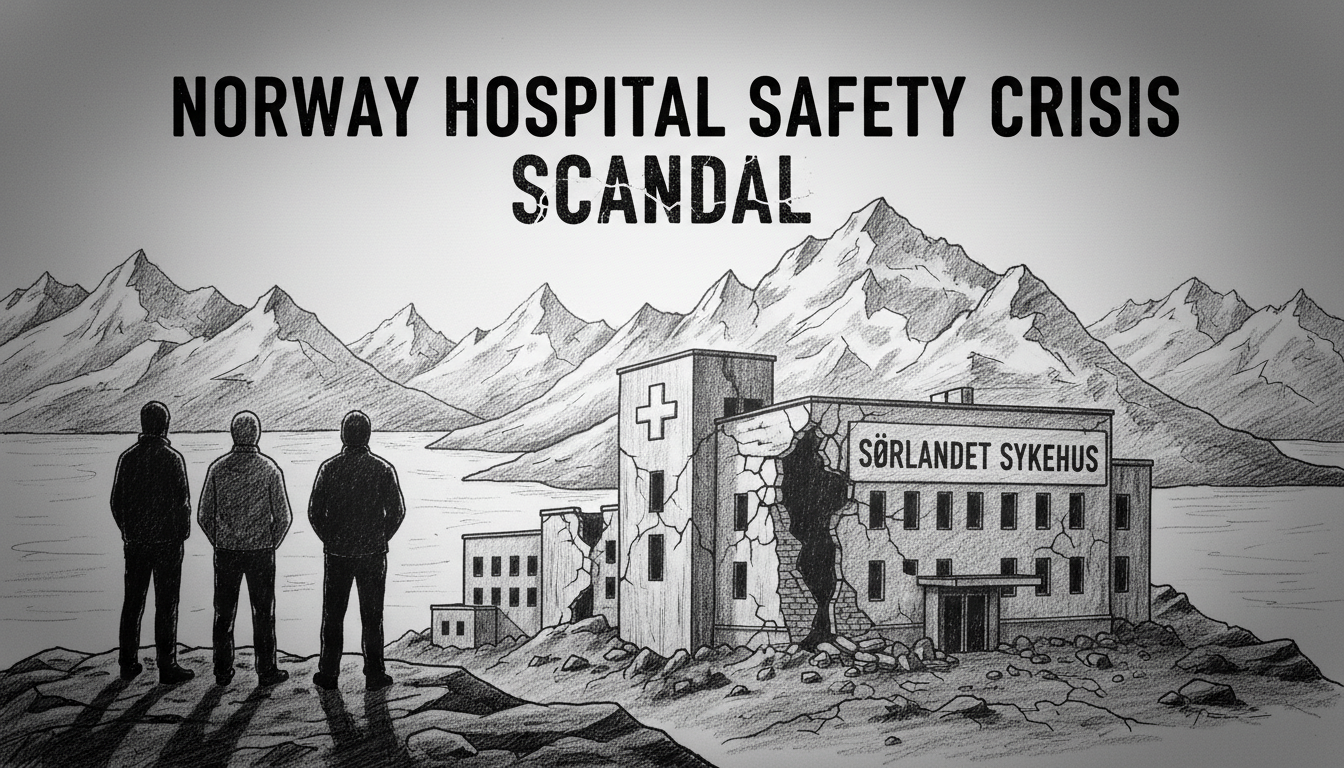
Norway's Sørlandet Sykehus hospital trust faces a severe patient safety crisis. A new report from the national health watchdog reveals the hospital has failed to learn from a major past scandal. The findings threaten patient safety at the Arendal hospital, where a surgeon worked for years without proper qualifications. Several patients died and others suffered permanent injuries as a result.
Statens helsetilsyn, the Norwegian Board of Health Supervision, conducted the investigation. Its report was initially withheld from the public. The case centers on a surgeon who served as a senior consultant at the gastro unit in Arendal for years. Hospital management knew the doctor was not a trained gastrosurgeon. This failure allowed the situation to continue, with devastating consequences for patients.
A Pattern of Failure and Unlearned Lessons
The report directly links current safety threats to the hospital's inadequate response to the so-called 'Flekkefjord-saken'. This prior case involved serious failures at the hospital's facility in Flekkefjord. The new investigation concludes that Sørlandet Sykehus has not implemented sufficient systemic changes. Critical gaps in oversight, credential verification, and management accountability remain unaddressed. This creates a dangerous environment where similar errors can recur.
"When a supervisory authority states that patient safety is threatened, it is the most serious criticism a hospital can receive," said a healthcare law expert I spoke with. "It indicates a systemic, not individual, failure. The trust between the public and this institution is now severely damaged." The hospital trust provides healthcare for the entire Agder region in southern Norway. Its main hospital is in Arendal.
The Human Cost of Systemic Neglect
Behind the official language of the report are human tragedies. Multiple patients lost their lives after undergoing procedures by the unqualified surgeon. Other patients survived but now live with lifelong, debilitating injuries. Their stories represent a profound breach of the social contract inherent in Norway's universal healthcare system. This system is built on a foundation of trust and the promise of safe, qualified care for all citizens.
Family members of affected patients have expressed anger and despair. One relative, who wished to remain anonymous, stated, "We trusted the hospital. We believed they had systems to prevent this. To know they were aware and let it continue is a betrayal that is hard to comprehend." The psychological impact on the affected families and the broader community's trust in local healthcare is immense and long-lasting.
How Could This Happen in Norway?
Norway's healthcare system is globally admired for its equity and high standards. Statens helsetilsyn exists precisely to prevent such catastrophes. Its role is to audit, inspect, and ensure compliance with safety regulations across all health and care services. The fact that this failure occurred under its purview raises urgent questions about the effectiveness of national supervision.
Experts point to a potential cocktail of failures: local management culture that prioritizes operational continuity over safety, breakdowns in internal reporting channels, and possibly inadequate follow-up from regional health authorities. "A single doctor acting alone is one thing," a patient safety researcher explained. "A management structure that allows an unqualified person to work as a senior consultant for years is a complete system collapse. It suggests a culture where speaking up was discouraged or ignored."
The Legal and Financial Repercussions
The scandal opens Sørlandet Sykehus to significant legal and financial liability. Patients and their families have strong grounds for compensation claims under Norwegian law. The Norwegian System of Patient Injury Compensation (NPE) will likely process many claims. These cases are not just about financial redress but about official acknowledgment of harm caused by the system's failure.
Beyond individual compensation, the hospital trust may face sanctions or enforced restructuring from the health ministry. The report's findings could trigger a wider review of surgical credentialing and oversight processes across other Norwegian hospital trusts. Health policy analysts suggest this case will become a benchmark for measuring institutional accountability. It will test the enforcement power of Statens helsetilsyn.
A Crisis of Confidence in Public Healthcare
This scandal strikes at the heart of Norway's social democratic model. Universal healthcare relies on public confidence. When a major hospital trust is found to have endangered patients repeatedly, it fuels public anxiety. People begin to question whether cost pressures or administrative failures are eroding the quality of care. This erosion of trust is perhaps the most damaging long-term consequence.
Other hospital employees now work under a cloud of suspicion, which is deeply unfair to the majority of dedicated staff. Restoring confidence will require radical transparency, leadership changes, and demonstrable proof that new safeguards are working. The local community in Agder must now navigate their healthcare needs with this knowledge, which may lead some to delay seeking necessary treatment due to fear.
The Path Forward: Demanding Accountability and Change
The immediate steps are clear. The full report must be made public without redactions that protect management over patients. The hospital's board and senior leadership must answer for the failures outlined. A comprehensive, independent plan to overhaul clinical governance and safety culture must be implemented and publicly monitored.
"Learning' is not a passive activity," the healthcare law expert emphasized. "It requires active investigation, honest confrontation of failure, structural change, and continuous verification. The report states learning did not happen. The question now is whether the hospital and the health authorities have the will to make it happen now, under the glare of public scrutiny."
This case is more than a local management failure. It is a national warning signal. It tests Norway's commitment to its core principle of safe healthcare for all. The response from health authorities in the coming weeks will show whether this tragic case finally becomes a catalyst for unshakeable systemic change, or merely another report on a shelf. The patients who died and were injured deserve the former. The public expects nothing less.