
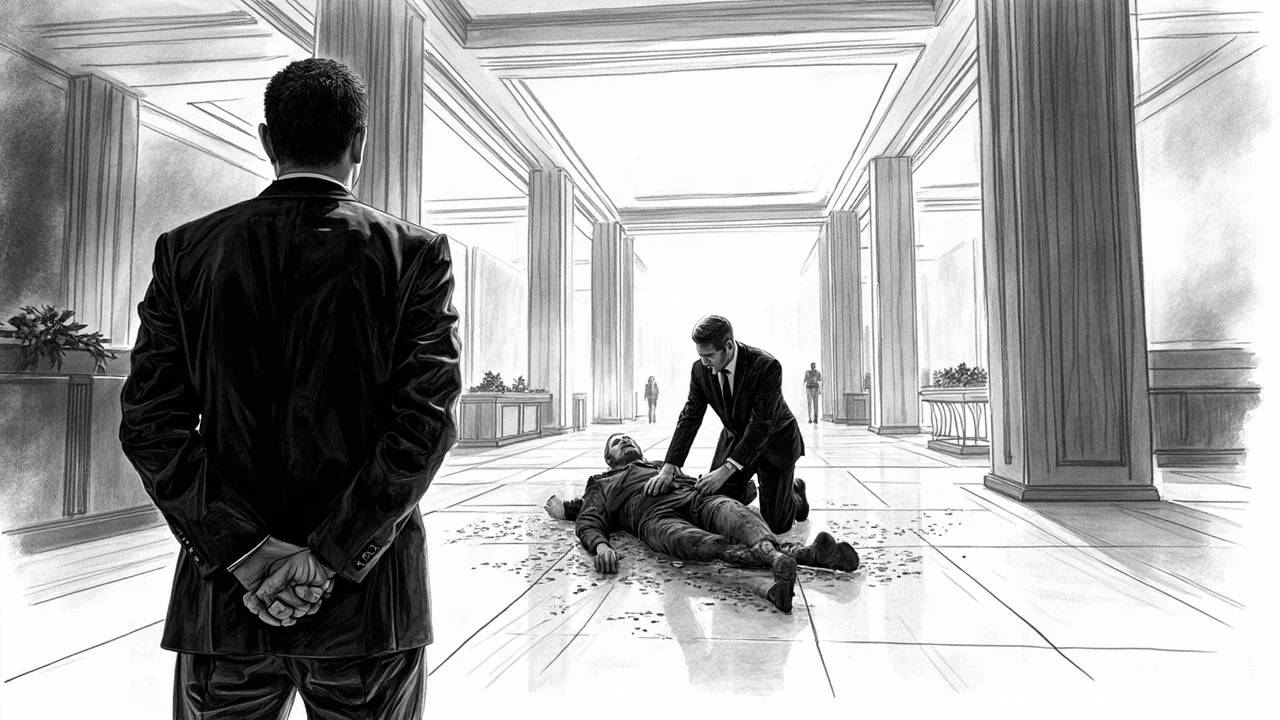
Norway's capital Oslo saw a violent hotel disturbance this week, resulting in one guest injured and another arrested. Police responded to reports of a guest harassing others at a central Oslo hotel. The situation escalated when the individual resisted officers upon their arrival. One person sustained minor cut injuries during the incident, according to police statements.
A Night of Disruption in the Capital
The event unfolded within the typically secure confines of a hospitality venue, a space where tourists and business travelers expect safety. Details remain sparse, but Oslo Police District confirmed the core facts: an individual caused a disturbance, targeted other guests, and became combative when law enforcement intervened. The injured party received treatment for non-life-threatening wounds. This breach of peace in a controlled environment raises immediate questions about security protocols and guest conduct in Norway's urban centers.
While isolated, such incidents challenge Norway's reputation for low crime and public order. Hotels, especially in major cities like Oslo, Bergen, and Stavanger, operate on an implicit social contract. Guests pay for security and quiet enjoyment alongside a bed for the night. When that contract breaks, it resonates beyond a single police report. It touches on the expectations of both international visitors and domestic travelers who view Norwegian society as fundamentally orderly.
The Legal and Security Response
Norwegian law provides clear frameworks for handling such disturbances. The individual was arrested under provisions likely relating to assault, disturbing public order, or resisting police authority. The Norwegian Penal Code, particularly sections on bodily harm and public misconduct, guides these situations. Police procedure in Oslo emphasizes de-escalation, but officers are trained to respond firmly to physical resistance. The fact that the injured guest's wounds were deemed not serious will influence the potential charges and their severity.
From a security perspective, hotel management faces scrutiny. Most major Norwegian hotels, from the historic Grand Hotel in Oslo to the modern chains dotting the cityscape, employ a combination of staff training, surveillance, and cooperation with local police. An incident that progresses to physical injury suggests a failure in early intervention. Experts in hospitality security note that prevention hinges on staff recognizing early signs of intoxication or aggression and acting decisively.
"Hotel security is a subtle art," says a former security manager for a major Oslo hotel chain, speaking on background. "It's about perceiving a shift in atmosphere before it becomes a physical altercation. Staff are not police; their role is to defuse and, if necessary, isolate a problem until authorities arrive. When that fails, the system has broken down."
The Broader Context for Norwegian Tourism
This incident, while minor in the scope of global city crime, holds symbolic weight. Norway markets itself internationally on pristine nature, safety, and high-functioning society. News of a violent hotel altercation in the capital conflicts with that brand. The tourism sector, a vital part of the Norwegian economy, relies heavily on perceptions of security. For a country that promotes peaceful fjord cruises and Northern Lights viewings, urban disorder stories are particularly damaging.
Data from Innovation Norway, the state's tourism promoter, consistently highlights safety as a top reason visitors choose Norway. Events that undermine this perception can have a tangible impact. The challenge for authorities and the industry is to contextualize such an event without dismissing it. Norway's crime rates are among the lowest in Europe, but they are not zero. A measured response acknowledges the incident while reinforcing the overall safety statistics.
Furthermore, the location in central Oslo is significant. The area around Karl Johans gate and the main train station, where many hotels are clustered, has seen increased police visibility in recent years to manage street-level issues. A disturbance migrating from the street into a hotel lobby represents an escalation of that urban challenge. It blurs the line between public and private security responsibilities.
Societal Norms and the Limits of Tolerance
At its core, this story is about breached social norms. Norwegian society operates with high levels of trust and consensus. Behavior that violently disrupts communal spaces, especially enclosed ones like hotels, is profoundly antithetical to the Janteloven-influenced ethos of collective well-being. The public reaction to such news is often one of disbelief and disappointment, more so than in societies where such events are commonplace.
This cultural context amplifies the incident's significance. It becomes a talking point about changing urban dynamics, the pressures on public services, and the preservation of social peace. Commentators may link it to broader debates about mental health services, police resources, or alcohol policies, though direct causation in a single case is speculative. The narrative often focuses on whether Norway is "changing" and if such events are becoming more frequent, despite statistical evidence to the contrary.
Looking Ahead: Implications and Oversight
The immediate aftermath will involve a standard legal process. The arrested individual will face questioning and potential charges. The injured guest may seek compensation. The hotel will conduct an internal review. The Oslo Police District will file its report. Yet the longer-term implications are more nuanced.
Hospitality industry groups may use this as a case study for renewed staff training. City council politicians in Oslo might reference it in debates about police funding or downtown safety initiatives. For the average Norwegian, it serves as a reminder that no space is entirely immune to conflict. For international observers, it subtly recalibrates the picture-perfect image of Norway.
Norway's strength lies in its ability to systematically address such failures. The response will likely be methodical: review protocols, assess training, and reinforce partnerships between hotel security and the Politi. There will be no dramatic rhetoric, just a quiet, determined effort to restore the integrity of the social contract that was briefly fractured in that hotel lobby.
The final measure of this incident's impact will be whether it becomes a forgotten police blotter entry or a reference point in future discussions on urban safety. In a nation where order is the expectation, even small disturbances carry a loud echo.