
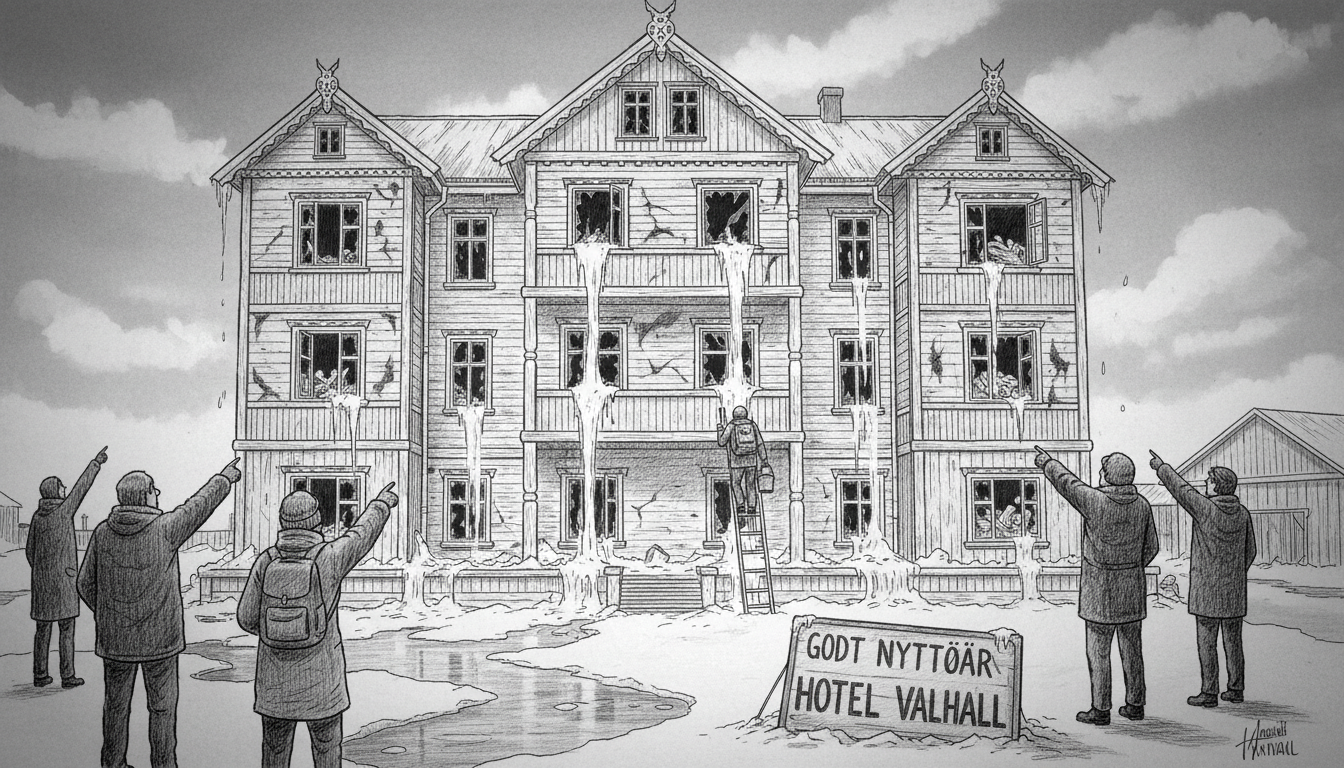
Norway hotel vandalism of an extreme nature has struck a popular mountain resort, leaving a trail of water damage across four floors. The incident at a Beitostølen hotel, described by its long-time director as unprecedented in his 30-year career, involved the intentional activation of a fire hose on New Year's Day. Police are investigating the deliberate act of property damage, which followed a night where the hotel hosted nearly 500 guests for celebrations.
Atle Hovi, the hotel's owner and managing director, received a call from the night watch just before 3:30 AM. "He had then stopped the water jet from the fire hose that was on in the fourth floor," Hovi stated. Rushing back to the hotel, he was met with a disheartening scene. Water flowed like a stream through the staff corridor, cascading down through the building's levels. "It ran like a brook in the staff hallway and all the way down to the floor below - through four stories," he recounted.
A Deliberate Act of Destruction
Police quickly arrived on the scene alongside the fire service, which assisted with water removal. Operations leader Andreas Ulshagen Jorde confirmed that forensic steps had been taken. "We were up there with a patrol, together with the fire service, and documented the damages," Jorde said. The investigation is now proceeding. Authorities state the act clearly appears to be intentional vandalism. No suspects have been identified, and it remains unclear if planned interrogations will occur.
Hotel director Hovi leaves no doubt about the malicious intent. "Yes, yes, yes, yes. The fire hose was in a cabinet that must be opened and was pulled two-three meters out into the corridor where it lay and sprayed," he explained. The act stands in stark contrast to the evening that preceded it. The hotel was filled to capacity, with approximately 300 overnight guests and only one room vacant. A total of 500 people attended the New Year's Eve buffet. "It was a fantastic evening, so this was a very annoying start to the new year," Hovi said.
Assessing the Damage and Legal Ramifications
While the common areas suffered significant water intrusion, a preliminary survey brought a piece of good news. Damage assessment firms, on site since the early morning hours, indicated that none of the guest rooms appear to be affected by water damage. "We still do not have an overview of the extent of the damage or the costs, but it is gratifying that guests are not directly affected," Hovi noted. Large fans now hum in the corridors, a curious sight for guests unaware of the night's events.
The incident falls under Norway's strict penal code regarding vandalism and property damage. Such acts are criminal offenses subject to investigation and prosecution. The severity of the punishment is contingent on the extent of the damage caused and the proven intent behind the actions. A deliberate, premeditated act causing widespread damage to a commercial property would typically be treated more seriously than minor, impulsive damage. The police investigation will seek to establish motive, which could range from a personal grievance to senseless mischief, with legal consequences adjusted accordingly.
Insurance experts are now a central part of the response. Their role is to conduct a thorough technical assessment of the water damage, which can be insidious. Water seeping into walls, floors, and electrical systems requires expert evaluation to prevent mold and structural issues. The final repair cost, which will factor into any criminal compensation claims, will be determined by these assessments. For the hotel management, the immediate focus is on restoration. "We just have to solve it, get the damages repaired, and have so far received incredibly good help from all instances," Hovi said.
The Human and Business Impact Beyond the Water
The psychological and operational impact of such an event extends beyond the physical repair bills. For staff who worked hard to create a memorable New Year's celebration, the vandalism represents a violating and demoralizing act. It disrupts business operations, potentially affecting future bookings if the hotel's reputation for security is questioned. Hovi's emphasis on having "never experienced similar vandalism" in three decades underscores how rare and shocking this event is within Norway's generally low-crime hospitality sector.
Mountain resorts like Beitostølen are crucial to Norway's domestic tourism economy, particularly during the winter season. They rely on a reputation for safety, tranquility, and high-quality service. An act of major vandalism strikes at the heart of this brand promise. It forces management to review security protocols, such as access to firefighting equipment and monitoring of common areas, potentially leading to increased operational costs. The incident also consumes vast amounts of managerial time and energy that would otherwise be directed toward guest service and business development.
A Broader Look at Property Crime in Norway
While severe vandalism of this scale is uncommon, it highlights the vulnerability of public and commercial spaces. Norway's penal code, specifically § 292 on vandalism, is designed to deter such acts by linking punishment to the economic loss incurred. The law distinguishes between negligence and intent, with the latter carrying heavier penalties. In cases where the perpetrator is identified, the court would consider the cost of repairs, lost revenue, and the reckless endangerment of property in its sentencing.
Community reaction in tight-knit areas like Valdres, where Beitostølen is located, is often one of collective dismay. Such acts are seen as an affront not just to a business owner but to the local economy and social fabric. The swift response from emergency services and the cooperative effort mentioned by Hovi reflect a community mobilizing to support one of its own. The investigation will now depend on traditional police work—reviewing any available footage, interviewing staff and guests, and looking for forensic evidence left at the scene.
For now, the hotel moves forward with cleanup and repair. The fans will run until the structures are dry, and experts will continue their meticulous work. The police file remains open, with the search for a motive and a perpetrator ongoing. The incident serves as an unwelcome reminder that even in places known for peace and natural beauty, human actions can create costly and destructive chaos. As the new year begins, the hotel's team faces the unenviable task of literally and figuratively mopping up, hoping that the memory of a fantastic New Year's Eve buffet is not entirely washed away by the actions of one individual.