
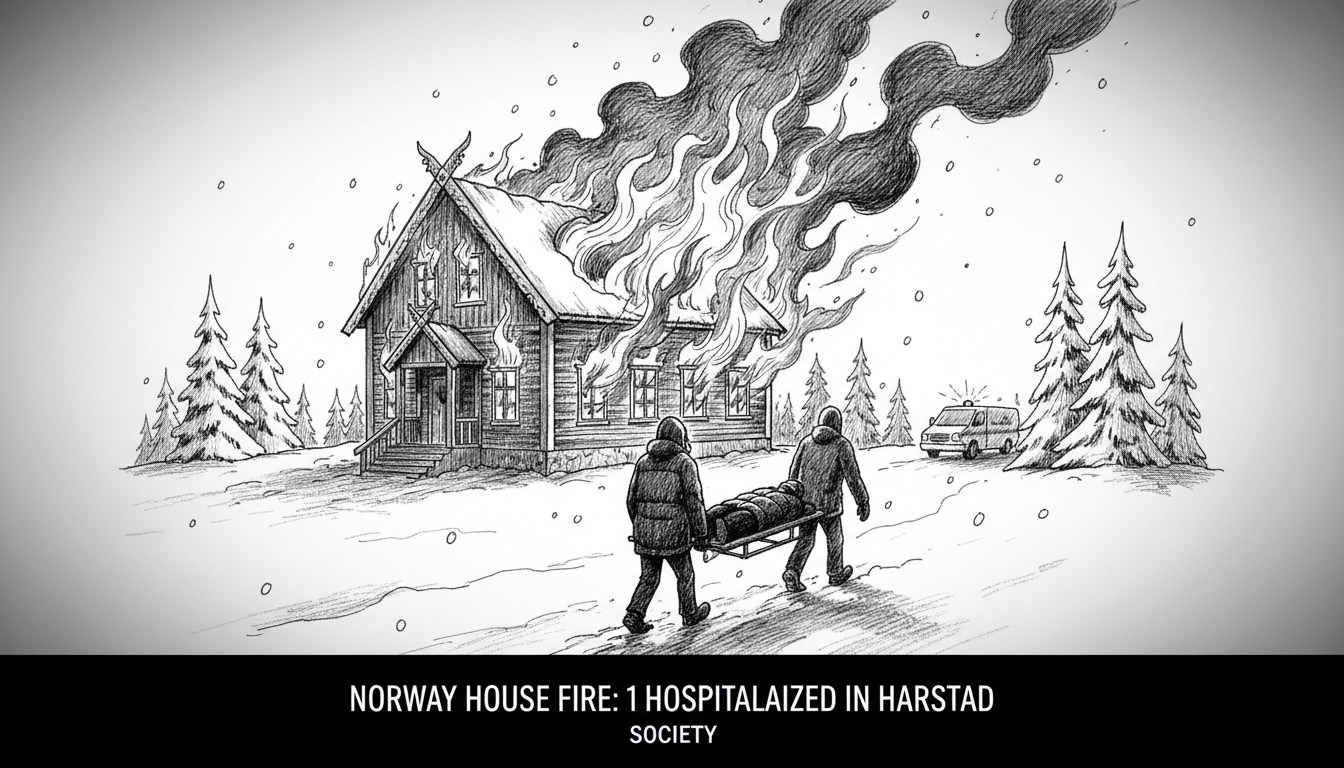
Norway's Troms police district reported a residential fire in Harstad that hospitalized one person Tuesday night. Emergency services responded to Borgveien at 22:26, where flames engulfed a home in the northern municipality. The individual was transported to Harstad Hospital with injuries of unknown severity. This incident highlights the persistent risks of household fires in Arctic communities, even in a nation with stringent safety standards.
The Borgveien Blaze: A Late-Night Emergency
Police confirmed the fire at 10:26 PM local time. First responders from the Harstad fire and rescue service arrived quickly at the address. Their immediate priority was evacuating the resident and preventing the blaze from spreading to neighboring properties. The cause of the fire remains under investigation by local authorities. No other injuries were reported, but the event has shaken the quiet neighborhood.
Cold nighttime temperatures in Troms county, currently hovering near freezing, can complicate firefighting efforts. Water used to douse flames can ice over, creating hazardous conditions. The structural integrity of buildings is also tested when extreme heat meets frigid air. This fire serves as a stark reminder of the unique challenges faced by emergency crews in Norway's north.
Harstad's Context and Community Impact
Harstad is a key regional center in Troms county with a population of over 24,000. It serves as an important hub for commerce, education, and healthcare in Northern Norway. Residential areas like Borgveien feature a mix of older wooden homes and modern apartments. Densely built-up zones can allow fires to spread rapidly if not contained early.
The hospitalized person's condition is a primary concern for the community. Local officials have not released the individual's identity, citing privacy protocols. Neighbors expressed shock and offered support to the affected household. Such events resonate deeply in close-knit northern towns where many residents know each other.
Fire Safety in the Norwegian Arctic
Norwegian fire safety experts consistently emphasize the critical role of prevention. "Smoke detectors are the first line of defense in any home," said a senior advisor from the Norwegian Directorate for Civil Protection. Early warning systems are particularly vital during night hours when occupants are asleep. Norwegian law requires working smoke detectors in all residential buildings.
The country's cold climate exacerbates fire damage risks. After a fire, water damage from extinguishing efforts can quickly lead to mold and structural weakening in sub-zero temperatures. This often results in higher repair costs and longer displacement for families. Prevention is not just about saving lives but also preserving property in harsh environments.
Residential fires in Norway have declined over the decades due to improved regulations. However, isolated incidents like the Harstad blaze show vulnerabilities remain. Older housing stock, especially in northern regions, may not have the same updated electrical systems as newer constructions. Winter months also see increased use of heating sources, which can elevate risk if not properly maintained.
Analysis of Emergency Response Protocols
Norway's emergency response model is decentralized but highly coordinated. Local fire departments, like Harstad's, are the first responders. They work in tandem with police and medical services. The police district's swift notification of the fire at 22:26 indicates efficient communication channels. Response times in urban Harstad are generally good, but remote areas in Troms county can pose logistical challenges.
The priority of life safety is absolute. Extricating the injured person and securing the scene takes precedence over property salvage. Firefighters then focus on containment to protect adjacent homes. In this case, the fire was confined to one residence, suggesting effective containment efforts. The response aligns with national standards that stress rapid intervention.
Broader Implications for Norwegian Policy
This fire occurs against a backdrop of national discussions on community safety. The Norwegian government has invested in modernizing emergency response infrastructure across the north. This includes upgrading communication networks and providing specialized cold-weather gear for crews. Such investments are tested in real-time during incidents like the Borgveien fire.
Building codes in Norway are among the world's strictest, mandating fire-resistant materials and clear escape routes. However, enforcement and retrofitting of older buildings are ongoing challenges. Municipalities like Harstad must balance preservation of historical homes with necessary safety upgrades. This fire may prompt local audits of residential fire safety compliance.
Expert Perspectives on Prevention and Aftermath
Fire investigators will now work to determine the blaze's origin. Common causes in Norwegian homes include electrical faults, kitchen accidents, or heating system failures. Experts stress that regular maintenance of wiring and appliances is crucial. They also recommend having fire extinguishers accessible and practicing home escape plans with all family members.
The psychological impact on the victim and neighbors is another concern. Community support services in Harstad may be activated to help those traumatized by the event. Recovery involves not just physical rebuilding but also emotional healing. Norwegian health services are adept at providing such holistic care in the aftermath of crises.
Looking Ahead: Recovery and Resilience
The injured person's recovery path will depend on the nature of their burns or smoke inhalation. Harstad Hospital is well-equipped for trauma care, but severe cases might require transfer to larger facilities in Tromsø. The community will likely rally around the affected family, offering practical help and solidarity.
This incident underscores a universal truth: fire risk exists everywhere, even in safety-conscious Norway. It prompts homeowners to check their smoke detectors and review their emergency plans. For local authorities, it is a case study in response effectiveness and prevention outreach. The resilience of Harstad will be shown in how it learns from this event to strengthen community safety for all residents.
As the investigation continues, the focus remains on the individual fighting for recovery in hospital. Their ordeal is a poignant reminder of what is truly at stake when the alarm sounds in the night.