
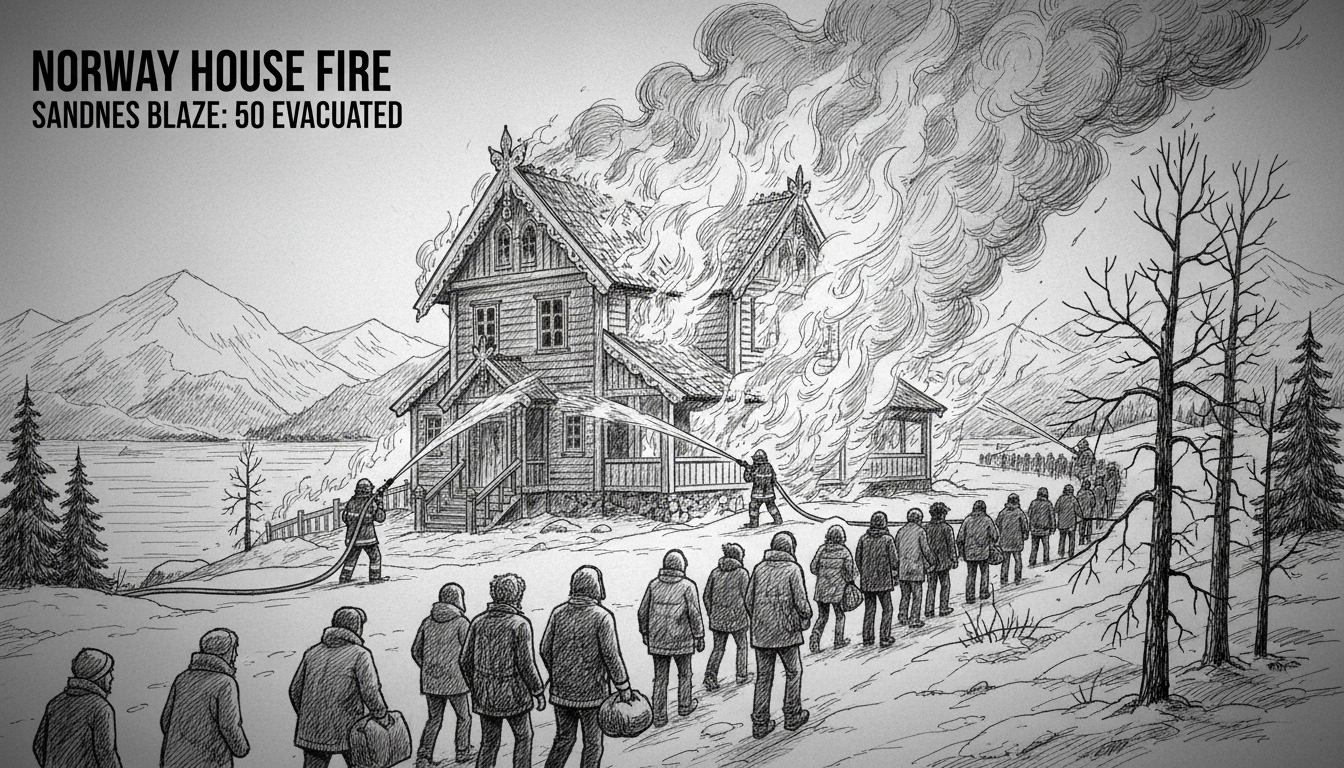
Norway's emergency services responded to a major residential fire in Sandnes Friday evening, evacuating approximately 50 people from 18 housing units. The blaze, which caused significant damage, broke out in the Skaarlia area, a hillside neighborhood characterized by large, closely spaced wooden single-family homes. Authorities reported no injuries in the immediate aftermath.
A Hillside Engulfed
The Skaarlia district, where the fire took hold, is typical of many residential zones in Norwegian towns. Its architecture—substantial timber homes built on steep slopes—presents both aesthetic charm and distinct firefighting challenges. The proximity of the structures, combined with wooden construction, can facilitate the rapid spread of flames, a concern repeatedly highlighted by safety experts across the Nordic region. Fire crews from Sandnes and likely neighboring Stavanger faced a complex task: containing the fire in a dense area while ensuring the safe evacuation of residents.
Initial reports indicate the fire resulted in total damage to at least two houses. The scale of the response suggests the potential for a significant incident, requiring multiple emergency units. The successful evacuation of all residents without injury points to effective coordination between first responders and local authorities. Such incidents test municipal emergency plans, particularly in communities where terrain and building materials add layers of difficulty to standard fire suppression protocols.
The Timber Construction Question
This fire in Sandnes inevitably renews a longstanding conversation in Norway about building standards and fire safety in wooden residential areas. While timber is a traditional and sustainable building material deeply rooted in Norwegian architecture, its use in dense configurations requires stringent preventive measures. Experts consistently emphasize the critical importance of adequate spacing, modern fire-retardant treatments, and functional sprinkler systems in mitigating risk.
"When wooden houses are built close together on a hillside, a fire in one structure can quickly become a threat to an entire neighborhood," said a fire safety engineer with knowledge of Norwegian building codes, who asked not to be named as the official investigation is ongoing. "The key is a combination of passive protection—like firewalls and treated wood—and active systems, alongside clear evacuation routes for residents." The incident in Skaarlia will likely be examined through this lens, with investigators looking at the construction specifics and the fire's path to inform future safety recommendations.
For the evacuated families, the immediate concern is shelter and assessing the damage to their property. Norwegian municipalities, supported by organizations like the Norwegian Red Cross and the Church's City Mission, typically activate local support networks to provide temporary housing, clothing, and crisis support in such situations. The psychological impact of losing a home, even if physically unharmed, is significant and often requires longer-term community support.
Emergency Response in Focus
The response to the Sandnes fire showcases Norway's integrated emergency management system. Police, fire, and health services operate on coordinated communication channels, allowing for swift evacuation orders. In a compact city like Sandnes, with a population of around 85,000, such coordination is crucial. The city's proximity to Stavanger, a larger urban center with additional specialist resources, also provides a backstop for major incidents.
Analysts note that effective evacuation, as seen here, is the paramount goal. "The primary metric of success in a sudden residential fire is life safety," said an emergency response analyst familiar with Scandinavian protocols. "The fact that around 50 people were moved to safety without injury suggests alarms functioned, evacuation messages were clear, and residents followed instructions. This is a testament to both public awareness and responder effectiveness." The aftermath will involve a thorough debrief among agencies to identify any logistical hurdles faced during the operation, particularly given the area's topography.
A Community's Resilience
Beyond the emergency response, the story shifts to the community of Sandnes itself. The city, often paired with Stavanger as part of a contiguous metropolitan area in Rogaland county, has a strong sense of local identity. Incidents like this often trigger a wave of community solidarity. It is common for neighbors, local businesses, and volunteer organizations to mobilize offers of help, from providing meals to collecting donations for those displaced.
The road ahead for the affected families involves navigating insurance claims, finding temporary accommodation, and eventually rebuilding or repairing their homes. The process can be lengthy, especially if the fire investigation takes time to determine a precise cause. Norwegian home insurance is widespread and typically covers such catastrophic events, but the emotional and practical disruption remains profound.
This fire also serves as a stark reminder for homeowners across Norway. Fire departments routinely advise checking smoke alarms, having clear escape plans, and understanding the specific risks associated with one's own property type. For those in wooden homes, ensuring that electrical systems are modernized and that vegetation is kept clear from structures are simple but vital preventive steps.
Looking Forward: Safety and Prevention
While the cause of the Skaarlia fire remains undetermined pending an official investigation, the event will almost certainly influence local policy discussions. Municipal planning committees may scrutinize building density rules in hillside wooden housing areas. Fire safety advocacy groups will use it to reinforce public education campaigns. The national Directorate for Civil Protection (DSB) may incorporate any lessons learned into its broader guidance for municipalities.
For now, the focus in Sandnes is on recovery and support. The sight of fire-damaged homes on a peaceful hillside is a jarring one, disrupting the sense of security that defines residential life. Yet, the absence of injuries provides a crucial silver lining. As the investigation proceeds and rebuilding begins, the incident underscores a universal truth: in communities built from wood, vigilance is the indispensable foundation of safety. The resilience of Sandnes will now be measured not just by the response to the flames, but by the care shown in the ashes.