
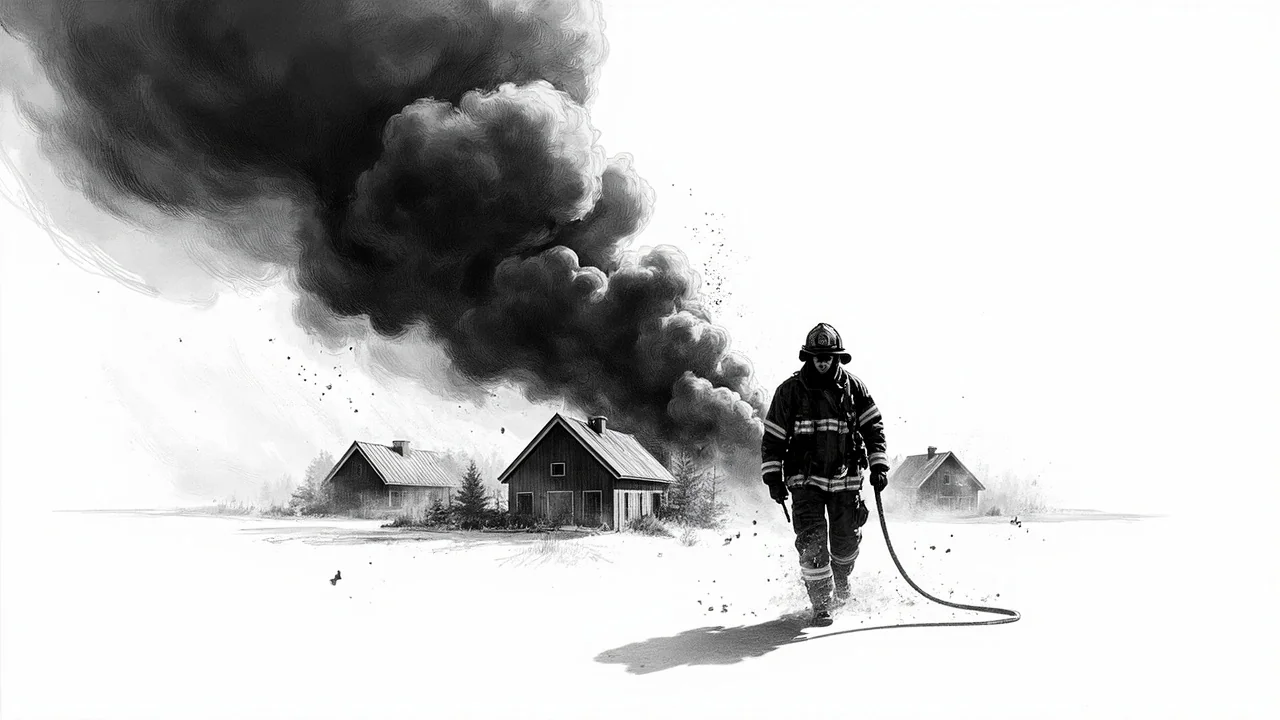
Norway emergency services responded to a major house fire with intense smoke development in Brevik, Porsgrunn, on Tuesday. Police worked to determine if anyone was inside the property while firefighters entered with breathing apparatus. Two individuals were assessed by ambulance personnel at the scene and were confirmed to be uninjured.
The incident, which saw a significant deployment of resources to the residential area, highlights the ever-present risks in communities along Norway's southern coast. While the immediate danger was contained, the event triggers a broader examination of fire safety in Norwegian homes, particularly in older housing stock common in towns like Brevik.
Emergency Response in a Coastal Community
Initial reports described "kraftig røykutvikling" or intense smoke development, a term that prompts a full-scale response from Norwegian emergency crews. The Brevik fire service, part of the larger Porsgrunn municipality apparatus, mobilized quickly. Firefighters equipped as "røykdykkere"—smoke divers using self-contained breathing apparatus—entered the building to search for occupants and locate the seat of the fire.
This standard procedure in Norway prioritizes life safety and rapid intervention. The simultaneous work by police to account for all potential residents underscores the coordinated protocol between agencies. The confirmation that two people were checked and found unharmed is the primary positive outcome from any such event. The speed of this assessment is crucial, as smoke inhalation remains a leading cause of fire-related injury and death.
The Unseen Danger of Smoke
While flames capture attention, smoke is often the more insidious threat in residential fires. "Kraftig røykutvikling" indicates a significant combustion process, potentially involving modern synthetic materials in furnishings that produce thick, toxic fumes. These fumes can spread rapidly through a home, disorienting occupants and blocking escape routes long before heat or flames become an immediate danger.
Norwegian fire safety education, led by organizations like the Norwegian Directorate for Civil Protection (DSB), consistently emphasizes the importance of early detection and planned escape. The presence of working smoke alarms is a legal requirement in all Norwegian dwellings. Investigations into fires like the one in Brevik often examine alarm functionality and occupant response time as key factors.
Building Safety in Norway's Older Towns
Brevik, with its history as an important industrial and shipping hub in Telemark county, contains a mix of architectural styles. Like many Norwegian towns, its residential areas feature traditional wooden houses alongside more modern constructions. Wooden structures, while treated with modern fire retardants, require vigilant maintenance and updated electrical systems to mitigate fire risk.
This incident serves as a community reminder. Local fire chiefs frequently advocate for regular checks of electrical wiring, heating sources like wood-burning stoves, and safe storage of flammable materials. The government's DSB regularly publishes statistics showing that the leading causes of house fires in Norway are related to electrical faults, cooking, and fireplaces or chimneys.
The Human Element and Community Resilience
Beyond the technical response, a house fire is a deeply personal crisis. For the individuals involved, even without physical injury, the event is traumatic. The loss of personal belongings, damage to one's home, and the sheer shock of the event have a lasting impact. In close-knit communities like Brevik, such events are felt collectively. Neighbors often provide immediate support, offering shelter and assistance in the aftermath.
Norwegian municipalities have social services protocols to support citizens displaced by fires. This can include temporary housing assistance and coordination with insurance companies. The quick work by emergency services to secure the property and prevent further damage is the first step in a longer recovery process for the homeowners.
Analysis: Preparedness in a High-Standard Nation
Norway boasts one of the world's most comprehensive welfare and safety systems. Its emergency response times are generally excellent, and its building codes are stringent. Yet, no system is immune to the sudden onset of a residential fire. This event in Brevik is not an anomaly but part of a national pattern of hundreds of such calls responded to each year.
The true test of a safety system is its performance in routine emergencies, not just large-scale disasters. The effective response in Brevik—where injuries were prevented and the situation was brought under control—demonstrates the value of sustained investment in professional and volunteer fire services across Norway's municipalities. It also highlights the importance of individual preparedness. Experts consistently state that the minutes before firefighters arrive are the most critical, determined by the actions of the occupants themselves.
A Look at the Broader Safety Landscape
This fire occurs within a national context where fire safety is a prioritized public policy. The DSB runs annual public awareness campaigns. Insurance companies offer incentives for homes with installed sprinkler systems, though these are not mandatory in single-family homes. There is an ongoing political discussion, particularly after fatal fires, about making more advanced safety measures compulsory in certain types of housing.
For now, the backbone of Norwegian home fire safety remains the smoke detector, a planned escape route, and a public expectation of a rapid, professional response. The Brevik incident, thankfully a non-fatal one, validates this model while also providing a case study for local services to review their own performance. Every response offers lessons that can be applied to the next call.
The Path Forward for the Affected Home
Following the extinguishment of the fire, the next phases begin. Fire investigators will work to determine the precise cause and origin. This forensic work is essential not only for insurance purposes but for collecting data that can inform future prevention efforts. The building itself will need to be assessed for structural safety before any cleanup or repair can commence.
The homeowners will navigate the process with their insurance company, a standard but often stressful procedure in Norway's highly regulated insurance market. The community's role shifts from emergency response to longer-term support, a testament to the social cohesion found in towns throughout Telemark and the wider Norwegian society.
In the end, the story from Brevik is one of a crisis averted. The keywords were "kraftig røykutvikling," but the outcome was "ikke skadet"—not injured. This is the result every emergency crew works for, and the foundation upon which Norway's reputation for safety is built. It is a quiet reminder that safety is not an abstract concept but the product of training, investment, and community awareness, tested in real time on an ordinary day in a coastal Norwegian town.