
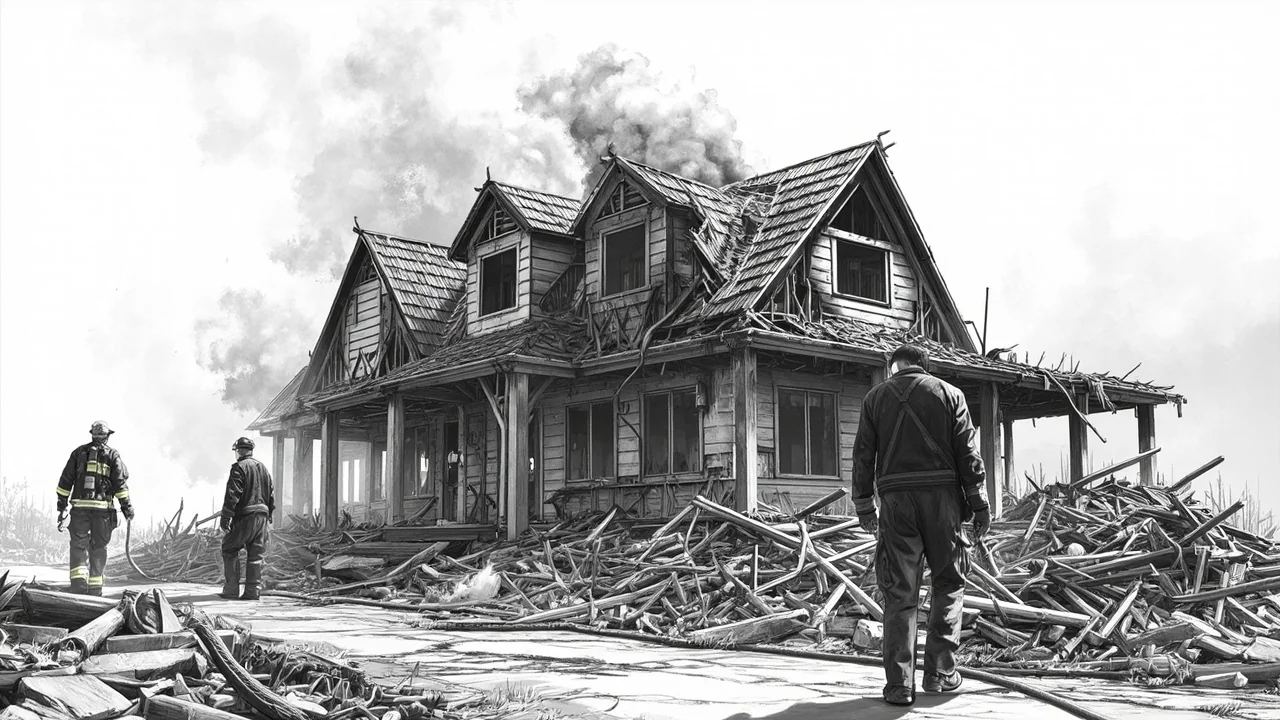
Norway's emergency services battled a severe house fire in Brevik overnight, with police confirming the detached home was completely destroyed. The blaze, reported at 10:41 PM, remained uncontrolled for over four hours, with authorities stating the house would burn to the ground. All residents were accounted for and two people received medical checks at the scene but were not injured.
The incident unfolded in the industrial port town of Brevik, part of Porsgrunn municipality in Telemark county. This region, historically central to Norway's maritime and chemical industries, now faces a stark reminder of the personal tragedies that can strike any community. Police maintained a perimeter as firefighters from multiple stations worked to contain the flames and prevent spread to neighboring properties.
A Long Night for Emergency Responders
Police provided sparse updates through the early morning hours, a common practice during active incidents to avoid compromising operations. Their final confirmation that the house was a total loss came just before 3:00 AM. The focus for crews on the ground shifted from saving the structure to ensuring the fire's complete extinguishment and investigating the site for safety and cause.
The fact that all residents were confirmed safe and only two required medical evaluation is the sole positive outcome from a devastating event. For the homeowners, the reality of losing a residence, along with all personal possessions within, will only set in as daylight reveals the full extent of the damage. The psychological and financial impact of such a total loss is profound and long-lasting.
The Broader Context of Norwegian Fire Safety
While this is a localized tragedy, it occurs against a national backdrop of evolving fire safety challenges. Norway has a strong building code, particularly for new constructions, which emphasizes non-combustible materials and compartmentalization to slow fire spread. However, a significant portion of the Norwegian housing stock, especially detached homes like the one in Brevik, is older.
Many single-family homes were built before modern fire safety regulations were fully implemented. Renovations and the installation of modern insulation can sometimes alter fire behavior in unforeseen ways. Furthermore, the increased use of synthetic materials in furniture and home goods compared to decades ago can lead to faster, hotter, and more toxic fires.
"Every total loss fire is a catastrophe for the family involved and a sobering event for the community," says a fire safety engineer with the Directorate for Civil Protection (DSB), who spoke on background. "Our data shows response times are generally excellent, but when a fire gains a significant hold in a detached dwelling, the outcome is often determined before the first truck arrives. This underscores the irreplaceable value of working smoke alarms and having an escape plan."
Community Impact in an Industrial Heartland
Brevik is not a major urban center but an integral part of Norway's industrial identity. The town sits on the Frierfjord, a branch of the vast Skagerrak strait, and is dominated by large-scale chemical and manufacturing plants. The community is tight-knit, where many families have lived for generations, working in maritime trades or the nearby industry.
A house fire here resonates deeply. Neighbors likely know each other, and local volunteer fire departments may include acquaintances or even relatives of those affected. The loss extends beyond property; it can mean the destruction of family heirlooms, photographs, and the tangible history of a household. The community's response in the coming days—through offers of shelter, clothing, or fundraising—will be a critical component of recovery.
This incident also highlights the operational load on municipal emergency services. While large industrial facilities in the area have their own dedicated, advanced fire crews, residential fires fall to the municipal fire department. They must be prepared for everything from a kitchen grease fire to a fully involved structure blaze, often with limited immediate manpower until mutual aid arrives.
The Path Forward for the Affected Family
The immediate aftermath involves police and fire investigators determining the cause of the blaze. This is a standard procedure for a major fire. Insurance assessors will then visit the site. Most homeowners in Norway are comprehensively insured through a husforsikring (home insurance) policy, which typically covers fire damage, temporary accommodation, and liability.
However, navigating a total loss claim is a complex and stressful process. The insurance settlement must cover not just the rebuilding of the structure but also the replacement of all contents. The emotional toll of cataloging a lifetime of lost possessions for an insurance report is immense. The family will likely rely on temporary housing, possibly provided by the insurance company or arranged with family in the area, for many months while decisions about rebuilding or relocating are made.
Local municipal services in Porsgrunn may also offer support through their social services department, particularly if the family has children or vulnerable members. The Norwegian Red Cross (Røde Kors) is often active in such situations, providing emergency aid like toiletries, blankets, and emotional first aid.
A National Conversation on Prevention
Tragedies like the Brevik fire, while isolated, inevitably prompt professional and public reflection on prevention. The DSB continuously runs public awareness campaigns stressing the importance of smoke alarms, having fire extinguishers, and practicing home escape routes. They emphasize that most deadly fires start at night, making working smoke alarms the single most effective lifesaving device.
There is also an ongoing discussion among safety professionals about the need for residential sprinkler systems in single-family homes. While costly and seen as impractical for retrofitting, they are arguably the most effective method for controlling a fire before it becomes a total loss. This debate balances cost, practicality, and the value of preventing the kind of utter destruction seen in Brevik.
For now, the community's thoughts are with the neighbors who have lost their home. The charred foundation and rubble will remain a visible scar for some time, a silent testament to a night when the routine of a quiet port town was shattered by flame. The resilience of the affected family and the strength of their community support will now be tested, as the long process of recovery begins amidst the ashes.