
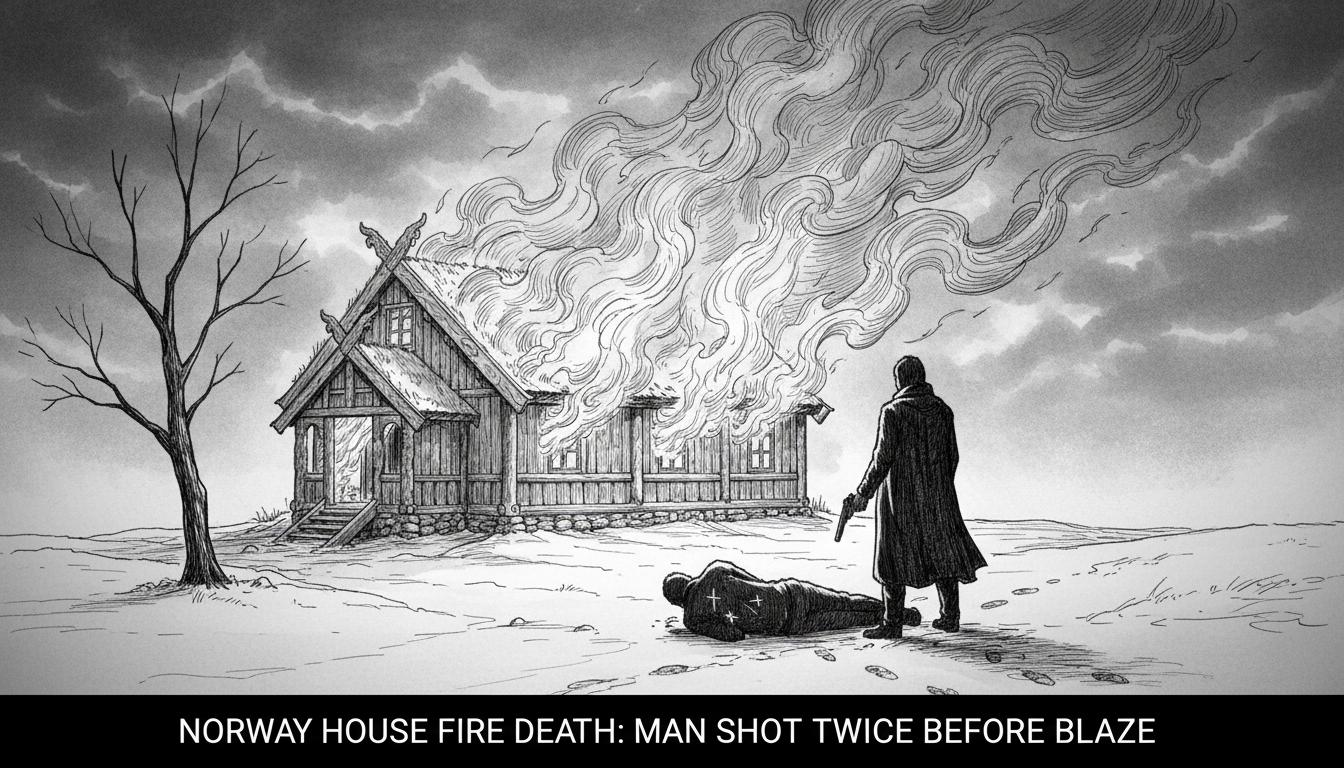
Norway police are investigating a death after an 89-year-old man was found shot in a burning house. The man was discovered in a burning detached home in Bergen in the early hours of January 15, 2025. Authorities have stated the death is being treated as a suicide, a conclusion now being questioned by the man's family.
Firefighters extracted the man's body from the bedroom of the burning property. He was pronounced dead at the scene. A subsequent autopsy revealed the man had sustained two gunshot wounds to the head. Crucially, forensic pathologists found no soot in his lungs. This indicates he was not breathing when the fire spread, meaning he died before the flames reached the bedroom.
A Family's Doubts and a Police Investigation
The deceased's relatives have publicly criticized the police investigation. They have raised questions about the sequence of events and the rapid conclusion of suicide. In Norway, police procedures for unexpected deaths are typically thorough, involving forensic teams, scene analysis, and consultation with medical experts. The family's concerns add a layer of complexity to a tragic case that initially appeared straightforward to investigators.
"We are following standard procedure in this investigation," a police spokesperson said in a statement. "All evidence from the scene and the autopsy report has been carefully examined. The current assessment points to the man taking his own life before the fire started." The police have not disclosed if a firearm was recovered at the scene, which is standard in such investigations to confirm ballistics and ownership.
The Forensic Evidence: Decoding the Scene
Forensic science plays a central role in cases involving fire and trauma. The absence of soot in the airways is a definitive marker. When a person is alive during a fire, they inhale smoke, hot gases, and toxic particles, which deposit soot deep in the lungs. The clean lungs of the 89-year-old man provide strong evidence he was deceased prior to significant smoke inhalation.
Experts explain that investigators would reconstruct the fire's origin and path. They would determine if an accelerant was used and map the burn patterns. This work helps establish whether the gunshot or the fire occurred first. The location of the body, the presence of any weapons, and the trajectory of the bullets are all pieces of a puzzle meticulously assembled by the police.
Understanding Suicide in Norway's Context
This incident occurs within Norway's broader societal context regarding suicide. The country has a developed mental health care system and national prevention strategies. Each suicide is a profound personal tragedy with complex, individual causes. For an elderly individual, factors can include isolation, physical health decline, and depression, though authorities have not commented on the man's personal circumstances.
The police's public stance that this was a suicide suggests their investigation found no signs of a struggle or another person present. They would have examined entry points, the state of the house, and the man's personal history. In Norway, a coroner's verdict is required for all unnatural deaths, and this process is ongoing.
The Human Element: Grief and Unanswered Questions
Beyond the forensic report and police statements lies a family in mourning. Their public criticism highlights the anguish that can accompany sudden, violent loss. When official conclusions clash with a family's perception of their loved one, it creates an additional emotional burden. They are left grappling not only with grief but with unresolved doubts about the final moments of his life.
Community support services in Bergen are often engaged in such tragedies. The sudden loss, compounded by the violent and public nature of the incident, can have a ripple effect on neighbors and the local area. The case serves as a somber reminder of the silent struggles individuals may face, regardless of age or circumstance.
A Look at Procedures and Next Steps
Norwegian police will continue to finalize their report. The final determination will be part of an official death certificate. The family may request a review of the investigation or seek independent expert opinions, though this is less common in Norway's tightly managed judicial system.
The case, while currently classified as a suicide, underscores the meticulous work of forensic teams. They must distinguish between different types of trauma and the effects of fire, a challenging task even for experienced professionals. Their findings form the bedrock of the legal and administrative process that follows a death.
This tragedy in Bergen is a single, stark event. Yet it opens a window into the processes that follow an unnatural death, the science of forensic investigation, and the enduring human need for answers in the face of inexplicable loss. The family's search for clarity continues, even as the police consider the case resolved from an investigative standpoint. The question of what led to that fatal night in January remains, for some, painfully open.