
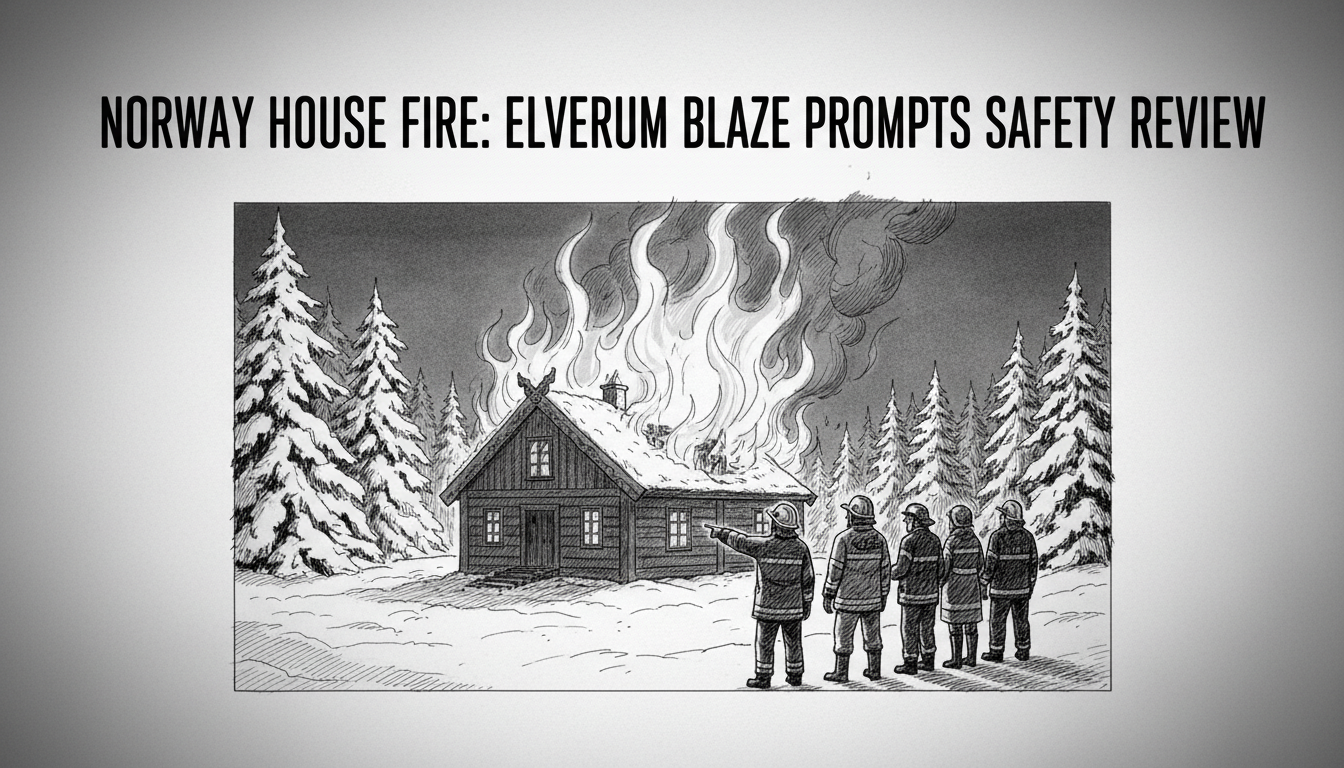
Norway emergency services responded to a residential fire in Elverum just before 1:30 AM. The blaze broke out in a residential building in the Innlandet county municipality, prompting a major response from police and fire crews. Initial searches by firefighters using breathing apparatus found no individuals inside the structure, though the situation remained unclear for several hours.
Police Operations Manager Christian Svarstad provided an update from the scene. "After examinations at the site, there is nothing to suggest that people have been injured as of now," Svarstad said. The confirmation brought relief after a tense period where authorities could not rule out occupants being trapped. The cause of the fire is not yet known, and a police investigation will commence once the scene is secure.
A Tense Night in Eastern Norway
Emergency vehicles flooded the quiet residential area in the early hours. Their flashing blue lights cut through the darkness, illuminating plumes of smoke rising from the building. Firefighters worked quickly to contain the blaze and prevent it from spreading to neighboring properties, a critical concern in areas with closely built homes. The operation involved both extinguishing the fire and conducting systematic searches.
Røykdykkere, or smoke divers—firefighters equipped with breathing apparatus—entered the building as soon as it was safe to do so. Their primary mission was a life-saving search. "It was unclear whether there were people inside the building," Svarstad noted, explaining the initial uncertainty that guides all such responses. The successful containment and lack of injuries mark this as a fortunate outcome given the potential for tragedy.
The Persistent Challenge of Wooden Structures
This incident highlights an enduring safety challenge in Norwegian communities. Elverum, like many towns across the country, features a significant number of residential buildings constructed with wood. This traditional building material is prized for its sustainability and cultural resonance but presents a distinct fire risk, particularly during dry periods. A single spark can lead to a rapidly developing fire.
Fire safety experts consistently stress that prevention and early warning are paramount. "The difference between a small incident and a catastrophic loss is often measured in minutes," says Lars Holm, a fire safety engineer with the Norwegian Directorate for Civil Protection (DSB). "Functional smoke detectors are the most critical component in any home. They provide the earliest possible warning, which is essential for escape." Norwegian building codes have evolved, but a large portion of the housing stock predates the most stringent modern regulations.
Community and Response in Innlandet
Elverum is a municipality of approximately 21,000 residents, known for its deep forests and agricultural heritage. It is a community where people often know their neighbors, making a nighttime fire a deeply unsettling event. The efficient response from local emergency services demonstrates the prepared infrastructure in place even in smaller Norwegian towns. Resources from the local police district and the Innlandet Fire and Rescue Service were coordinated effectively.
The psychological impact of a house fire extends beyond the immediate property loss. It shatters the fundamental sense of security a home provides. Community support systems, often coordinated by the local municipality and volunteer organizations like the Norwegian Red Cross, typically activate in the aftermath to provide temporary housing, clothing, and counseling for those displaced.
Investigating the Source of the Blaze
With the fire extinguished, the focus now shifts to investigation. Police will work with fire cause analysts to determine the origin of the blaze. This is a meticulous process that involves sifting through debris to find the point of ignition. Common causes in residential fires include electrical faults, cooking accidents, improper use of heating appliances like wood stoves, or careless disposal of smoking materials.
"Determining the cause is not just about assigning blame," explains Senior Investigator Eva Larsen. "It is a crucial learning tool. Every investigation informs public safety campaigns and can lead to recommendations for product recalls or changes to safety guidelines. Our goal is to prevent the next fire." The findings from Elverum will be added to national statistics, helping shape broader safety strategies.
National Context and Preventative Measures
This fire occurs within a national framework focused on reducing fire-related deaths and injuries. Norway has seen a significant decline in fire fatalities over past decades, a trend attributed to aggressive public education campaigns and the legislated installation of smoke detectors. However, each incident serves as a stark reminder that risk remains.
The Norwegian Directorate for Civil Protection runs recurring campaigns with clear messages: test smoke detectors monthly, have an escape plan, and never leave open flames unattended. They particularly target the winter months, when the use of candles for ambiance and wood-burning stoves for heat increases the statistical risk. For older wooden homes, additional measures like fire-retardant treatments and ensuring clear escape routes are emphasized.
Looking Ahead: Safety in a Changing Climate
The Elverum fire also invites consideration of larger environmental factors. Climate change is leading to warmer, drier summers in parts of Norway, increasing the risk of wildfires that can threaten communities and prolonging the seasonal window for high fire danger. This environmental shift places additional importance on community-wide preparedness, defensible space around properties, and heightened vigilance during drought conditions.
Municipalities are increasingly reviewing their emergency response plans with these climate projections in mind. This includes ensuring adequate water supply for firefighting during dry spells and educating homeowners about creating firebreaks. The interplay between traditional building materials, modern safety codes, and a changing climate creates a complex safety landscape for Norwegian towns.
A Close Call and a Constant Vigilance
The successful response in Elverum, resulting in no reported injuries, is a testament to the professionalism of Norway's emergency services. Yet, it underscores a universal vulnerability. A home can be transformed from a place of safety to a scene of danger with alarming speed. The incident reinforces the non-negotiable importance of basic preventative measures—working smoke detectors, cautious use of heat sources, and a practiced escape plan.
As the investigation proceeds and the community in Elverum assesses the damage, the event resonates far beyond the town's borders. It is a case study in effective emergency response, a prompt for personal safety checks, and a reminder of the ongoing work required to protect Norway's distinctive wooden architecture from its inherent risks. The question for every homeowner, from Elverum to Oslo, becomes simple: When was the last time you tested your smoke detector?