
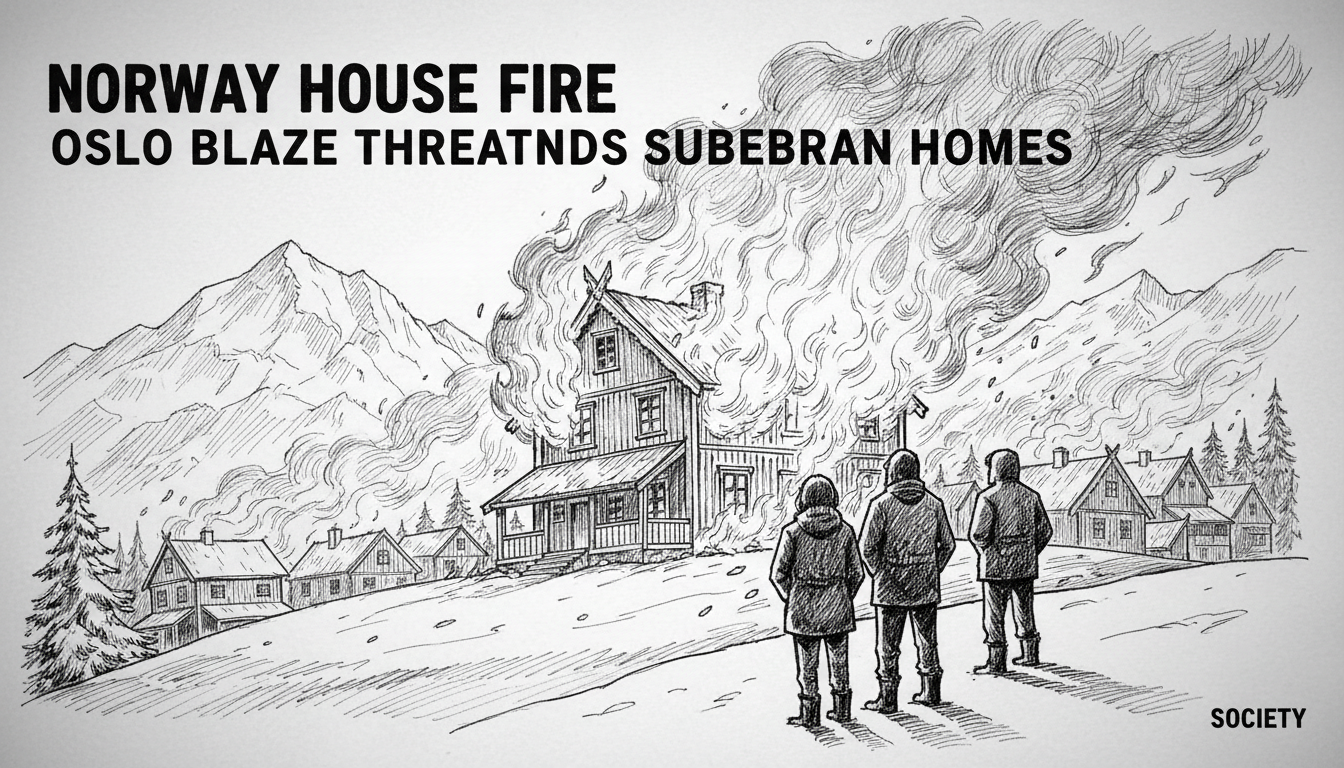
Norway's emergency services battled a major residential fire in Oslo's Østensjø borough on Tuesday evening. Flames engulfed a large single-family home, forcing the evacuation of a neighboring property and prompting a significant response from the Oslo Fire and Rescue Service.
Operational leader Øyvind Hammervold confirmed initial assessments. "At the moment, there is nothing to indicate that there are people inside," Hammervold said. Firefighters focused their initial efforts on preventing the blaze from spreading to adjacent houses in the densely built suburban neighborhood.
A Race Against the Flames
Tor Audunhus, a duty officer with the emergency services, described the scene to reporters. "It is a full fire internally in a large detached house. We have started extinguishing through windows. Smoke divers are on their way in." He emphasized the primary concern was containment. "We are focused now on ensuring it does not spread. The detached house stands quite close to the neighboring house. There are not many meters between them."
This proximity triggered immediate protective actions. Police advised residents in nearby homes to close windows and doors due to heavy smoke. Authorities evacuated the house next door as a precautionary measure. By 18:04, the fire department reported it had gained "some control" over the fire, a critical milestone in preventing a larger disaster.
The Anatomy of a Suburban Fire Response
Fires in residential areas like Østensjø present unique challenges for Norwegian emergency services. The borough is characterized by a mix of single-family homes, many built with traditional wood elements, and closer spacing than in rural areas. This combination can allow fires to spread rapidly if not contained early.
"The first priority in a residential fire is always life safety, followed by preventing extension to exposures," explained Lars Holen, a former fire safety director now with the Norwegian Fire Protection Association. "The report of smoke divers entering and attacking the fire through windows indicates a direct, offensive strategy to knock down the main body of fire before it breaches exterior walls."
Holen noted that the evacuation of the neighboring home, while disruptive, is a standard and vital protocol. "Smoke inhalation and radiant heat are significant risks in such scenarios. Evacuating the adjacent structure is a prudent, life-saving decision made long before flames actually touch it."
Building Safety and Urban Density in Focus
This incident places a spotlight on fire safety in Norwegian suburban housing. Norway has strict building codes, particularly for new constructions, which mandate fire-resistant materials and compartmentalization. However, older eneboliger, or detached houses, may not meet all modern standards.
"The key elements are early detection, early alarm, and early response," said Kari Nilsen, a building engineer specializing in fire safety. "Working smoke detectors are non-negotiable. For existing homes, homeowners should consider the spacing to neighboring properties, the condition of exterior cladding, and ensuring firefighters have clear access."
The Oslo Fire and Rescue Service is one of Scandinavia's most well-equipped, but urban density tests its capabilities. "They train extensively for exactly this: a structure fire in a tight neighborhood where the risk of a conflagration is real," Holen added. "The rapid deployment and focus on exposure protection described here is textbook procedure for a reason."
The Human Impact Behind the Headlines
While initial reports suggest no one was inside the primary house, the emotional and practical toll on homeowners and neighbors is immediate and severe. A house fire represents a profound violation of safety and the loss of personal sanctuary.
Insurance experts indicate that the aftermath involves more than just structural repair. "There is smoke damage to consider, potential water damage from firefighting efforts, and the complete disruption of daily life," noted Henrik Falk, a claims manager with a major Nordic insurer. "The process of recovery is long, often taking a year or more for significant fires, even after the flames are out."
Community response in areas like Østensjø often activates quickly. It is common for neighbors to offer temporary shelter, support with pets, or assist with immediate needs in the hours following an emergency, reflecting the close-knit nature of many Oslo suburbs.
A Broader Look at Norwegian Fire Statistics
Residential fires in Norway, while taken extremely seriously, are relatively less common than in many other countries, partly due to high building standards and a strong culture of safety. Most fatal fires occur in older housing stock and often involve factors like faulty electrical systems or unattended cooking.
The effectiveness of the response is measured in containment time and property saved. Gaining "some control" within a reported timeframe after the alarm suggests a successful initial engagement, though full extinguishment and overhaul—ensuring all hidden hot spots are out—can take many more hours.
Fire services also conduct thorough investigations post-fire to determine origin and cause, which can lead to broader safety advisories for the public. These findings are crucial for preventing future tragedies.
Lessons from the Østensjø Blaze
This fire serves as a stark reminder for all homeowners. Safety experts reiterate core advice: test smoke alarms monthly, have an escape plan, and never delay calling emergency services at the first sign of fire. For communities, it highlights the importance of clear street signage and accessible hydrants for fire crews.
As the smoke clears over Østensjø, the work shifts from emergency response to recovery and investigation. The speed and coordination of Oslo's firefighters likely prevented a more widespread disaster, but the event leaves a charred scar on the community and a warning about the ever-present vulnerability of our homes to fire. How prepared are we, really, when the unimaginable happens just next door?