
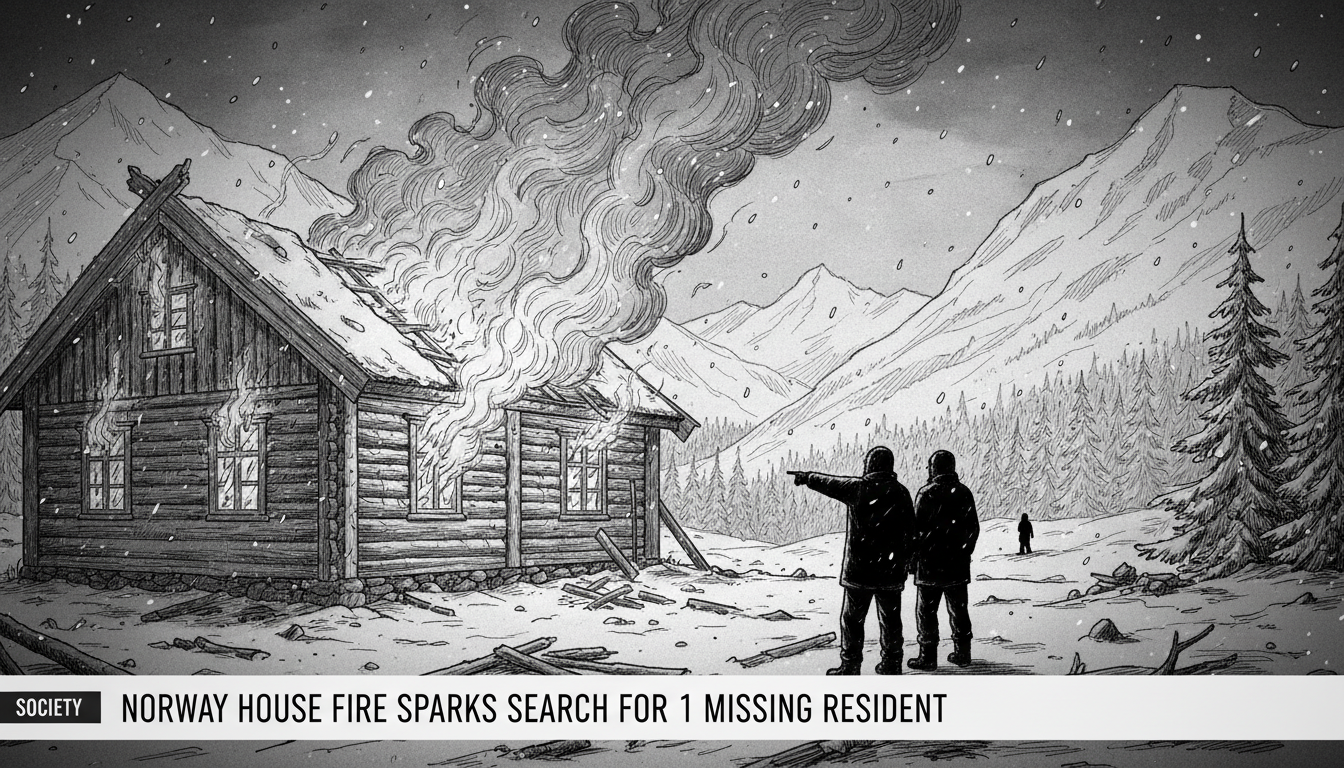
Norway's emergency services are searching for one missing person after a devastating house fire early Saturday. Police received the first alarm at 3:30 AM, with the fire taking hold so completely that authorities said the structure would burn to the ground.
"There is a full blaze in the house," operations manager Jan Kristian Johnsrud noted in a police log shortly after crews arrived. Firefighters worked through the morning to contain the inferno, but the damage was too severe. Police confirmed they have been unable to contact the individual registered as living at the address, raising urgent concerns for the person's welfare. A full search of the charred remains cannot begin for several hours, officials said.
A Race Against Time in the Cold Dark
The fire's timing, in the dead of night during a Nordic winter, compounded its danger. Most residents are asleep, and heating systems often run at their peak. The specific location of the fire has not been disclosed, but typical Norwegian residential areas feature a mix of modern insulated homes and older wooden structures. The country's Directorate for Civil Protection (DSB) emphasizes strict building codes for new constructions, mandating fire-resistant materials and multiple escape routes. Older homes, particularly traditional wooden houses common in rural and suburban areas, can be more vulnerable to rapid fire spread despite regulations for smoke alarms.
“The first priority is always life,” said a veteran fire commander from the Eastern Norway region, speaking on background about general procedures. “When we cannot account for a resident, the operation takes on a profoundly different character. We fight the fire with that uncertainty pressing on us.” The psychological toll on responders is significant, he added, especially in close-knit communities where they may know the residents.
The Grim Wait for Access
As dawn broke, the scene shifted from active firefighting to a controlled burn and cool-down operation. The police statement that the house was expected to burn down completely indicates the fire had reached a flashover point, where all combustible materials in a space ignite simultaneously. This intensity leaves little behind and makes the subsequent forensic investigation both critical and difficult.
“The inability to contact the registered resident is the central mystery now,” stated Erik Hansen, a former chief fire investigator for the DSB. “It directs the entire next phase. Investigators will be trying to determine if the person was home, if they escaped, or if they were away. Until they can safely enter the structure and, if necessary, conduct a recovery, the police cannot provide answers to the family or the public.”
The process is methodical. After the site is cool enough, fire investigation dogs may be brought in to detect accelerants. The electrical system, any remaining heating appliances like wood stoves or boilers, and the point of origin will be meticulously documented. This can take days or even weeks.
Norway's Fire Safety Landscape
While generally safe, Norway is not immune to residential fire tragedies. The combination of long, dark winters and widespread use of supplemental heating—including candles, wood-burning stoves, and electrical heaters—creates seasonal risk factors. The Norwegian Directorate for Civil Protection (DSB) maintains national statistics on fires. According to their latest annual report, Norwegian fire departments respond to approximately 1,800 structural fires in homes and holiday cabins each year. These fires result in, on average, between 30 and 40 fatalities annually, a stark reminder of the danger even in a safety-conscious society.
Building codes, updated regularly, focus on compartmentalization—using fire-resistant walls and doors to contain a blaze—and early warning systems. Since 2010, the installation of interconnected smoke alarms has been mandatory in all dwellings. “The technology and regulations are good,” Hansen noted. “But they cannot eliminate risk entirely, especially in older stock or in situations of human error or technical failure.”
A Community on Edge
The unresolved status of the folkeregistrert, or officially registered, resident leaves a community in limbo. In Norway, everyone is registered in the National Population Register with a primary address. This system allows authorities to quickly identify who should be at a location, but it does not track real-time whereabouts. Neighbors and local officials often hold crucial information in such cases.
Police have not indicated any suspicion of criminal activity, but standard procedure involves treating the scene as potential crime scene until evidence suggests otherwise. The local police district will lead the investigation, likely with technical support from the DSB's fire and explosion investigators.
For now, the focus remains on the grim task ahead: sifting through the ashes of a home to find answers. The story is a somber reminder of how quickly normalcy can vanish in the flare of a flame. As the investigation moves from emergency response to forensic analysis, one question hangs over the smoke-scarred plot: Who was home on that cold winter night, and what sparked the catastrophe that consumed their house?