
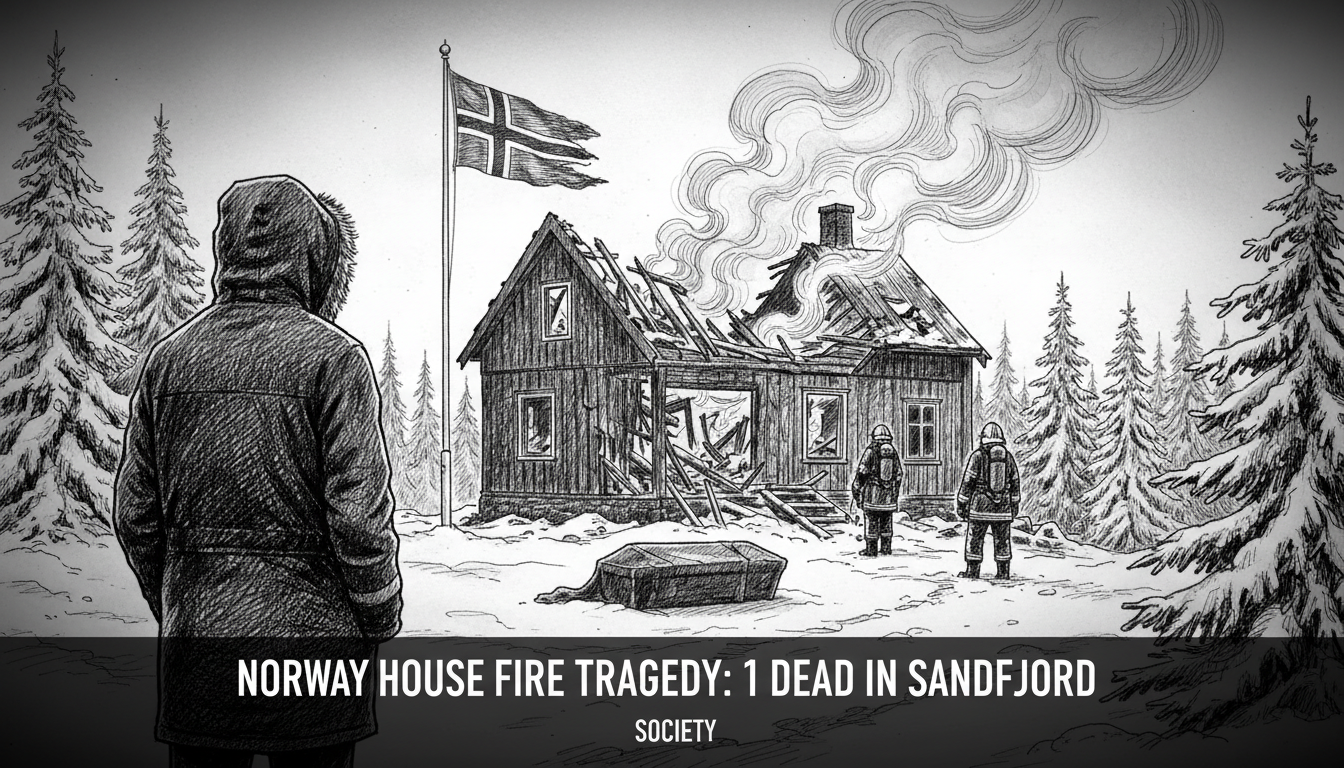
Norway's emergency services responded to a fatal house fire in Sandefjord overnight Friday. A person was found dead in the ruins of a detached wooden home after a severe blaze consumed the structure. Police and forensic technicians worked at the scene throughout Saturday.
"It was unfortunately found that one person died in the fire ruins," police said in a statement. The fire broke out in the early hours of Saturday in the single-family home. The old timber-framed house burned completely to the ground. Authorities have not released the identity of the deceased or any information about potential next of kin.
A Community in Mourning
Sandefjord, a coastal city in Vestfold county with a population of around 65,000, is a tight-knit community. Historically famous as a global whaling capital, its character is defined by maritime heritage and clusters of traditional wooden architecture. The sudden loss in a residential neighborhood sends shockwaves through the city. Local residents reported being awakened by the glow and the sound of emergency vehicles, with many expressing shock and sadness at the tragedy unfolding on their street.
This incident highlights a persistent vulnerability in Norwegian towns. While modern building codes are strict, a significant portion of the national housing stock, especially in older areas, consists of wooden buildings. These structures can be particularly susceptible to rapid fire spread if a blaze takes hold. The proximity of homes in many neighborhoods, a feature of traditional Norwegian town planning, can also pose additional risks during major fires.
The Investigation Begins
Forensic technicians from the police spent all day Saturday meticulously examining the charred remains of the property. Their work is critical to determining the fire's origin and cause. Standard procedure in such fatal fires involves ruling out criminal activity, though police have given no indication of foul play at this early stage. The investigation will likely examine electrical systems, heating sources, and any potential accidental causes.
A key part of the process will be the official identification of the victim, which may require dental records or DNA analysis given the severity of the fire. The police directorate has a dedicated fire investigation unit that may be called upon if local authorities require specialized expertise. Their findings will be compiled into a report for both the police and the local fire prevention authority.
Fire Safety in the Norwegian Home
This tragedy brings national focus back to residential fire safety. Norway has a strong culture of preparedness, but experts consistently warn about complacency in private homes. "Every fatal fire is a stark reminder that the risk is real," said Lars Ingebrigtsen, a senior advisor with the Norwegian Directorate for Civil Protection (DSB), in a previous statement on fire prevention. "The difference between a small incident and a catastrophe can be minutes, and functional smoke alarms are the single most important factor for survival."
Norwegian law requires smoke detectors in all homes, with specific rules about their placement and maintenance. The DSB recommends testing alarms monthly and replacing them every ten years. For older wooden houses, additional considerations like ensuring clear escape routes, having fire extinguishers accessible, and being cautious with open flames and electrical loads are emphasized. Many local fire brigades offer free home safety checks, a service that sees increased interest following tragedies.
The Human Cost of a Single Blaze
Beyond the physical investigation, the emotional and procedural aftermath is profound. The police must manage the sensitive notification of family members. The municipality's crisis team may be activated to offer support to neighbors and the community. The practicalities of cleaning the site and the insurance process for the destroyed property will begin, though these are overshadowed by the loss of life.
Fatal house fires, while statistically rare in Norway compared to many countries, have a deep impact because they strike at the heart of perceived safety. The home is a sanctuary, and its sudden transformation into a scene of tragedy violates a fundamental sense of security. This event in Sandefjord is not just a local news item; it serves as a somber national prompt for every household to review its own safety measures.
A Look at the Broader Picture
Data from the DSB shows that the majority of fire-related deaths in Norway occur in residential buildings. Most victims are found in the room where the fire started, often indicating a rapidly developing situation or a fire that starts at night when people are asleep. This underscores the life-saving potential of early warning systems that can rouse occupants before escape routes are blocked by smoke and flames.
Prevention campaigns often target specific risk groups, including elderly people living alone and those in older housing without modern renovations. The age and construction materials of a building are significant risk factors. A fire in a modern, concrete apartment block typically develops more slowly than one in a dry, old timber house, giving residents and firefighters more time to react.
Moving Forward from the Ashes
As the police investigation continues in Sandefjord, the community will begin to process its grief. Local flags may fly at half-mast. The fire brigade will likely review its response, though early reports suggest crews faced a fully developed fire upon arrival, limiting their options to containment and preventing spread.
The ultimate report on the fire's cause may take weeks or months to finalize. Its conclusions could influence local safety advocacy and remind national authorities of the need for ongoing public education. For now, the focus remains on the individual who lost their life and the family left behind. This single event in a quiet Vestfold neighborhood is a heartbreaking reminder of how quickly disaster can strike, and how the simple act of checking a smoke detector's battery can be a decisive act of prevention.
Norway's high standard of living and excellent emergency services cannot eliminate risk entirely. They can only mitigate it. The rest depends on individual awareness and vigilance. The charred foundation in Sandefjord stands as a silent, tragic testament to that reality.