
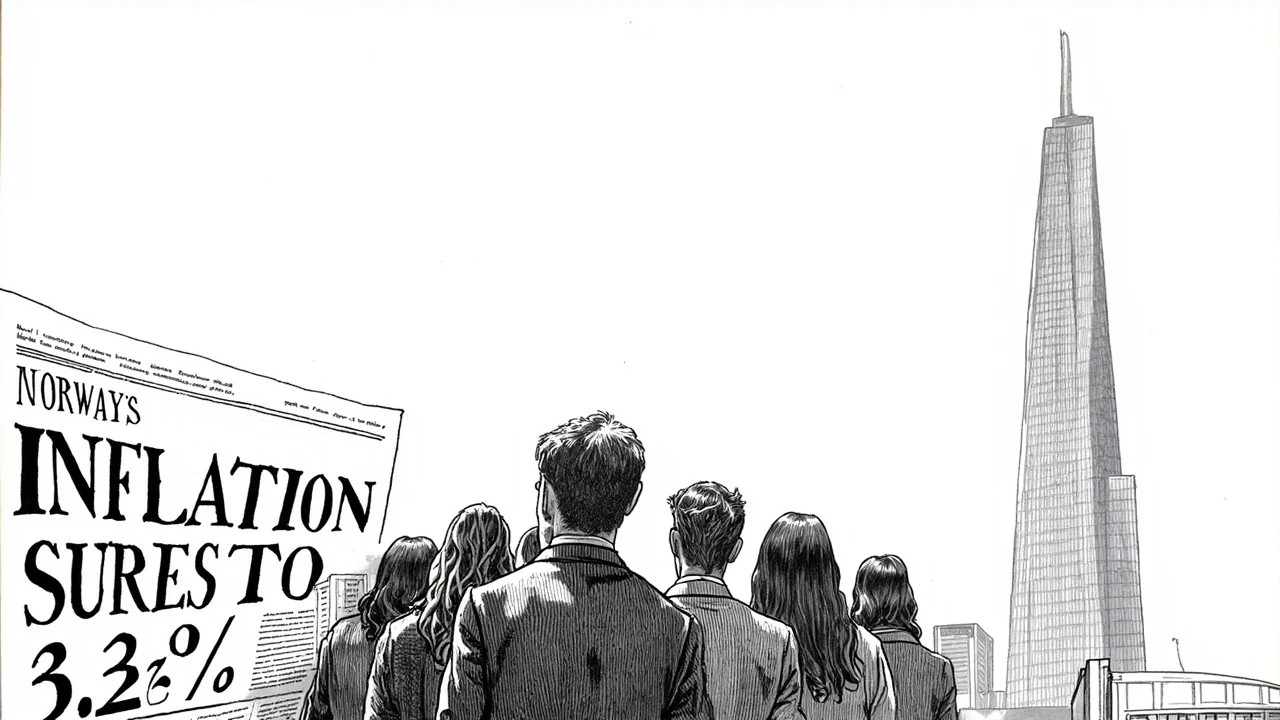
Norway's consumer price index rose 3.2 percent in December compared to the same month last year. The figure, released by Statistics Norway (SSB), exceeded central bank forecasts and complicates the path to lower interest rates. Persistent food price inflation and seasonal travel costs drove the increase, signaling continued pressure on household budgets.
Espen Kristiansen, a section head at SSB, noted the unusual seasonal pattern. "We are used to seeing food prices fall from November to December because of various offers and campaigns on Christmas goods. We saw that this year too," Kristiansen said. "Yet we saw that prices fell less in 2025 than the year before."
Transport and energy prices also pulled inflation upward. "With many traveling home for Christmas and more using the holiday to visit sunny destinations, we saw an increase in airfare prices in December," Kristiansen added.
The core inflation rate, which excludes energy prices and taxes, landed at 3.1 percent. This metric is the primary focus for Norges Bank when setting interest rates. The central bank's December forecast anticipated core inflation at 3.0 percent, but the actual result was one-tenth of a percentage point higher.
A Setback for Monetary Policy
This modest overshoot carries significant weight for Norway's economic policy. Norges Bank has held its key policy rate at 4.5 percent since December 2023, aiming to curb inflation and anchor expectations. The December data suggests the economy remains more heated than models predicted.
Dane Cekov, a rate strategist at Sparebank 1 Markets, interpreted the numbers as a clear signal. "This is not in favor of early rate cuts. The central bank must tread carefully going forward," Cekov stated. "We expect one rate cut this year, in June."
This analysis pushes back market expectations for monetary easing. Many analysts had speculated a cut could come as early as March or the second quarter. The December inflation print reinforces a cautious stance, aligning with recent statements from Governor Ida Wolden Bache emphasizing the need for certainty that inflation is moving sustainably toward the 2 percent target.
The Stubborn Driver: Food Prices
The December report highlights the enduring challenge of food price inflation. While promotional offers led to a monthly price drop, the decline was less pronounced than in previous years. This indicates underlying cost pressures in the supply chain, from global commodity prices to domestic wages and transportation.
For Norwegian families, this trend translates to a higher baseline cost for weekly groceries, even with seasonal discounts. It erodes purchasing power, particularly for lower-income households that spend a larger share of their budget on essentials. The government in Oslo has previously addressed food inflation through dialogue with retailers, but global factors and domestic cost structures limit direct intervention tools.
Seasonal Spikes and Underlying Trends
The contribution from transport costs, specifically air travel, illustrates how seasonal demand can distort monthly figures. December is a peak travel month in Norway, with families reuniting across the long country and many seeking winter sun abroad. Airlines adjust pricing dynamically, leading to predictable seasonal spikes.
However, economists look past these volatile components to core inflation. The 3.1 percent core rate is the more concerning number for Norges Bank. It suggests that inflationary pressures are becoming embedded in the domestic economy, beyond just global energy shocks or temporary tax changes. Service prices, wages, and domestic demand all feed into this measure.
Implications for the Storting and Government
The inflation data arrives as the Storting, Norway's parliament, prepares for its spring session. Fiscal policy set in the national budget can influence the central bank's calculations. Finance Minister Trygve Slagsvold Vedum has walked a fine line, aiming to support households with targeted measures while avoiding adding excessive fuel to the economic fire.
Persistent inflation above target may strengthen the hand of those arguing for a restrained fiscal stance. It also raises political questions about cost-of-living support. The government faces pressure to help struggling households, but direct subsidies risk increasing demand and contradicting the central bank's efforts to cool the economy.
The Broader Nordic Context
Norway's situation presents a contrast to some of its Nordic neighbors. Sweden, for instance, has seen a more rapid decline in inflation, allowing its central bank to begin a cutting cycle. Norway's economy, heavily influenced by the petroleum sector, follows a different rhythm. Strong investment in oil and gas projects, driven by high energy prices and European demand, continues to stimulate economic activity and wage growth.
This creates a divergence in monetary policy across the region. A slower path to rate cuts in Norway could affect the Norwegian krone's strength relative to the Swedish krona and the euro, with implications for trade and cross-border commerce.
The Road Ahead for Households and Businesses
For Norwegian mortgage holders, the delayed prospect of rate cuts means continued high borrowing costs. Many households face expiring fixed-rate contracts in 2025, which will roll over to current higher rates, squeezing disposable income further. Businesses planning investments also face uncertainty regarding financing costs.
The June forecast for a potential rate cut hinges on incoming data over the next several months. Key indicators include wage settlements in the upcoming spring negotiations, developments in the housing market, and of course, the monthly inflation prints. A significant weakening in the labor market or a sharper-than-expected drop in global energy prices could accelerate the timeline.
Conversely, robust wage growth or renewed supply chain disruptions could push the first cut further into the future. Norges Bank's next monetary policy report in March will provide updated forecasts and a crucial signal of the committee's thinking.
A Test of Economic Resilience
The December inflation figure, though only a slight overshoot, tests the resilience of the Norwegian economy. It demonstrates the challenges of steering a small, open economy with a large commodity sector through a global inflationary period. The Petroleum Fund provides a vast fiscal buffer, but it does not insulate the everyday economy from the bite of high prices and interest rates.
The coming months will reveal whether the current policy stance is sufficient to gently slow the economy without triggering a recession. The path to a "soft landing"—reducing inflation without causing a sharp rise in unemployment—has narrowed slightly. All eyes now turn to the central bank's board, which must balance the risk of doing too little against the risk of doing too much.
For now, the message from the data is clear: the fight against inflation in Norway is not over. Patience, both from policymakers and the public, remains the essential ingredient.