
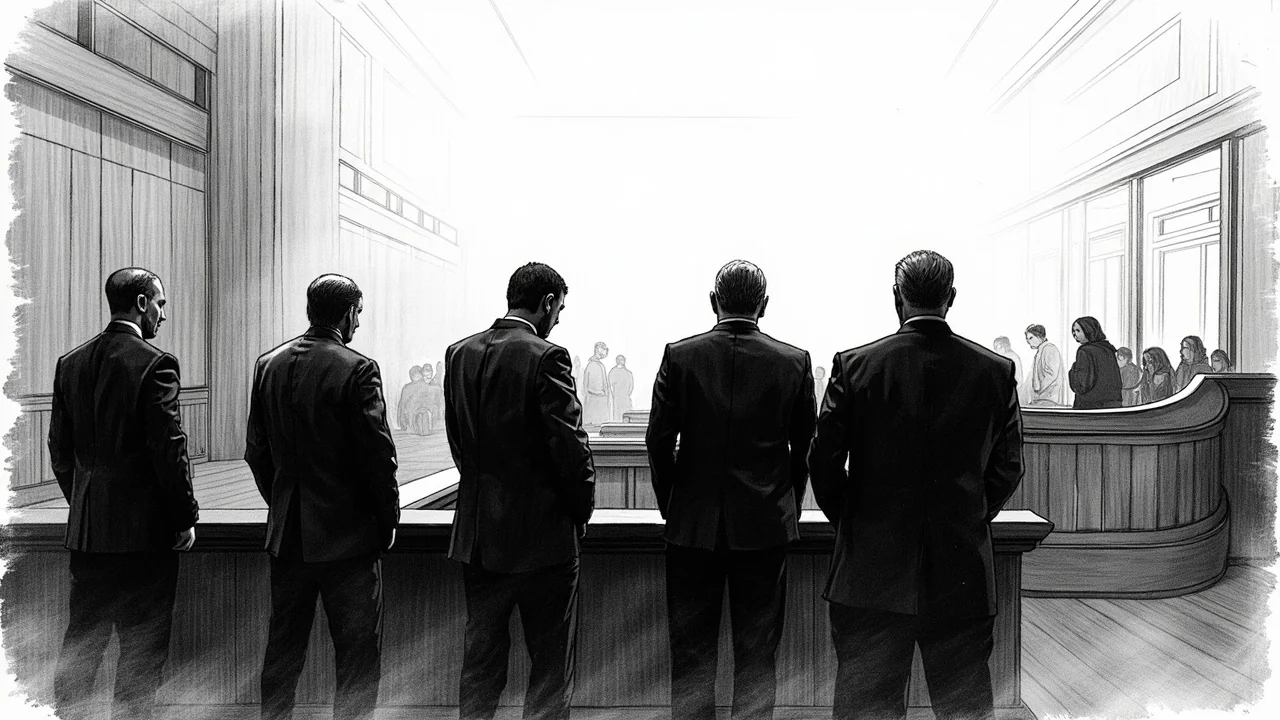
Norway's justice system has delivered a stark verdict on workplace safety, jailing two company directors and imposing multi-million kroner fines after a 17-year-old apprentice died on the job. Chris-Stian Holmgren was killed on July 28, 2023, while performing maintenance on a machinery trailer at a transport firm in Alta. A hydraulic loading platform crushed him when a hose was detached without proper safety measures in place. The Alta District Court found the tragedy resulted from comprehensive failures in the company's safety routines and a lack of supervision for young workers.
Both the father and son who served as the company's managing director and acting managing director received 60-day prison sentences. They must also pay a combined three million Norwegian kroner (approx. €260,000) in fines. The court ordered the company to pay 400,000 kroner (approx. €35,000) in compensation to Chris-Stian's parents, Stian and Bente Holmgren. The convicted men have maintained their innocence throughout the proceedings, a position the court firmly rejected.
A Preventable Tragedy in the Far North
The incident occurred in the northern Norwegian town of Alta, a community where industries like transport and construction are vital. Chris-Stian was in his apprenticeship, a cornerstone of Norway's vocational education system designed to give young people practical experience under close guidance. Instead, the court found he was left to perform dangerous work without adequate training or oversight. The specific task involved a hydraulic system, where the sudden release of pressure caused the heavy platform to fall.
Prosecutor Jørn Henning Bremnes stated he was satisfied the court agreed with the prosecution's assessment of gross negligence. "This case sends a clear message about the non-negotiable responsibility employers have for their youngest and most vulnerable workers," a legal expert on Norwegian labor law, who requested anonymity due to ongoing case appeals, told Nordics Today. "The sentencing of individual directors to prison is significant. It moves beyond corporate fines to personal accountability."
Systemic Failures and a Culture of Neglect
The court's ruling pointed to more than a single procedural error. It described an "encompassing failure" in the company's safety protocols. This aligns with a prior damning report from the Norwegian Labour Inspection Authority (Arbeidstilsynet) following the accident. That investigation reportedly identified 17 regulatory deviations at the company, indicating a pattern of non-compliance.
In previous statements, one of the convicted owners said he took "no self-criticism" regarding the 17 deviations found. This attitude likely influenced the court's decision to impose both custodial sentences and substantial financial penalties. The case highlights a critical tension in Norwegian industry: between the high safety standards enshrined in law and the practical pressures sometimes faced by smaller firms, particularly in remote regions.
"Norway has one of the world's most robust regulatory frameworks for worker safety, built on the principle of 'internal control' where the employer is primarily responsible," explains Lars Mjøs, a researcher at the University of Stavanger's Department of Safety, Economics and Planning. "When that system breaks down completely, as the court found here, the consequences can be fatal. The sentencing reflects the severity of that breakdown."
The Human Cost and Legal Repercussions
For Chris-Stian's parents, the legal outcome is a small measure of accountability in the face of immeasurable loss. They attended the court proceedings, studying the evidence presented about their son's final moments. They have declined to comment on the fresh verdict. Their lawyer also stated he needed time to review the full judgment before speaking publicly.
The defendants' lawyer, Odd Robert Aksnes, said on Friday he had not yet had time to read the judgment or consult with his clients. The convicted men have the right to appeal the sentence to the Lagmannsretten (Court of Appeal). This means the legal process may continue, prolonging the ordeal for the grieving family.
The 400,000 kroner in compensation, while ordered by the court, is a statutory recognition of their emotional suffering, known as "oppreisning" (literally, "reparation"). It is a standard component in Norwegian civil liability cases involving death or severe injury, separate from any criminal fines.
A Warning to Employers Across Industries
This case resonates far beyond the transport sector in Finnmark. It serves as a potent reminder to all Norwegian employers, especially those hiring apprentices or young workers. The Working Environment Act (Arbeidsmiljøloven) places a strict duty of care on employers, with heightened requirements for protecting workers under the age of 18. They must be given thorough training, suitable tasks, and continuous supervision.
"An apprenticeship should be a gateway to a safe and productive career, not a death sentence," says Mjøs. "This verdict underscores that the authorities will treat the violation of these protective rules with the utmost seriousness. The prison sentence, though relatively short, is a powerful symbolic and punitive tool."
The case also puts a spotlight on the role of the Labour Inspection Authority. Their post-accident investigations can form the backbone of criminal prosecutions. In a prior statement about this case, a union representative warned of a "significant risk of more accidents" at the company, suggesting the failures were evident and known.
The Broader Context of Norwegian Workplace Safety
Norway consistently ranks among the safest countries in the world to work. Its fatality rate is low, a point of national pride tied to the tripartite cooperation between government, employers, and unions. However, this case exposes the cracks that can appear. High-risk sectors like construction, fishing, and transport still account for the majority of serious accidents. Young male workers are statistically the most vulnerable group.
The verdict from Alta suggests the judiciary is willing to use the full force of the law to uphold safety standards. It demonstrates that the principle of "forebyggende arbeid" (preventive work) is not just a guideline but a legal imperative. Employers cannot delegate their ultimate responsibility for a safe worksite.
As the industry grapples with this verdict, questions remain about how to ensure universal compliance. Does the system rely too heavily on inspection after an accident occurs? Are penalties strong enough to deter negligence before tragedy strikes? For Stian and Bente Holmgren, these are abstract questions overshadowed by a concrete loss. Their son's name is now part of a legal precedent, a somber case study in what happens when a nation's famed commitment to safety is betrayed at the most basic level. The appeal process may offer the defendants a path to challenge the ruling, but it cannot offer the parents a path back. The sentence from Alta is a judgment on a fatal day at work, and a reminder that in Norway, the protection of life on the job carries the weight of law.