
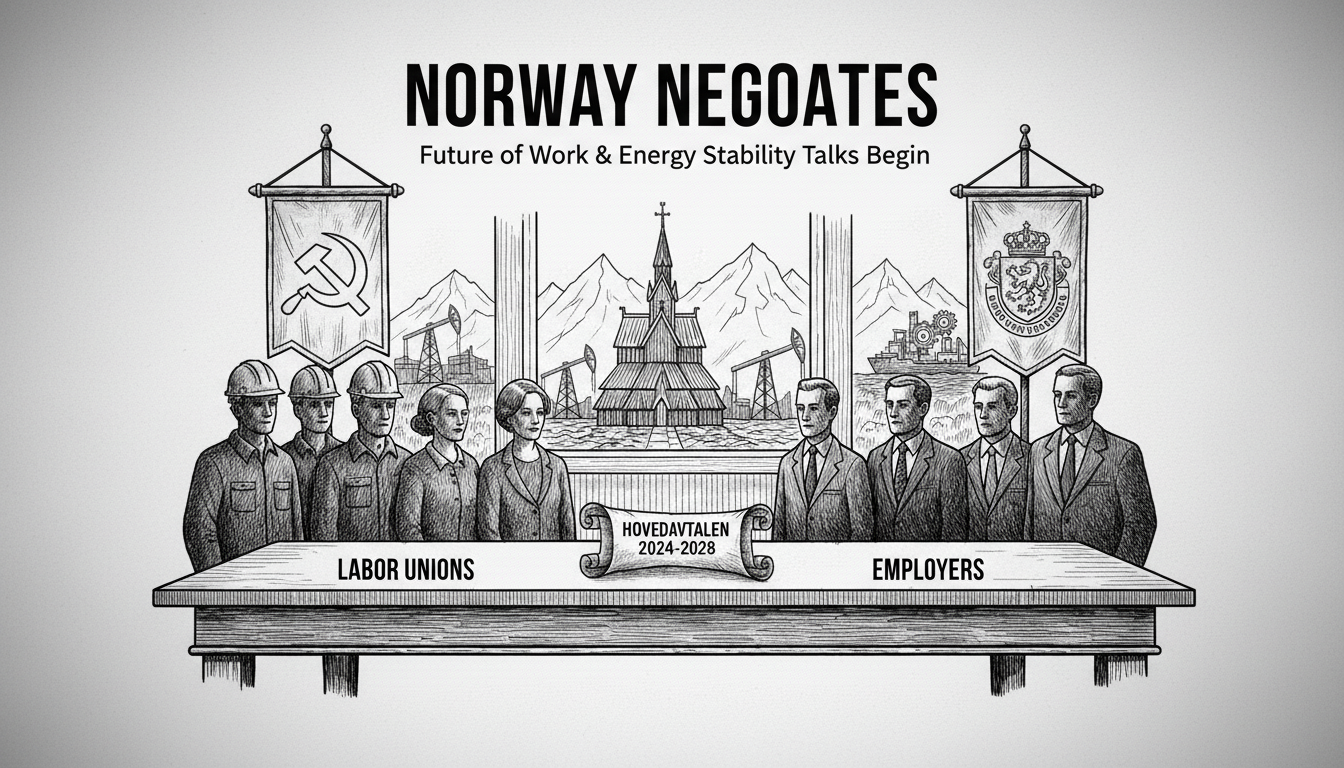
Norway's national labor federation LO and employers' organization NHO have commenced negotiations to revise the country's main collective agreement. These talks began Thursday and address what many call the constitution of Norwegian working life. The main agreement establishes fundamental rules governing workplace relations between employers and employees.
LO chief negotiator Tone Faugli emphasized the agreement's critical role in maintaining labor peace. She stated in a briefing that the framework provides clear rules for worker participation in companies and dispute resolution mechanisms. This systematic approach contributes to Norway's relatively low level of labor conflicts compared to other nations. The negotiations occur during peacetime rather than during active disputes, creating more stable conditions for discussion.
The main agreement revision carries substantial implications for Norway's economic stability and international competitiveness. As Europe's second-largest natural gas supplier and a major oil producer, labor stability directly affects global energy markets. Any changes to working conditions could influence production at key installations like the Johan Sverdrup field in the North Sea or Hammerfest LNG facility in the Arctic.
Norwegian labor relations operate through a unique model of centralized bargaining combined with workplace cooperation. This system has evolved over decades since the first basic agreements were established in the 1930s. The current negotiations follow established patterns where both sides typically reach compromise without major confrontations. The famous Norwegian labor peace stems from this institutionalized cooperation between social partners.
International observers closely monitor these discussions because Norway represents a rare case of highly organized labor markets functioning effectively. Approximately 50% of Norwegian workers belong to unions, while most employers participate in employer associations. This high organization rate creates comprehensive coverage for collective agreements across industries.
The timing of these negotiations coincides with broader economic challenges facing Norway's petroleum-dependent economy. As the country navigates energy transition pressures, labor costs and working conditions become increasingly sensitive topics. The outcomes could influence investment decisions in both traditional energy sectors and emerging green industries.
What makes these negotiations particularly noteworthy is their potential impact on regional development. Northern Norway and coastal communities dependent on maritime industries watch closely as agreement terms affect operations from Vesterålen to the Oslofjord region. The discussions also hold implications for public sector workers across government buildings in Oslo and other administrative centers.
The negotiation process typically spans several weeks with both sides presenting their positions on working hours, wage formation mechanisms, and adaptation to technological changes. The resulting agreement will set patterns for subsequent industry-specific negotiations throughout the Norwegian economy.