
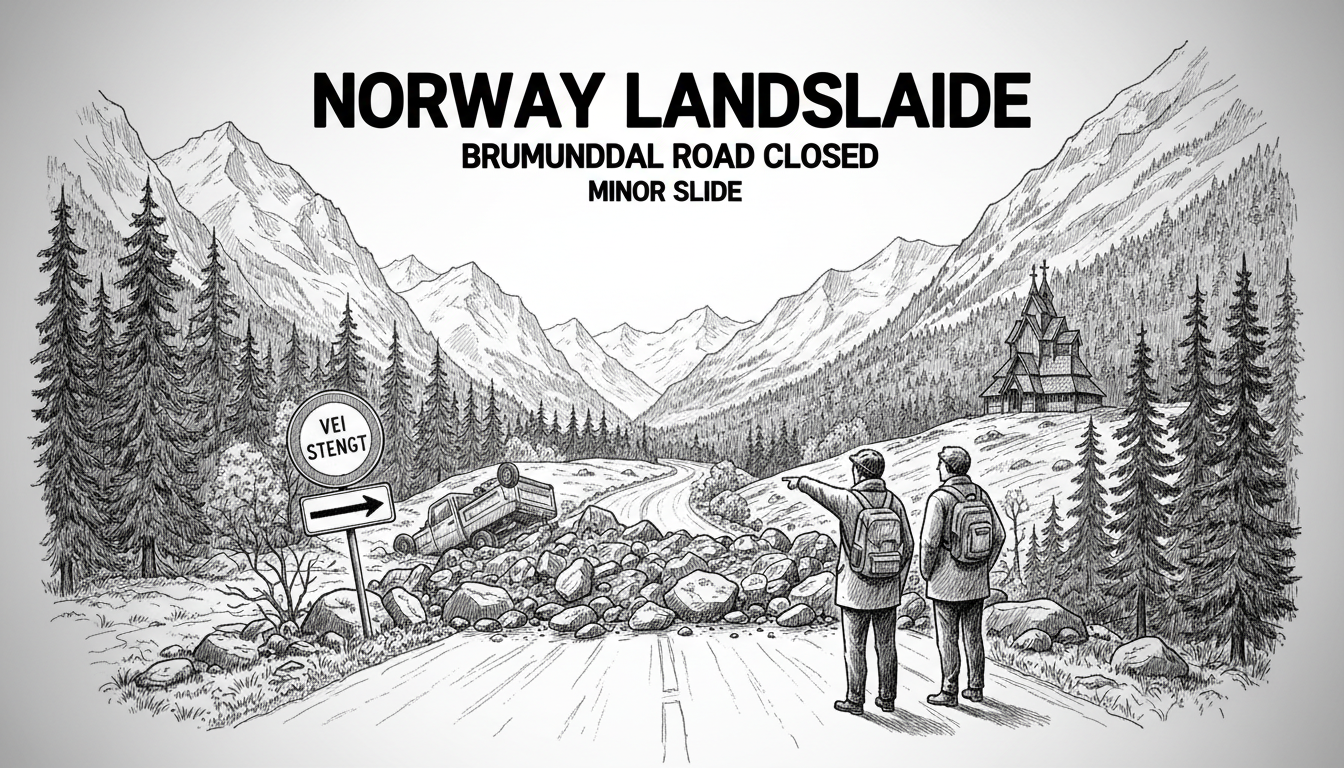
Norway landslide risks are under renewed scrutiny after a minor earth slide near Brumunddal in Ringsaker municipality. Police reported the slide originated from a logging area and moved toward a local road, where accumulating water posed a threat to the roadway. Authorities closed Spikdalsvegen and alerted households in the vicinity as municipal crews mobilized for repairs and assessments. This incident highlights the persistent natural hazard landslides present across Norway's varied terrain.
A Recurring Threat in Vulnerable Terrain
Landslides are a common feature of the Norwegian landscape, with the Norwegian Water Resources and Energy Directorate (NVE) recording several hundred events annually. The geology of regions like Innlandet, with its steep slopes and deposits left by ancient glaciers, creates inherently unstable ground conditions. Heavy rainfall or rapid snowmelt often acts as the trigger, saturating the soil and causing slopes to fail. The slide near Brumunddal, while described as minor, follows this familiar pattern, with water accumulation being a primary concern for infrastructure damage. "Every slide, regardless of size, is a reminder of the dynamic ground we build our communities upon," said a geotechnical engineer familiar with the region, who requested anonymity as they were not directly involved in the assessment. "The connection to a logging area is also a critical point for investigation, as vegetation removal can significantly alter drainage and root stability."
The Immediate Response and Community Impact
Local police and the Ringsaker municipality moved quickly to manage the immediate risks. The closure of Spikdalsvegen is a standard preventative measure to ensure public safety, allowing experts to evaluate the slope's stability and the road's integrity. Notifying nearby households is part of a standard protocol for such events, ensuring residents are aware of potential dangers and service disruptions. Municipal teams are now tasked with a dual mission: implementing short-term repairs to secure the area and conducting a thorough evaluation to understand the slide's cause. This evaluation will likely examine recent weather patterns, the specific logging activities on the slope, and the area's historical susceptibility to movement. For residents, such events are a disruptive reminder of nature's force, potentially affecting daily commutes, local business access, and a sense of security.
Climate Change and Escalating Risks
The Brumunddal incident occurs against a backdrop of growing concern among scientists and planners about climate change's impact on geohazards. A warmer climate is projected to increase the frequency and intensity of extreme precipitation events in Norway. More rain falling in shorter periods can overwhelm natural drainage, leading to higher pore water pressure in slopes—a key factor in triggering landslides. This means historically stable areas could become vulnerable, and already prone regions, like many parts of Innlandet, may face more frequent and severe events. "What we classify as a 'minor' slide today might become a more common precursor to larger events in the future," the geotechnical expert noted. "Our mapping of risk zones and our standards for infrastructure and land use must evolve with the climate." This long-term perspective transforms a single road closure into a data point in a much larger trend, pressing the need for updated national and municipal risk assessments.
Prevention in a Changing Landscape
Mitigating landslide risk is a complex challenge blending nature, technology, and policy. Experts emphasize a multi-faceted approach. Improved hydrological modeling and detailed geotechnical mapping can identify high-risk zones more accurately. In these areas, preventative measures like engineered drainage systems, terracing, and anchoring techniques can stabilize slopes. Land-use planning is perhaps the most critical tool, restricting construction and activities like logging in the most vulnerable areas. The link to a "hogstfelt" or logging area in the Brumunddal report will inevitably focus attention on forestry practices and whether regulations sufficiently account for slope stability. "Logging changes everything—the water uptake, the root structure that binds the soil, the surface runoff," the engineer explained. "Responsible forestry must include post-harvest stability assessments, especially near infrastructure."
A National Challenge with Local Solutions
Norway has a strong tradition of managing natural hazards through agencies like NVE and the Norwegian Geotechnical Institute (NGI). However, the frontline of response and daily risk management lies with the 356 municipalities, including Ringsaker. They are responsible for local zoning, emergency preparedness, and initial responses. This decentralized model requires consistent funding, expertise sharing, and clear guidelines from national authorities. Events like the Spikdalsvegen closure test this system, checking if local crews have the resources and knowledge to act effectively. It also tests communication, ensuring residents receive clear, timely information. The successful, orderly response to this minor slide suggests protocols are in place, but the real test lies in preparing for less predictable, more severe events in the decades to come.
Looking Beyond the Closed Road Barrier
The temporary barrier on Spikdalsvegen is more than a local inconvenience; it is a symbol of a national conversation. As Norway continues to develop its towns and cities, expand its road networks, and manage its vast forests, the dialogue between development and geological risk becomes increasingly urgent. Balancing economic activity in sectors like forestry with community safety is a delicate task. Each landslide, whether in a populated area or a remote forest, provides valuable data. The assessment from Brumunddal will contribute to the broader understanding of how soil behaves under stress and changing climatic conditions. The ultimate question for planners and politicians is whether this growing body of knowledge will lead to tougher, more proactive decisions before the next slide occurs, or if action will remain primarily a reaction to closed roads and emergency alerts. The path Norway chooses will determine the resilience of its communities against the shifting ground beneath them.