
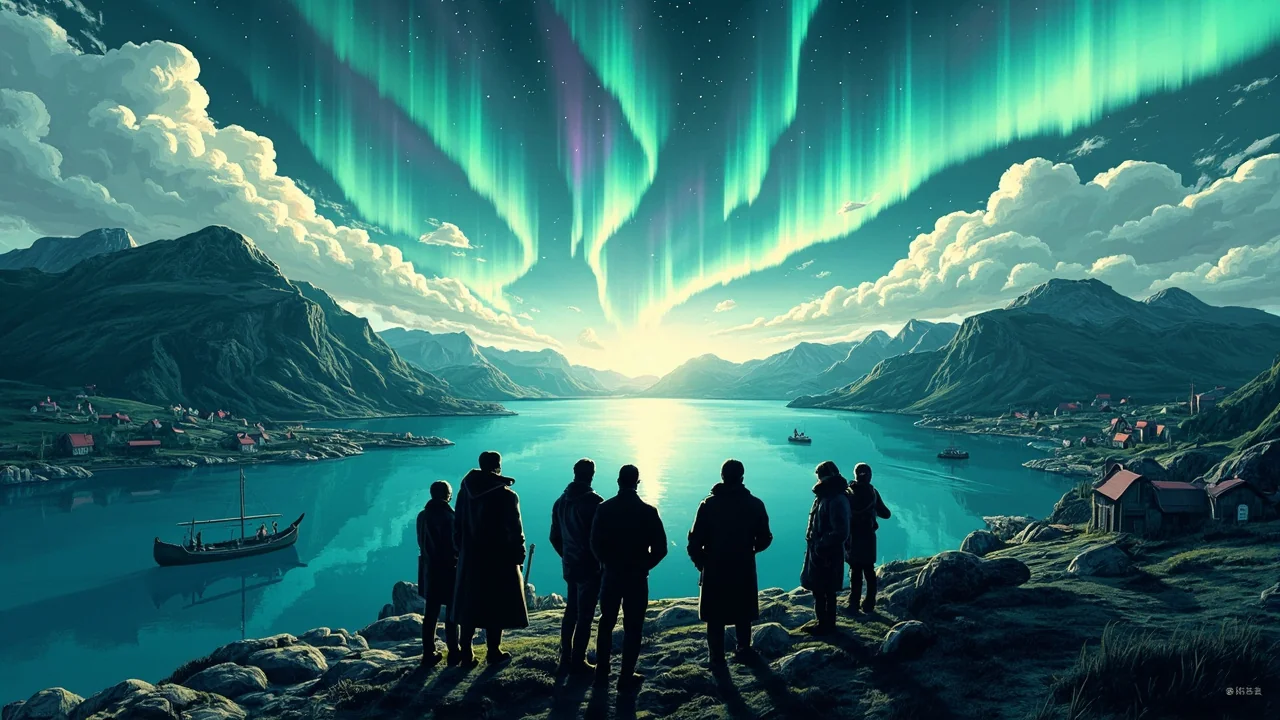
Norway is spearheading a historic five-nation travel alliance with Sweden, Denmark, Finland, and Iceland to create the premier Scandinavian travel experience for 2026. The collaborative initiative, set to launch early next year, aims to present the Nordic region as a unified, world-class destination. It builds on decades of cultural and economic cooperation but marks the most ambitious joint tourism project to date. 'This collaboration shows the strength and appeal of our region,' said Norway's Minister of Tourism, Erik Solheim. 'By working together, we can offer travelers an experience that showcases the best of Scandinavia.'
For decades, travelers have viewed the Nordic countries as distinct destinations. A visitor might chase the Northern Lights in Norway, explore design in Denmark, or visit geothermal spas in Iceland. This new strategy challenges that fragmented approach. The alliance will develop integrated travel packages, seamless cross-border itineraries, and coordinated marketing targeting global audiences. The goal is to increase visitor numbers and economic benefits across all five nations by presenting a cohesive Nordic journey.
A Unified Vision for a Connected Region
The foundation for this tourism pact is not new. The Nordic Council has long promoted regional cooperation through campaigns like 'Nordic by Nature,' which highlighted shared values of sustainability and outdoor life. Cross-border tourism routes, such as those linking southern Sweden and eastern Denmark, have also seen success. This 2026 initiative, however, represents a significant scaling up of ambition and resources. It moves beyond marketing to actively design the traveler's journey across borders with minimal friction.
Industry experts see this as a logical and powerful step. 'The Nordic countries individually are strong brands, but together they are unbeatable,' said Lena Karlsson, a Stockholm-based travel industry analyst. 'A traveler from Asia or North America often has limited vacation time. Offering them a curated, multi-country experience that is easy to book and navigate addresses a major pain point. It makes choosing Scandinavia over other world regions much more compelling.' The initiative is expected to leverage digital platforms for booking and real-time information, a natural extension of the region's tech-savvy reputation.
Economic Impact and Sustainable Goals
Tourism is a vital economic sector for all five nations. In Norway, pre-pandemic tourism accounted for over 4% of GDP and supported hundreds of thousands of jobs. Similar figures are seen across the region. A coordinated push aims to boost these numbers, particularly in shoulder seasons, by promoting a wider variety of experiences. A single trip could combine Copenhagen's urban buzz, Norway's fjord scenery, and Finnish Lapland's wilderness, spreading tourist spending more evenly across the region and throughout the year.
Sustainability will be a core selling point, aligning with the global Nordic brand. The alliance is expected to promote green travel corridors, emphasize electric transport options, and highlight eco-certified accommodations. 'The modern traveler is increasingly conscious of their footprint,' noted Björn Andersen, a sustainable tourism researcher in Oslo. 'This collaboration allows us to present a model for responsible regional tourism. We can showcase efficient rail and ferry connections between capitals and natural sites, reducing reliance on short-haul flights.' This focus aims to protect the very natural attractions that draw visitors.
Crafting the 2026 Traveler Experience
While full details of travel packages and itineraries are still in development, the vision is clear. The experience will likely emphasize thematic journeys. One might focus on 'Nordic Design and Architecture,' connecting Helsinki's Oodi Library, Copenhagen's design museums, and Oslo's opera house. Another could be 'Viking Heritage and Coastal Culture,' linking sites from Iceland to Sweden. A third might be 'Arctic Adventures,' combining Norwegian fjords, Swedish forests, and Icelandic glaciers.
The human element of culture will be central. The initiative promises deeper access to local life beyond major landmarks. This could include farm stays in rural Finland, foraging workshops in Sweden, or fishing village visits in Norway. The concept is to offer immersion, not just observation. Digital integration will be key, with potential for a unified app providing navigation, cultural insights, and booking for local activities across all five countries.
Challenges and Opportunities on the Path to 2026
Significant logistical and bureaucratic hurdles remain. Harmonizing visa information for non-EU travelers, coordinating cross-border transport timetables, and aligning business standards for thousands of service providers is a massive undertaking. There is also the challenge of balancing promotion with preservation, ensuring popular hotspots are not overwhelmed. 'The key will be dispersal,' said Karlsson. 'Success means guiding visitors to lesser-known regions between capital cities, creating economic benefit widely and reducing pressure on honeypot sites.'
For Nordic residents, this initiative promises more than just tourist numbers. It reinforces a shared regional identity on the world stage and can stimulate infrastructure improvements, like better rail links, that locals also use. It also encourages residents themselves to explore their neighboring countries with new, visitor-inspired packages. The collaboration could set a global benchmark for regional tourism cooperation, showing how neighboring countries can work together for mutual economic gain.
The Road Ahead for Nordic Tourism
In the coming months, national tourism boards will form joint task forces. They will develop the branding, digital tools, and partner networks needed to launch in early 2026. Global marketing campaigns are expected to ramp up in late 2025, targeting key markets in Europe, North America, and Asia. The world's major travel trade shows will likely see a united Nordic pavilion for the first time.
The ultimate test will be in the delivery. Can a trip from Reykjavik to Helsinki feel as seamless as one within a single country? If successful, the 'Scandinavia 2026' model could redefine regional travel. It positions the Nordic countries not just as a collection of destinations, but as a single, epic, and thoughtfully curated journey. For travelers dreaming of midnight sun, northern lights, and modern Nordic culture, the promise is a trip where the only border that matters is the one they cross to enter a world designed for discovery.