
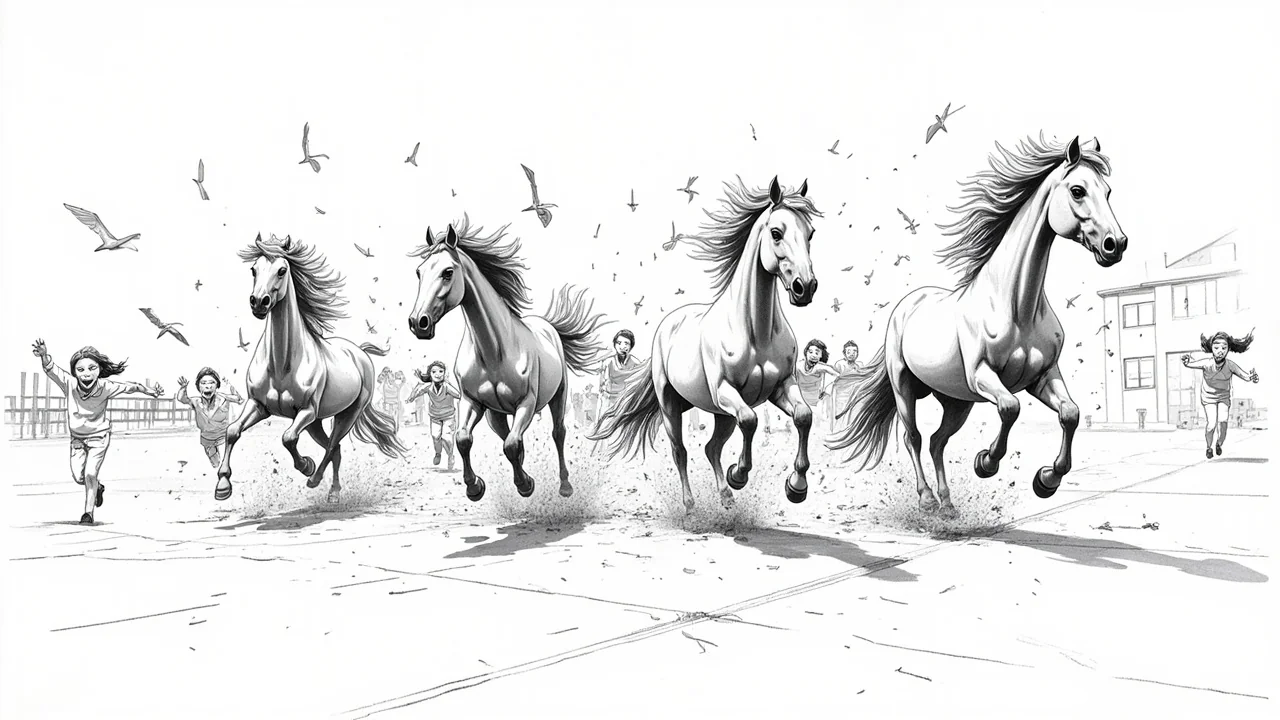
Norway's police in Østfold scrambled to respond as calls flooded in about two large animals creating a major traffic hazard at one of the county's busiest intersections. The reports to the operations center were clear: two horses were running loose near the Rygge Storsenter shopping center, posing a direct danger to motorists. "They are running around and causing trouble in traffic," wrote operations manager Håkon Hatlen in the police press client during the incident. The drama, however, took a sudden turn shortly after the first alerts, leading to an unconventional and peaceful resolution inside a preschool playground.
An Unusual Rush Hour Hazard
The horses, believed to have come from the Bredsand area, were moving through a zone dense with traffic, shops, and unpredictable situations. The primary fear for authorities was that the animals would wander onto the main highways, potentially causing serious collisions. The area serves as a key transport link in the region, making the presence of large, unrestrained animals a significant public safety concern. Police quickly mobilized, understanding the urgency of containing the situation before it escalated into an accident. For a tense period, the animals' movements dictated the response, turning a routine Monday into a high-priority animal control operation.
A Quick-Thinking Civilian's Instincts
The unfolding drama shifted abruptly when the horses moved away from the asphalt and wandered into the outdoor play area of a nearby kindergarten. There, a civilian present grasped the seriousness of the moment and reacted instinctively. This individual quickly closed and locked the gate behind the horses, effectively "arresting" them behind secure fences. This simple, decisive action neutralized the immediate threat to traffic. "Thus, they are no longer problematic for traffic," confirmed mission leader Jimmy Pettersen of the police after the swift intervention. The horses were reported to be calm, grazing peacefully within the enclosed space while police worked to locate their owner.
The Search for an Owner
With the acute danger over, police work transitioned to investigation. A patrol was dispatched to the kindergarten to secure the scene and begin the process of finding the horses' owner. "If anyone knows who owns the horses, it would be nice if the police are contacted," Hatlen wrote. Officers checked farms in the surrounding areas of Bredsand and Rygge, attempting to trace the animals' origins. The priority was a safe reunion, but questions remained about how the horses managed to escape their enclosure in the first place. This phase highlights the broader responsibilities of police in rural and semi-urban Norwegian communities, where animal-related incidents are not uncommon.
A Safe Reunion and Lingering Questions
Shortly after 7:00 PM, police successfully made contact with the owner, who was en route to collect the escapees. No injuries were reported to the horses, vehicles, or any individuals—a best-case outcome for a potentially dangerous situation. While the story ends well, it opens a discussion about animal containment and public safety in areas where urban development meets agricultural land. The incident near Rygge Storsenter is a reminder of how quickly routine can be disrupted and how effective, simple actions by alert citizens can prevent harm. The horses are now back where they belong, but the image of them calmly contained in a kindergarten yard will linger as a peculiarly Norwegian solution to an unexpected problem.
Analysis: When Country Life Meets City Traffic
This incident, while resolved without harm, serves as a microcosm of a recurring challenge in Norway's developing regions. As towns expand, the interface between traditional agricultural areas and dense traffic infrastructure creates unique risks. Loose livestock, primarily horses and sheep, occasionally find their way onto roads, leading to hazardous situations. Norwegian law places clear responsibility on animal owners to ensure their livestock is properly contained. The police response in Østfold followed a standard protocol for such events: secure public safety first, then address the ownership and cause. The effective civilian involvement was fortunate but not part of any formal plan.
Expert perspective from those in animal control and rural policing suggests these events, while often ending peacefully, require significant resources. A single patrol can be tied up for hours managing the situation, locating owners, and ensuring animal welfare. There is no centralized national database for livestock ownership, making the identification process reliant on local knowledge and legwork. The incident also underscores the importance of secure fencing, especially as winter approaches and animals may seek food or shelter, potentially testing boundary integrity. For communities like those around Rygge, it's a balance between preserving rural character and ensuring modern safety standards.
The Broader Context of Animal Incidents
This event was not isolated in spirit. Norwegian media regularly reports on animals creating public disturbances or safety concerns. Recent stories have covered everything from missing cats found great distances away to record numbers of wild boar being culled. Several municipalities are even considering New Year's fireworks bans due to the severe stress and injuries they cause domestic animals and wildlife. The loose horses in Østfold fit into this broader narrative of human-animal interaction in a densely populated, nature-rich country. Each incident prompts local debate about regulations, responsibility, and coexistence.
What makes this case distinctive is its resolution. The kindergarten gate became an impromptu holding pen, a symbol of pragmatic problem-solving. It avoided the need for more complex and stressful methods of animal capture, which could have risked injury to the horses or responders. The story's positive outcome is a testament to calm heads and community awareness. However, it should also serve as a cautionary note to animal owners in peri-urban areas: regular checks on fences and gates are a critical part of civic responsibility. As one police officer noted off the record, "We'd much rather prevent these calls than respond to them."
A Peaceful End to a Chaotic Day
As the owner arrived to retrieve the horses, the unusual episode at the Rygge kindergarten concluded. The children would return to a playground briefly transformed into a stable, a curious tale for their parents. The police closed their log, another non-criminal but resource-intensive incident resolved. For the anonymous civilian who shut the gate, it was a moment of instinctive public service. The story, ultimately, is a very Norwegian blend of rural reality and modern community, solved not with high-tech tools but with a simple latch. It asks a quiet question of all of us: in a moment of unexpected crisis, would we recognize the simple solution right in front of us?