
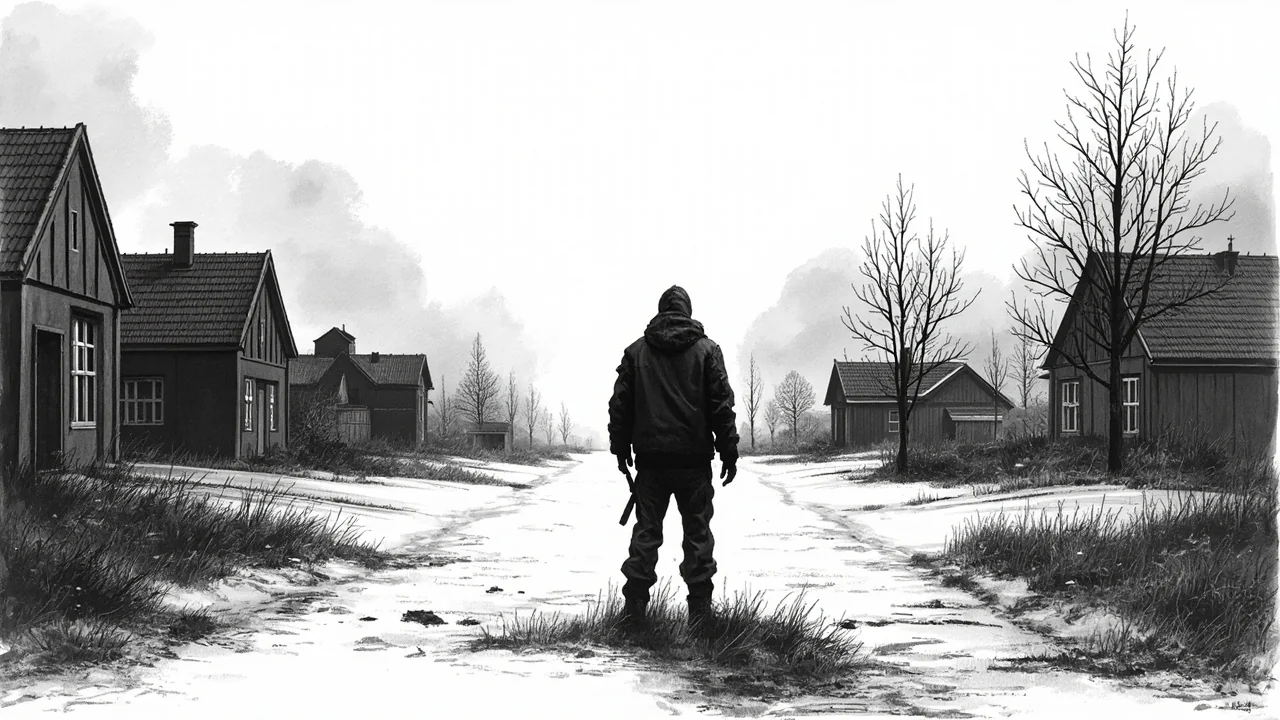
Norway police are hunting suspects after a man was threatened with a machete and hammer and hospitalized with a hand injury in Kløfta early Sunday morning. The Øst police district confirmed the violent assault occurred in the morning hours, with the victim transported to Akershus University Hospital (Ahus) for treatment. Authorities have launched a search for the perpetrators and are appealing to the public for information, photos, or video related to the incident.
This attack in a typically quiet commuter town near Oslo disrupts the common perception of Norway's low violent crime rates. It raises immediate questions about weapon availability and the nature of the conflict that led to such a brutal confrontation. While details remain scarce, the use of a machete—a weapon more commonly associated with conflicts abroad—marks a disturbing escalation in local violence.
A Community on Edge
Kløfta, located in the Ullensaker municipality roughly 30 kilometers north of Oslo, is primarily known as a residential and transit hub. It is not an area frequently highlighted in crime reports for serious violence. The assault, therefore, sends shockwaves through a community where residents value safety and predictability. Local police presence has been increased as the investigation proceeds, with officers conducting door-to-door inquiries and reviewing available CCTV footage from the area.
The timing of the attack—during Sunday morning hours—adds to its unsettling nature. This period is typically associated with quiet domestic routines, not violent street confrontations. The Øst police district has not released information on whether the victim and assailants were known to each other, or if this was a random act. This uncertainty contributes to a palpable sense of unease among residents.
The Weaponry and Its Implications
The specific mention of a machete and hammer by police is significant. A machete is a large, heavy blade designed for cutting through vegetation. Its use as an offensive weapon in a Norwegian town is highly unusual and suggests either premeditation or an improvised choice from available tools. Criminologists note that the choice of weapon can indicate the level of intent to cause serious harm or instill terror.
"When we see weapons like machetes appear in street violence, it often points to an intent that goes beyond a simple fistfight," says a security analyst familiar with Nordic crime patterns, who spoke on background. "It is an instrument designed to inflict severe injury and creates a high level of fear. Its presence in Norway is a worrying development that police take extremely seriously." The hammer, a common tool, also becomes a potentially lethal weapon in such a context, indicating the assailants were armed with multiple implements.
Norway's Evolving Crime Landscape
While Norway consistently ranks as one of the safest countries in the world, police and researchers have documented a gradual shift in the nature of some violent crime. There has been a noted increase in gang-related violence, particularly in major urban centers, often linked to the drug trade and inter-gang conflicts. These conflicts sometimes spill over into other areas or involve individuals with peripheral connections.
The Kløfta case will be scrutinized for any potential links to broader criminal networks. The Øst police district, which covers a vast area including the capital's eastern suburbs and neighboring counties, has dealt with complex organized crime investigations in recent years. Any connection, however tentative, would represent a geographic spread of such conflicts into quieter satellite communities.
Furthermore, police statistics show a slow but steady increase in reports of threats and assaults with weapons over the past decade. This trend is part of a wider Nordic discussion about social integration, economic disparities in growing suburbs, and the challenges of policing in an increasingly complex society. A single machete attack does not define a national crime trend, but it acts as a stark data point in an ongoing analysis.
Police Response and Public Appeal
The Øst police district's response followed standard protocol for a serious violent crime. Securing the scene, ensuring medical aid for the victim, and initiating a prompt search for suspects are the immediate priorities. The public appeal for information, images, or video is a critical component of modern policing, especially in areas where private security cameras or smartphone footage may have captured crucial evidence.
"We are seeking the public's assistance," the police statement read. "Any piece of information, no matter how small it may seem, could be important for the investigation." This collaborative approach between law enforcement and the community is a cornerstone of the Norwegian policing model. The effectiveness of this appeal will now be tested as investigators work to piece together the events leading up to the assault.
The victim's condition remains a primary concern. Hospitalization at Ahus suggests the hand injury was significant enough to require specialized trauma care. The psychological impact of such a traumatic event, both on the individual and the wider community, is substantial and often longer-lasting than the physical wounds.
Looking Ahead: Safety and Perception
This incident will inevitably spark a local debate about public safety, police visibility, and the roots of violence. Community leaders in Ullensaker municipality will face questions about preventative measures. The discussion may also touch on broader national issues, such as sentencing guidelines for violent crimes involving weapons.
For now, the people of Kløfta are left waiting for answers. The peaceful Sunday morning was shattered by an act of extreme aggression. The search for the perpetrators continues, but the search for understanding—how such violence emerged in their midst—will linger far longer. This case serves as a sobering reminder that no community is entirely insulated from the unpredictable nature of human conflict, a reality that challenges Norway's enduring image of tranquil security. The ultimate test will be how the justice system responds and how the community heals in the aftermath of a morning that turned from ordinary to terrifying.