
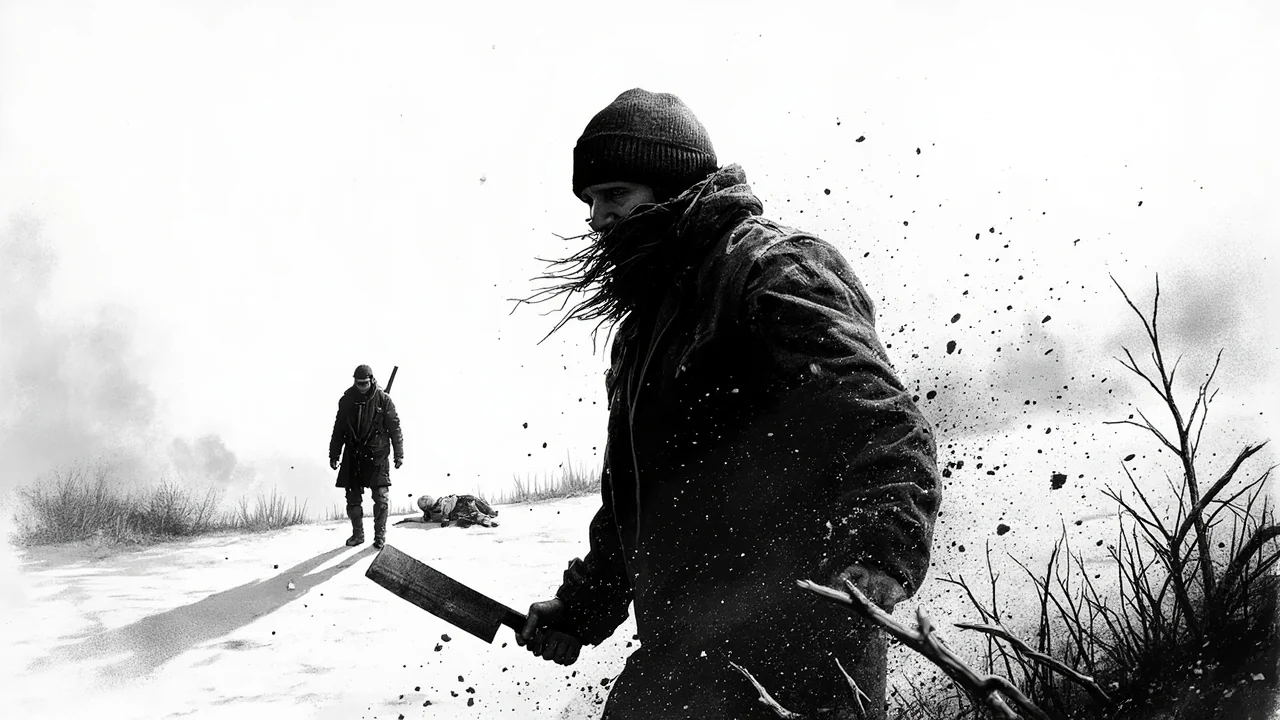
Norway's Romerike region witnessed a violent assault where a man was threatened with a machete and a hammer, sustaining a cut to his hand. The victim was transported to a hospital for treatment. Police in Akershus are actively searching for the perpetrators, with the incident occurring in Kløfta.
A Quiet Suburb Shattered
The attack unfolded in Kløfta, a community within the Ullensaker municipality northeast of Oslo. Known primarily as a transport hub and a residential area for commuters to the capital, Kløfta represents the kind of peaceful Norwegian suburb where violent crime of this nature remains deeply shocking. The assailants reportedly used both a machete and a hammer as weapons, a combination that suggests a high level of intimidation and premeditation. The victim's hand injury, while requiring hospital care, was not initially described as life-threatening. The immediate police response focused on securing the scene and initiating a search, but no suspects were in custody at the time of initial reports.
The Context of Norwegian Violent Crime
This incident stands out against the general backdrop of Norway's relatively low violent crime rates. While isolated serious assaults occur, the use of weapons like machetes is uncommon in the Norwegian context. Most violent crime statistics are dominated by domestic incidents or altercations between individuals known to each other. The public nature of this attack, and the weaponry involved, will likely prompt questions about gang-related activity or organized crime, though police have not publicly speculated on a motive. Norway's penal system and policing strategies are designed around rehabilitation and prevention, making a brazen armed assault a significant event for local authorities to manage.
Police Response and Investigative Challenges
The Akershus Police District, responsible for the area, has launched an investigation. Standard procedure in such cases involves forensic examination of the scene, collection of CCTV footage from nearby businesses and residential areas, and appeals for witnesses. The suburb's location near major highways like the E6 could complicate the search if perpetrators used vehicles for a quick escape. The police's primary challenge will be establishing the sequence of events and the relationship between the victim and the attackers. Determining whether this was a targeted confrontation or a random act of violence is crucial for both the investigation and public reassurance.
Community Impact and Perceptions of Safety
For residents of Kløfta and the wider Romerike region, this attack disrupts a fundamental expectation of safety. Norwegian society is built on a high degree of social trust and a sense of security in public spaces. An event involving bladed weapons and blunt instruments in a suburban setting directly challenges that perception. Local politicians and community leaders often face pressure to address safety concerns following such incidents, even if they are statistically rare. The discussion typically turns to visible police patrols, street lighting, and youth outreach programs as preventative measures.
Analyzing the Tools of Violence
The choice of weapons is analytically significant. A machete is not a typical weapon of convenience in Norway; its possession indicates some level of planning or access to specialized weaponry. A hammer, by contrast, is a common tool that could be acquired easily. Their use together suggests an intent to threaten with the machete while having the hammer as an alternative or secondary weapon. This combination is more often associated with extortion or severe intimidation tactics than with a spontaneous fight. It points to a potential power dynamic where the perpetrators sought to instill maximum fear.
The Broader Scandinavian Picture
While Norway maintains low homicide rates, neighboring Sweden has grappled with a significant increase in gun violence and explosions linked to gang conflicts in recent years. Norwegian authorities consistently monitor these trends, keen to prevent similar patterns from taking root. An isolated incident like the Kløfta attack inevitably leads to discussions among security analysts about whether it represents an outlier or a sign of evolving criminal methodologies in Norway. The pressure on border controls and customs to intercept weapon imports, particularly from other parts of Europe, remains a constant priority for police.
A Look at Legal Frameworks and Penalties
Norwegian law treats violent assaults with weapons severely. Aggravated assault, which this likely constitutes, can carry a maximum penalty of several years in prison. The judicial process would consider the use of weapons, the intent behind the attack, and the injuries inflicted. Norway's focus on rehabilitation does not preclude substantial prison sentences for serious violent crimes. The police investigation will aim to build a case solid enough for prosecution, emphasizing forensic evidence and witness testimony to overcome the challenge of no immediate arrests.
The Path Forward for Kløfta
In the coming days, the community's recovery will depend on transparent communication from the police and the eventual resolution of the case. A swift arrest would greatly alleviate public concern. Without one, a lingering sense of unease may persist. Local police may increase their presence in the area as both an investigative and reassurance measure. The incident serves as a stark reminder that no community, regardless of its peaceful reputation, is entirely immune to sudden violence. The ultimate test will be how the local institutions—police, municipal government, and community networks—respond to restore the sense of security that defines everyday life in Norway.
The Kløfta attack, while a single event, forces a momentary reckoning with the foundations of safety in Norwegian society. It raises uncomfortable questions about the tools of violence available to criminals and the capacity of communities to absorb such shocks. The resolution of this case will be watched closely, not just in Akershus, but as a note in the ongoing record of Norway's enduring struggle to maintain its peaceful character in a changing world.