
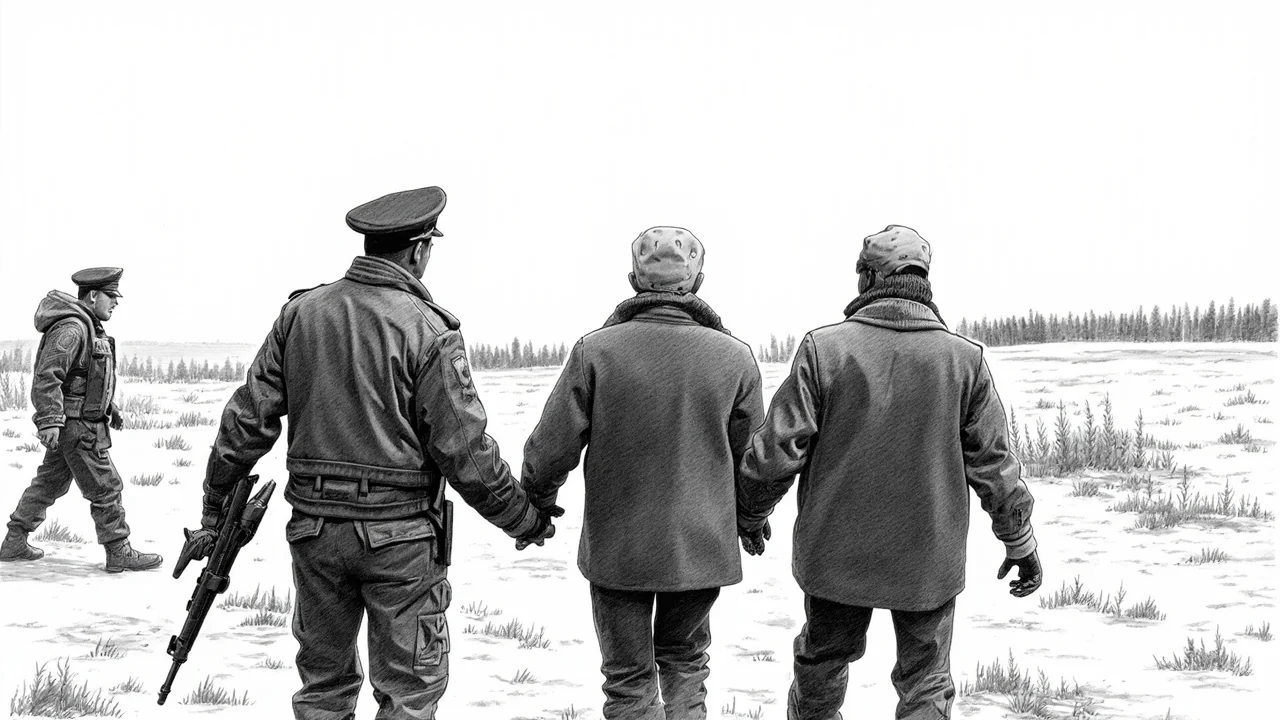
Norway police arrested three individuals after a man was threatened with a machete and a hammer and cut on the hand in an early morning attack on Kløfta in Akershus. The incident occurred at 4:20 a.m. on Saturday, according to the East Police District. The assailants fled the scene, prompting an immediate search operation. Operations leader Ronny Hellerud Samuelsen confirmed the arrests in a statement to press at 5:22 a.m. Saturday, marking a rapid police response to a violent episode in a typically quiet suburban community.
A Violent Awakening in a Quiet Commuter Town
Kløfta, located within the Ullensaker municipality, is a central hub in the Romerike region northeast of Oslo. It is known primarily as a commuter town with good rail connections to the capital, not for violent crime. The attack, occurring in the pre-dawn hours of a weekend, represents a severe breach of the area's normal public safety record. Residents waking to police activity and cordoned-off areas were confronted with an unsettling reality. Such brazen violence involving weapons like a machete is statistically rare in Norway, even in larger urban centers. The fact that it transpired in a smaller community amplifies its shock value and raises immediate questions about context and motive.
The police have not released the identities of the victim or the three arrested persons, nor have they detailed the specific charges beyond the violent nature of the incident. The victim sustained a cut to his hand, an injury that, while requiring medical attention, suggests the situation could have escalated to far more grievous outcomes. The use of both a machete and a hammer indicates a level of preparation or intent that goes beyond a spontaneous fistfight. Investigators will now work to establish the relationships between those involved and the sequence of events that led to the confrontation. Was this a targeted conflict, a dispute that spiraled out of control, or an attempted robbery? The police investigation will center on these questions.
The Police Response and Community Safety Perceptions
The operational response from the East Police District appears to have been swift and effective. From the incident at 4:20 a.m. to the public update confirming a search at 5:22 a.m., and subsequent arrests, the timeline suggests a coordinated effort. This efficiency is a cornerstone of Norway's policing model, which emphasizes rapid deployment to contain incidents and prevent further danger. Operations leader Samuelsen's early communication was deliberate, aimed at reassuring the public that action was being taken while also potentially appealing for witnesses. In the hours following the arrests, forensic teams likely worked to secure evidence from the scene, which could include the weapons, personal belongings, and any surveillance footage from nearby homes or businesses.
For the community, the psychological impact often outweighs the physical evidence. "When violence of this nature occurs in a place people consider safe, it fundamentally shakes their trust," says Kari Hauge, a sociologist at the University of Oslo who studies crime and community relations. "Residents in areas like Kløfta do not expect to encounter machete attacks on their doorstep. The police's next challenge, beyond the judicial process, is managing this erosion of perceived security." Hauge notes that while national crime statistics may show stability, a single dramatic event can redefine a community's self-image overnight. Local officials and police may face calls for increased patrols or community meetings to address public concern.
Contextualizing Violence in Norwegian Society
To understand the significance of this event, one must look at Norway's crime landscape. The country consistently ranks low on global indices for violent crime. Homicides are rare, and most violent offenses are linked to relational conflicts or, increasingly, to organized crime and gang rivalries—though these are still at a scale far below neighboring Sweden or Denmark. An attack involving a machete, however, fits a concerning pattern of increased weapon visibility in certain criminal milieus. It is not an everyday weapon but one associated with intimidation and extreme violence.
"The choice of weapon is a message in itself," explains Arne Johannessen, a former police prosecutor now with the Norwegian Police University College. "A knife might be carried for many reasons. A machete is an implement of pure threat and severe harm. Its presence suggests the perpetrators either intended to cause serious injury or wanted to create maximum fear. When police investigate, the weapon's provenance will be key—was it recently purchased, or has it been in someone's possession?" Johannessen stresses that while arrests are a crucial first step, securing convictions requires airtight evidence linking the individuals to the specific weapons and the victim's injuries.
This incident on Romerike also forces a conversation about suburban and ex-urban safety. As housing prices in Oslo soar, more people move to towns like Kløfta. This demographic shift can sometimes transplant urban social challenges to smaller municipalities. Local police districts, often with fewer resources than Oslo's major stations, must adapt to a wider array of incidents. The East Police District's handling of this case will be scrutinized as a test of their capacity to manage serious, sudden violence.
The Road Ahead: Investigation and Judicial Process
The three arrested individuals will now undergo questioning. Norwegian law permits holding a suspect in custody for initial periods while the police investigate, particularly in cases involving violence or flight risk. The police will need to determine whether to charge them with grievous bodily harm, threats, or other relevant statutes. The victim's statement, witness accounts, forensic analysis, and any digital evidence will form the core of the case file.
Legal experts point to the challenges in such cases. "The priority is ensuring the victim's safety and well-being, both physically and legally," says lawyer Martine Iversen, who often represents clients in violent crime cases. "Then, the prosecution must build a timeline that leaves no reasonable doubt about who did what. In a fast-moving, dark-hour altercation, this can be complex. The defense will likely probe the circumstances leading up to the attack, the relationships at play, and the precise actions of everyone involved." The case may take months to proceed through the system, depending on the complexity of the evidence and the pleas entered.
For the local community, the aftermath involves a slow return to normalcy, but with a changed perspective. School administrators, local business owners, and municipal leaders may all engage in discussions about safety protocols. The incident serves as a stark reminder that no community is entirely insulated from sudden violence. The effectiveness of the police response provides some reassurance, but the lingering question of 'why here?' may never be fully answered to public satisfaction.
A Broader Look at Security and Social Cohesion
Ultimately, this machete attack on Romerike is more than a police blotter entry. It is a stress test for local institutions and a jarring event for citizens. Norway's high levels of social trust and functional institutions mean such incidents are handled with competence, but they also feel like a deeper violation when they occur. The country's debate on crime often centers on whether its model remains sustainable in the face of changing social dynamics and transnational criminal influences.
Does this event signal a new trend, or is it a tragic anomaly? Only time and data will tell. For now, the people of Kløfta are left with the unsettling image of a machete wielded in their quiet streets before dawn—an image that conflicts sharply with the peaceful Norwegian reality they know. The swift arrests offer a form of closure, but the work of restoring a sense of absolute security is a longer, more subtle process. As the case moves from police hands to the prosecutors, it carries with it the weight of a community's disrupted peace.