
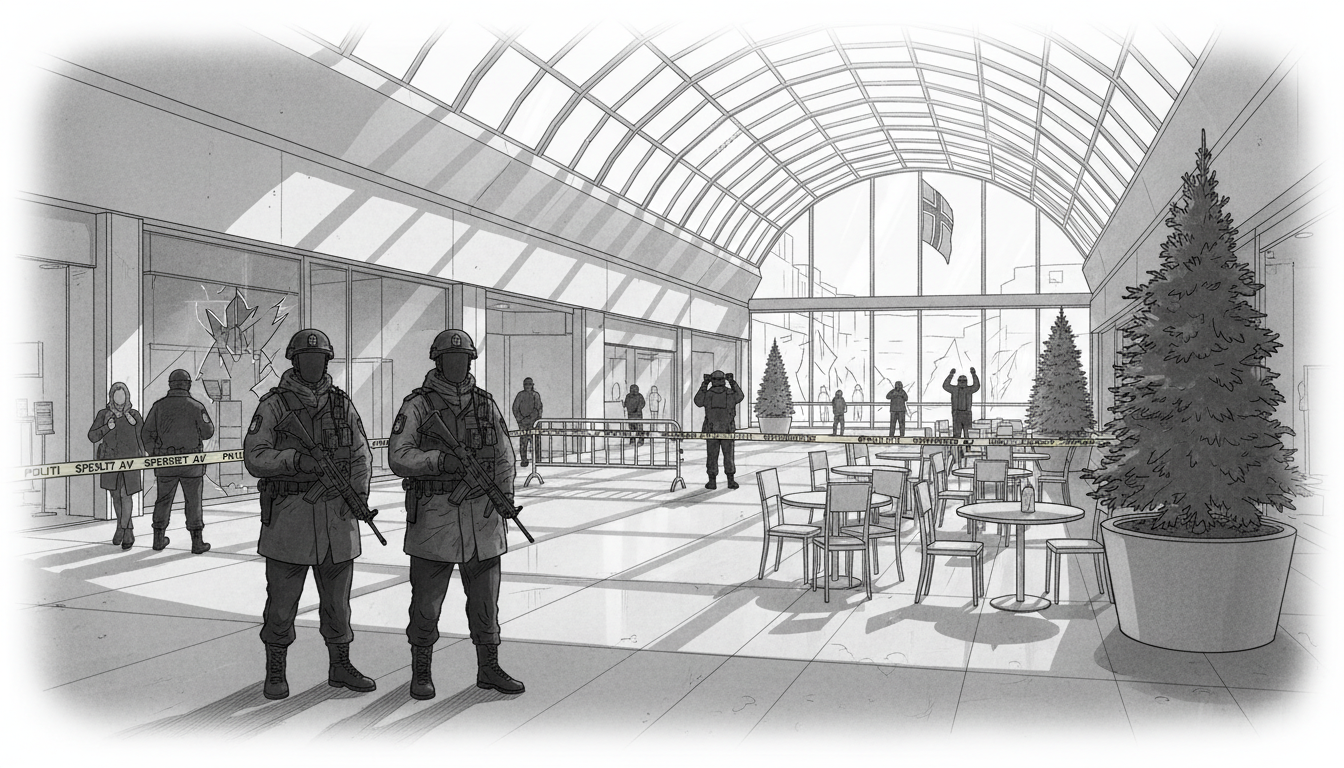
Police in Norway have secured a suspected shooter at a major Oslo shopping mall, responding to reports of shots fired within the crowded Storosenteret complex on Monday. Operasjonsleder Eirik Sannes confirmed authorities have the shooter under control and are now searching the building for potential victims. The swift police response, aided by multiple emergency calls, prevented a larger-scale evacuation. 'We ask people to stay away from the shopping centre to improve working conditions for the emergency services,' Sannes stated in a police log. The exact type of firearm used remains unverified, a detail police are withholding pending forensic investigation.
Senterleder Unni Merethe Aasgaard confirmed all visitors had been evacuated from the premises, redirecting all inquiries to the ongoing police operation. This incident immediately triggers national protocols established after previous tragedies, mobilizing specialized response units to a scene of potential mass violence. The Storosenteret, a large retail hub in the capital, represents the type of soft target that security experts consistently monitor. Police presence across Oslo's public transport and key infrastructure saw an immediate, visible increase following the alert.
A Nation's Traumatic Memory
Any shooting in modern Norway cannot be separated from the shadow of July 22, 2011. On that day, a far-right extremist killed 77 people in a bomb attack in Oslo and a shooting rampage at a youth camp on Utøya island. That tragedy fundamentally reshaped Norway's approach to policing, crisis response, and national discourse on violence. While initial indications suggest the Storosenteret incident is not terror-related, the national trauma informs both the public's reaction and the authorities' comprehensive mobilization. The country maintains strict gun control laws, with a licensed ownership rate of approximately 25 firearms per 100 people, according to GunPolicy.org. Most firearms are registered for hunting or sport, and obtaining a license involves thorough background checks.
'The immediate containment of the suspect points to a highly effective police response, likely informed by decades of revised training post-2011,' noted a security analyst familiar with Nordic procedures. 'The priority now is casualty care and securing forensic evidence.' The rarity of such events in Norway—where gun violence rates are a fraction of those in the United States—amplifies their psychological impact. A shooting in a peaceful shopping mall disrupts the fundamental sense of public safety that defines everyday life in Oslo. Social media channels flooded with concerns from residents checking on family members known to be in the area, illustrating the rapid spread of community anxiety.
Scrutiny on Security and Motive
As the scene at Storosenteret is processed, the investigation will pivot toward two core questions: the shooter's motive and the weapon's origin. Norwegian police will examine all possible angles, from personal grievance to ideological inspiration. The failure of the country's tight firearm regulations to prevent this weapon from reaching the mall, if it is proven to be illegal, will prompt immediate review. Parliament members in the Storting are likely to call for expedited briefings from Justice Ministry officials. Norway's deep cultural association with hunting and sport shooting creates a complex environment for gun policy, balancing tradition with public security demands.
Operational lead Tor Grøttum emphasized that police gained control early, crediting the volume of emergency calls from the public. This public vigilance is another legacy of past attacks, where citizen awareness is actively encouraged in national security strategy. The decision not to fully evacuate during the initial response suggests police judged containment to be the safest tactic to prevent panic and potential harm from a fleeing suspect. Forensic teams will work meticulously to map the shooter's path through the mall, interview witnesses, and analyze security footage. This process can take days, even for a contained incident, before police release a detailed sequence of events.
The Path Forward for Oslo
For Oslo residents, the immediate aftermath involves a cautious return to normalcy around Storosenteret, guided by police updates. The mall itself will remain a crime scene for an extended period, disrupting local commerce and daily routines. Broader implications for Norway's security posture are already under discussion. While the country has avoided knee-jerk reactions to violence in the past, preferring deliberate policy reviews, each incident tests the balance between openness and protection. The incident may accelerate existing plans for increased visible policing in major public spaces, a measure often debated after European attacks elsewhere.
Norway's model of policing, which emphasizes de-escalation and a generally unarmed civilian force, will also face examination. The officers who first responded to Storosenteret were likely armed, given the nature of the call, activating a different protocol than most daily interactions. The nation's high trust in its authorities will be a crucial asset in the coming days, as the public awaits transparent information. Community leaders in the diverse neighborhood surrounding the mall have called for calm and unity, wary of any potential for misplaced blame or social tension before facts are established.
Ultimately, this event at Storosenteret forces a uncomfortable reminder: no society, regardless of its peace and orderly systems, is completely immune to violence. Norway's strength has been its ability to respond with both firmness and humanity, to investigate thoroughly, and to heal collectively. The true test in the hours ahead lies not just in the police investigation, but in the public's resolve to maintain the social fabric that makes such shocking events so exceptionally rare. The final casualty count and the shooter's profile will answer immediate questions, but the longer-term conversation about safety in public spaces is now, once again, reopened.