
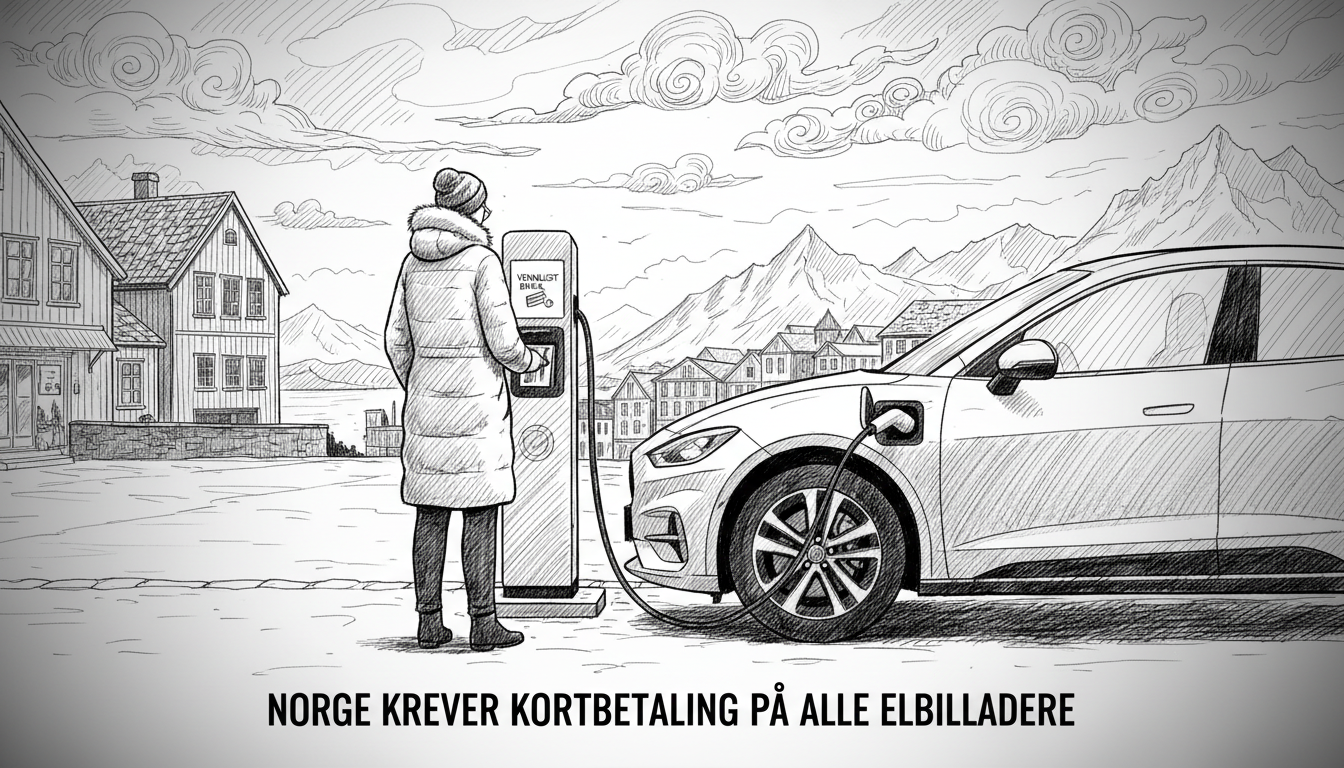
Norway's government is proposing a new law to mandate bank card payments at all electric vehicle charging stations. The regulation, sent out for public consultation this week, would require both new and existing chargers to accept standard contactless payments. This move aims to end the current fragmented system where drivers need multiple apps and RFID tags. It represents a major step in standardizing Norway's world-leading EV infrastructure.
For years, Norwegian EV drivers have navigated a confusing digital maze. To charge their cars, they must pre-register with various network operators. They download specific apps or carry proprietary RFID cards and key fobs. A driver traveling from Oslo to Bergen might need accounts with four different companies. This complexity creates friction, especially for tourists and infrequent users of public chargers.
"The government wants charging an electric car to be as easy as refueling a petrol car," said a ministry spokesperson. "Everyone has a bank card. This is about simplicity and security for all users." The proposed rule mandates acceptance of standard debit and credit cards with contactless 'tap' functionality. It would apply to Norway's entire network of over 20,000 public charging points.
The App Overload Problem
Marie Larsen, a graphic designer from Oslo, describes the current system as a 'wallet full of plastic and a phone full of apps.' She uses her home charger most days but relies on public stations for longer trips. "I have three different apps and two RFID tags," she says. "Sometimes I arrive at a charger and realize I don't have the right one activated. It's frustrating. Just letting me tap my card would solve everything." Her experience is common among Norway's massive EV community.
In 2023, battery electric vehicles made up 82.4% of all new car sales in Norway. The country aims to ban new petrol and diesel car sales by 2025. This aggressive policy has made convenient, ubiquitous charging infrastructure a national priority. Analysts say payment complexity is now a key barrier. "Norway has won the race on adoption, but the user experience needs to catch up," says tech analyst Henrik Falk. "Standardizing payments is the logical next step. It removes a significant mental hurdle."
How the New System Would Work
The technical proposal is straightforward. All charging stations, including fast chargers along highways and slower ones in city centers, must integrate a card reader. Drivers would simply tap their physical bank card or smartphone with a digital wallet. The transaction would process instantly, charging the driver's account directly. No pre-registration, app download, or account top-up would be required. The government suggests a phased implementation to give operators time to upgrade older hardware.
This shift could reshape the business models of charging network operators. Many currently rely on captive customers within their app ecosystems. They can offer subscriptions and collect valuable user data. Moving to an open, card-based system increases competition. "When payment is universal, drivers will choose chargers based on location, price, and speed, not based on which app they have," explains Falk. "This should put downward pressure on prices and upward pressure on service quality."
Industry Response and Technical Challenges
Reactions from the charging industry are mixed. Larger operators with extensive networks have acknowledged the need for simplification. Smaller players express concern about the cost of retrofitting older stations. A CTO for a major Nordic charging firm, who asked not to be named, outlined the challenge. "The hardware upgrade is significant but manageable," he said. "The bigger issue is transaction security and handling micro-payments efficiently. But if any market can solve this, it's Norway. Our digital payment infrastructure is already top-tier."
Norway's high trust in digital systems and near-universal bank card penetration makes the proposal feasible. The country's BankAxept system, which handles domestic debit transactions, is known for its low fees and reliability. Integrating this at charging stations could keep costs low. The consultation document will seek feedback on implementation timelines and potential subsidies for operators needing to upgrade equipment.
A Boost for Tourism and Occasional Users
The benefits extend beyond daily commuters. Norway's stunning landscapes attract millions of tourists. Rental car fleets are rapidly electrifying. International visitors often cannot register for Norwegian charging apps without a local phone number or national ID number. Mandatory card payments would eliminate this barrier instantly. "This is crucial for our tourism sector," says Lars Jensen, who runs an EV rental company in Geiranger. "I spend hours explaining the app system to customers. Many are anxious about being stranded. A simple card tap would give them the confidence to explore."
Similarly, residents who primarily charge at home but occasionally need a public top-up would benefit. They would no longer need to maintain accounts with multiple providers for rare use. This convenience factor is key to achieving 100% EV adoption. Experts note that the next wave of EV buyers may be less tech-savvy or less willing to manage multiple digital accounts. Simplifying the process is essential.
The Global Context and Norway's Leadership
Norway's move is being watched closely by other nations racing to electrify transport. Countries like the UK and Germany have similar fragmented payment systems. The European Union is also developing rules to improve charging accessibility. By acting first, Norway positions its tech startups and hardware manufacturers as potential solution providers. Oslo's innovation districts, like Fornebu and Grünerløkka, are hubs for green transport technology.
"This isn't just a consumer convenience story; it's an innovation catalyst," says Priya Sharma, Nordic Tech Correspondent. "Mandating a universal standard creates a clear market signal. It tells Norwegian tech startups exactly what problem to solve: building secure, reliable, and inexpensive card-integration hardware and software. This kind of regulatory clarity can spur a whole new sub-sector in our thriving tech scene."
The Road Ahead: Consultation and Implementation
The public consultation period will run for several months. Stakeholders from the automotive industry, finance sector, charging networks, and consumer groups will submit feedback. The final regulation is expected to be passed by parliament within the year. Observers predict a transition period of 12-24 months for full compliance.
This policy represents a mature phase in Norway's energy transition. The early focus was on subsidies and incentives to boost sales. Now, attention is shifting to the everyday user experience. By mandating simple, universal payments, Norway is smoothing the last bumps in the road to a fully electric future. It sends a clear message: the electric revolution must be convenient for everyone, not just the technologically adept. As one ministry official put it, "The goal is that charging your car should be boring. It should just work."