
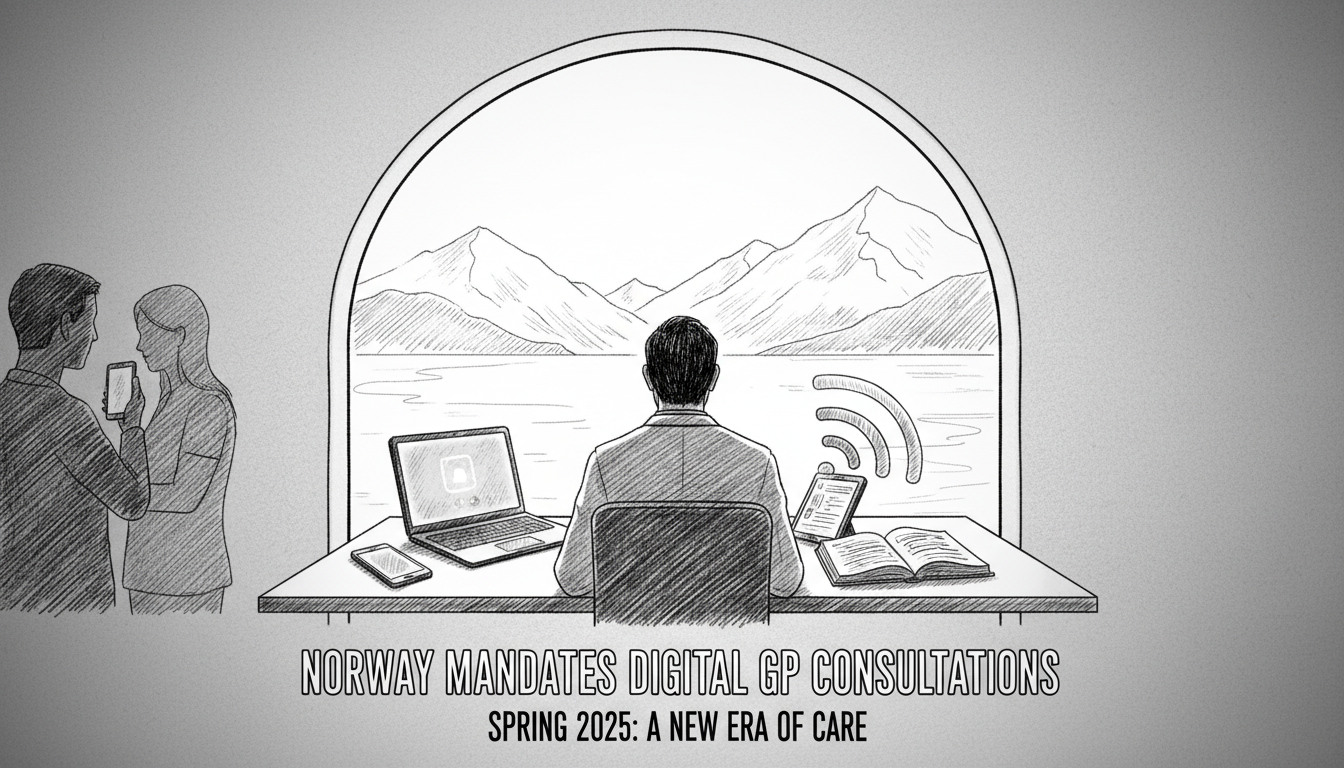
Norway is making a major shift in its healthcare system. Starting next April, every general practitioner in the country must offer digital consultations. This includes video calls, text messaging, and phone appointments. The government has changed the official regulations for GPs to include this new digital service requirement.
Health Minister Jan Christian Vestre announced the mandate. He said many residents now prefer to handle appointments digitally. The rule aims to meet that demand for suitable medical inquiries. The policy was tested in several municipalities over recent years. It received positive feedback from patient groups, local councils, and technology companies during a public consultation period.
However, the doctors who must provide these services are skeptical. The Norwegian Association of General Practitioners represents GP interests. Its leader, Hans-Christian Myklestul, points to low current usage. Video consultations account for just 1 to 2 per thousand appointments today. Usage spiked during the pandemic but then fell sharply. Myklestul questions the real need for a mandatory system.
He also highlights practical limitations for patient care. Measuring blood pressure, examining a shoulder, or taking a blood sample requires a physical presence. A video call cannot replace hands-on medical exams. The association believes visiting a doctor's office is still best for patients.
Public reaction in towns like Førde is mixed but leans positive. High school student Wiktoria Bujnicka sees clear benefits. Video calls with a doctor could make it easier for students to avoid school absences. She believes you can get just as much information digitally. Connie Hamre, from an older generation, also supports using new technology. She thinks it could make booking appointments simpler for everyone.
The Norwegian Board of Health Supervision shared the doctors' concerns. It cited an international study from the University of Bristol. That research indicated digital-first consultation models often increase doctors' total workload. Digital appointments tend to add to physical visits rather than replace them.
The Data Protection Authority raised separate issues. It stressed the critical importance of patient privacy and data security. The authority said GPs must be able to meet fundamental data protection requirements before deploying such services.
The health minister is not worried about increased pressure on GPs. He argues a consultation will likely take the same time whether physical or digital. The number of available appointments will not change. The government chose to proceed despite objections from medical professionals.
This move is part of a broader Nordic digital transformation in public services. Norway is pushing to become a more connected society. The mandate also requires all GPs to offer digital booking via the national Helsenorge.no portal. This aligns with trends across Scandinavia where tech hubs in Oslo and Stockholm drive public sector innovation.
The real test will come after implementation. Will digital tools streamline care or create more administrative tasks? Can they truly serve patient needs without compromising examination quality? Norway's nationwide experiment will provide valuable answers for healthcare systems everywhere.