
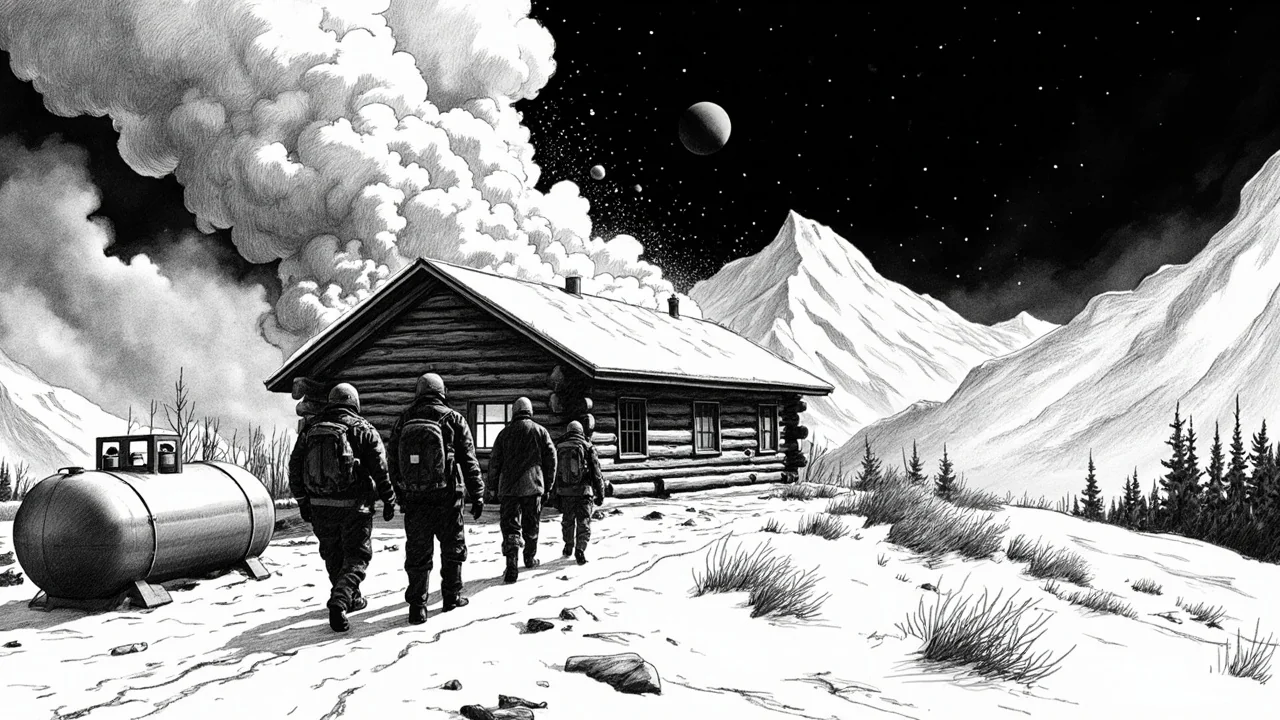
Norway's emergency services faced a complex and ultimately futile battle against a cabin fire in the remote mountain area of Tuddal on Tuesday. The incident, which saw four people safely evacuated, highlighted the persistent challenges of firefighting in Norway's vast and often inaccessible wilderness. Authorities were forced to make the difficult decision to let the cabin burn after determining they could not transport sufficient equipment to the site.
A Remote and Dangerous Scenario
The alarm was raised for a fire in a leisure cabin in Tuddal, a popular hiking and skiing destination in Telemark county. The location's remoteness immediately complicated the response. Police confirmed there was no drivable road all the way to the cabin, meaning it would take significant time for ground crews to arrive. To expedite the response, a police helicopter was deployed to fly personnel directly to the scene. A critical safety concern was quickly identified: a propane tank on the property. This led responders to establish a 100-meter safety perimeter around the burning structure.
All occupants had managed to evacuate before emergency services arrived. Just after 4:00 PM, the Norwegian Red Cross reached the location to transport four individuals who had been present at the cabin. Police confirmed all involved parties were safe and in good health. Initial reports indicated no visible flames from the cabin, but dark grey smoke was pouring from the structure. Authorities also stated there was no immediate risk of the fire spreading to the surrounding forest.
The Decision to Let It Burn
By 5:30 PM, the situation had been assessed on the ground with a sobering conclusion. Police and fire service personnel evaluated the site and determined it would not be possible to transport adequate firefighting equipment to gain control of the blaze. The terrain and lack of access roads proved insurmountable. Consequently, authorities made the operational decision to allow the cabin to burn down completely, focusing instead on containment and preventing any spread. This pragmatic approach is a recognized protocol in Norwegian firefighting when the risks to personnel outweigh the potential to save a structure, especially in isolated areas.
"The police and fire department report that they have been on site and assessed that it will not be possible to transport sufficient firefighting equipment to be able to gain control of the fire," a police statement said. "Therefore, the cabin will likely burn down." The priority shifted from active firefighting to monitoring and investigation. Police began interviewing the involved individuals to piece together a timeline of events leading to the fire. The cause remains unknown and under investigation.
Analyzing Norway's Wilderness Fire Protocol
This incident in Tuddal is not an isolated case but part of a recurring pattern in Norway. Each year, fires destroy cabins in remote locations where the infrastructure cannot support a conventional fire brigade response. The country's geography, with its deep fjords, steep mountains, and sparse road networks in rural areas, creates unique logistical hurdles. The presence of propane tanks or other fuel sources at many cabins adds a layer of danger, often forcing a defensive strategy.
"The decision to withdraw and monitor is never taken lightly, but it is a fundamental principle of firefighter safety," said a veteran fire safety analyst familiar with Norwegian operations. "When you combine difficult terrain, limited water sources, and a volatile fuel source like propane, the calculus changes. The goal becomes protecting the wider environment and ensuring no lives are lost, rather than saving a property that may already be a total loss." This analysis underscores the tough risk assessments made by commanders on the ground.
The Human and Regulatory Impact
For the cabin owners, the emotional and financial loss is profound. Norwegian cabins, or hytter, are deeply embedded in the national culture, representing a cherished connection to nature and family tradition. Rebuilding will involve navigating planning permissions, building codes for remote areas, and significant cost. The investigation will seek to determine the fire's origin, which could influence future insurance claims and safety recommendations. Common causes in such settings include electrical faults, chimney fires, or issues with heating systems.
The event also prompts questions about preparedness and prevention in Norway's leisure property sector. While many cabins are equipped with smoke detectors, their remoteness means an alarm does not trigger an immediate professional response. This places a heavy emphasis on owner responsibility for fire prevention measures, such as proper installation and maintenance of electrical and heating systems, safe storage of fuels, and ensuring clear access paths for emergency vehicles where possible.
A Look at the Broader Picture
The Tuddal fire occurs within a broader national context where Norwegian emergency services are increasingly stretched. Volunteer fire brigades form the backbone of response in rural municipalities, but many face challenges with recruitment and funding. Simultaneously, the popularity of cabin life continues to grow, pushing development further into vulnerable and hard-to-reach areas. This creates a tension between the desire for solitude in nature and the practical realities of safety and infrastructure.
Climate change introduces another variable. While not directly linked to this single event, warmer and drier summers in parts of Norway are increasing the statistical risk of wildfires. This can make cabin fires in forested areas more dangerous and likely to spread, potentially changing the risk assessment for future incidents. Authorities continuously revise their strategies to account for these evolving environmental conditions.
The four individuals rescued from Tuddal escaped physical harm, but they witnessed the loss of a personal retreat. Their experience serves as a stark reminder of nature's power and the limits of human intervention. As the investigation continues, the charred remains of the cabin will stand as a testament to the difficult choices made when fire meets Norway's formidable wilderness. The incident reinforces a hard truth for cabin owners across the country: in the most remote places, you are ultimately your own first responder.