
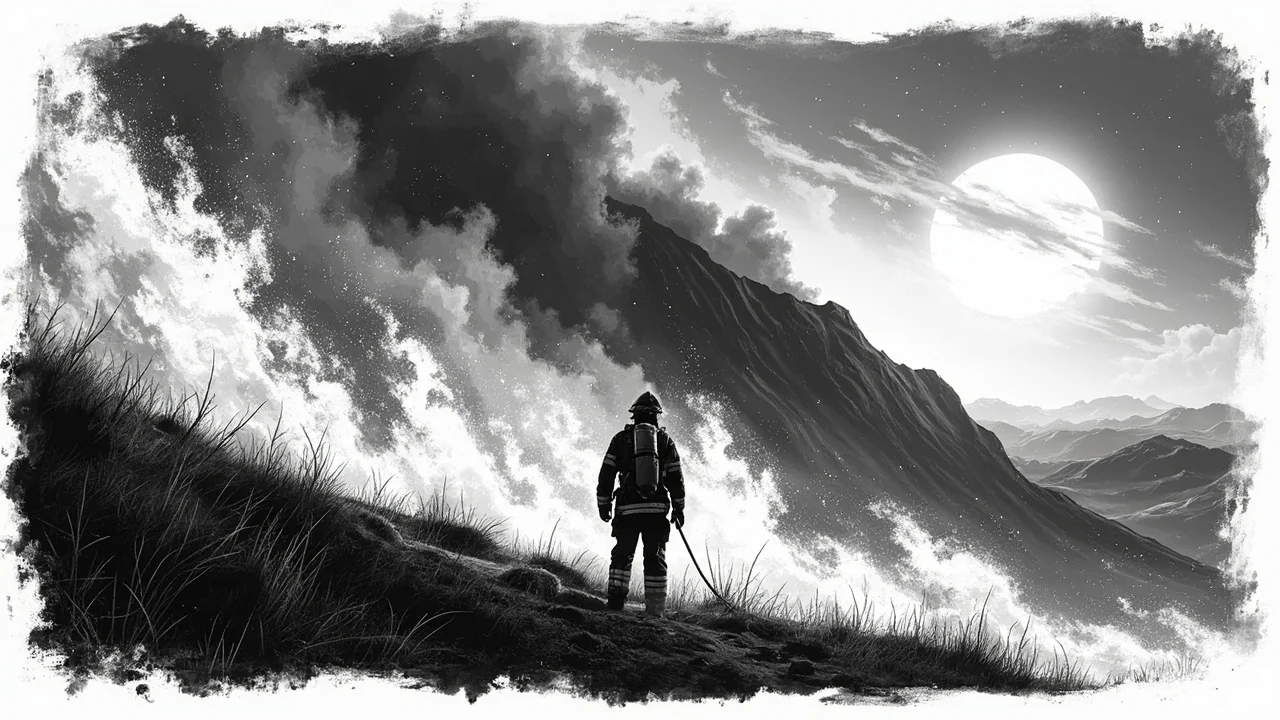
Norway's fire services are battling a challenging mountain blaze in Kinn municipality that has escaped initial containment efforts. The fire, which began as a controlled pasture burn, is now burning freely in difficult terrain but currently poses no threat to buildings or power infrastructure according to authorities.
Operational leader Frode Kolltveit stated the situation is under monitoring. "It is difficult to 'put down' the fire, but there is no danger to buildings or high-voltage masts in the area now," Kolltveit wrote in the police log. The 110 emergency center first received reports of the pasture burning activity earlier on Saturday.
A Controlled Burn Turns Unruly
The incident highlights the inherent risks of agricultural burning practices, even in Norway's often damp western climate. What began as a routine land management procedure—clearing dry grass and brush from grazing land—evolved into a firefighting operation when the flames spread beyond the intended area. The specific beiteområde, or pasture area, in Kinn is characterized by rugged fjellterreng, or mountain terrain, making direct access for fire crews problematic.
This type of terrain presents unique challenges. Steep slopes, variable winds, and limited road access can turn a small fire into a complex operation. Firefighters cannot simply drive a truck to the edge of the flames. They must often hike in with portable pumps and hoses, relying on natural water sources like streams or tarns, or call in aerial support if the situation escalates.
The Delicate Balance of Land Management
Controlled burning is a traditional and sometimes necessary practice in Norwegian agriculture. It clears old growth, encourages new grass for grazing, and reduces the overall fuel load that could feed a much larger, catastrophic wildfire later in a dry season. However, it requires precise conditions: the right humidity, wind speed, and temperature. A sudden gust of wind or a shift in weather can turn a controlled fire into a runaway blaze.
Local municipalities typically have strict regulations governing such burns, requiring permits and adherence to safety protocols. The fact that emergency services were notified suggests this was a permitted activity that simply exceeded its planned boundaries. Kolltveit's use of the phrase "difficult to 'put down'" indicates firefighters are actively engaged in suppression efforts, but the terrain is limiting their tactics.
Norway's Evolving Wildfire Reality
While Norway is not traditionally associated with severe wildfires like southern Europe or North America, climate change is altering the risk profile. Warmer summers, earlier snowmelt, and longer dry periods are creating conditions where vegetation dries out more thoroughly, becoming susceptible to fire. A 2022 report from the Norwegian Climate Service Centre noted an increase in the number of days with high forest fire danger in parts of western and southern Norway.
This incident in Kinn, though currently limited, serves as a microcosm of a broader national conversation. How does Norway adapt its land management and emergency response strategies to a changing climate? The country's famed wilderness, a source of national identity and tourism, could become more vulnerable. Firefighting resources, historically focused on structure fires in towns and cities, may need greater capacity for wildland fire response, including specialized training and equipment.
The Role of Emergency Coordination
The response illustrates Norway's integrated emergency management system. The 110 central received the initial call, dispatching both police and fire services. The police log serves as a central coordination point, with Kolltveit providing public updates to ensure accurate information is available. This transparency is crucial for preventing public alarm, especially when residents see smoke in mountainous areas.
The explicit statement that no buildings or high-voltage power masts are threatened is a key piece of public assurance. It directs concern toward the natural environment and firefighting effort, rather than potential property damage or infrastructure failure. Protecting power lines is particularly important in remote areas, where communities rely on consistent electricity.
Looking Ahead: Containment and Lessons
The immediate focus for authorities in Kinn is containment. Without a threat to human life or critical infrastructure, the strategy will likely be one of controlled monitoring and targeted suppression. Firefighters may establish natural firebreaks—like rocky outcrops or already-burned areas—and let the fire burn itself out within a contained perimeter, a common tactic in remote wilderness fires.
The coming hours and days will depend heavily on weather. Rainfall would significantly aid the operation, while continued dry, windy conditions would complicate it. The fire service will be monitoring wind patterns closely, as embers can travel long distances to start new spot fires ahead of the main blaze.
This event, while hopefully resolved without major incident, should prompt reflection. Municipalities across Norway may review their protocols for controlled burns, considering even stricter weather parameters or requiring the presence of fire service observers for larger operations. Farmers and landowners will be reminded of their profound responsibility when using fire as a tool.
Norway's relationship with its landscape is one of both use and preservation. This fire in Kinn sits at the intersection of those two principles. It began as an act of agricultural stewardship and became a reminder of nature's power. The successful management of this incident will depend not just on the skill of the firefighters on the ground, but on the lessons learned for future coexistence with a land that is becoming, in subtle ways, more unpredictable.
Ultimately, the story of this fire is not one of disaster, but of a near-miss and a test of preparedness. In a nation where mountain and fjord shape daily life, respecting the raw power of these environments is not just poetic—it is essential for safety. The controlled burn that got away serves as an annual warning as the snow recedes and the sun climbs higher: the margin for error in the Norwegian wilderness is thinner than it used to be.